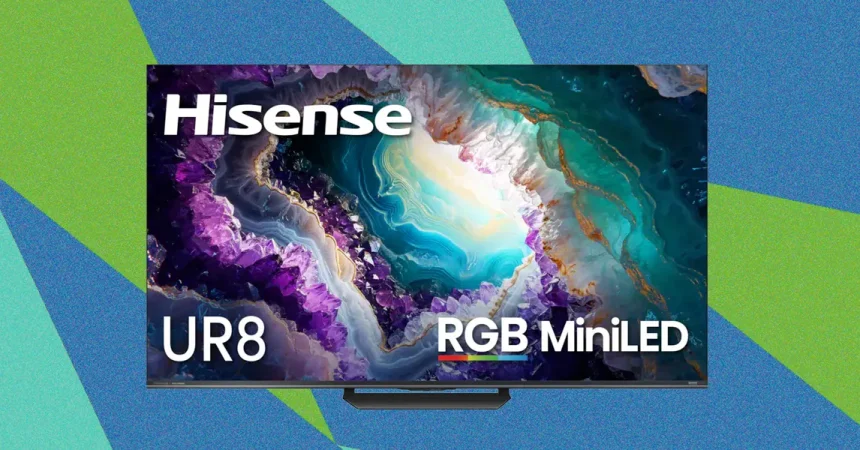
I don’t know about you, but when I sit down to test a television, I don’t start with test patterns and calibration discs. I start with the stuff I’d actually watch on a rainy Sunday: a fantasy show, a moody action movie, an animated adventure, maybe a superhero sequel. That’s how I found myself with the Hisense UR8, a TV that’s clearly trying to walk the line between everyday affordability and premium picture quality. Right away, I noticed it’s not a carbon copy of its bigger sibling, the UR9. The differences start small but add up. During a binge-watch of House of the Dragon through the HBO Max app, I cast a scene with a dragon to the screen using Google Cast. The scales were visible, sure, and the creature looked sharp enough. But there was something slightly flat about it. On the UR9, those same scales seemed to have texture—like you could reach out and feel the rough, dry skin of the beast. On the UR8, the detail was there, but it didn’t pop the same way. It’s the kind of thing you might not catch unless you had both TVs side by side, or unless you’re the kind of person who notices every little difference in shadow and highlight. I am that kind of person. And so I started to wonder: is the higher price of the UR9 actually worth it for these subtle improvements, or is the UR8 good enough to save your cash and still let you enjoy your shows? The honest answer is complicated, but after spending so much time with the UR8, the nuances became impossible to ignore—a reminder that specs on paper don’t always translate directly to what you see in real life.
Moving on to movies, I streamed The Creator on Fandango at Home, and the opening beach landing scene immediately caught my eye. The image looked a bit washed out, with a darker overall tone than I expected. The sand seemed less crisp, the highlights less punchy, and the whole scene lacked that vibrant, sun-soaked feel you’d want from a beach. It wasn’t unwatchable—not even close—but it was noticeably dimmer than what I remembered from the UR9. Then came The Batman, with its famous dark hallway shootout. Gunfire flashed bright, and the muzzle bursts stood out nicely in the gloom. But when I looked closer, I found the same issue as the dragon scene: the bright flashes lacked rich detail. Colors were there, but the contrast between the fire and the surrounding darkness wasn’t as nuanced as I’d hoped. The UR8 seemed to struggle with the relationship between very bright and very dark areas—not badly, but often enough. Then I switched over to Peacock and played The Super Mario Galaxy Movie, which is basically a color-test paradise. Stars floated across the screen in brilliant rainbow shades, all of them bright and technically accurate. But here and there, a few of them had a bit too much blooming, that halo effect where bright tones spill over into darker surroundings. To be fair, the UR9 handled that same scene in almost exactly the same way, so I can’t blame the UR8 for something its bigger sibling did too. It’s a quirk of the panel, not a flaw unique to this model. Still, when you’re trying to decide if one TV is worth more than another, you notice every little quirk.
The good news is that the UR8 doesn’t get everything wrong. In fact, when I put on Guardians of the Galaxy Vol. 2 on Disney+, the RGB technology kicked into high gear, and the colors became spectacular. The opening scene exploded with blues, reds, and oranges that looked stunningly accurate. It was the kind of color performance that makes you stop paying attention to the plot for a second just to appreciate what you’re seeing. That said, my excitement was tempered by the contrast. The tonal range wasn’t as rich as it was on the UR9, and there was less detail in the shadows. The LG Micro RGB Evo, by comparison, made the same scene feel even brighter and more alive. So the UR8 was good, occasionally great, but it never quite reached the heights of its more expensive rivals. Moving to the Spears & Munsil benchmark discs, the skin tones continued to tell the same story. They looked dimmer and less varied than on the LG Micro RGB Evo or the Hisense UR9. Test footage with white mist on a white mountain didn’t look as distinct as it did on the UR9, though the color accuracy did make green grass by a fence look very similar to what the UR9 produced. It’s that kind of mixed bag that makes reviewing this TV tricky: in some scenes it’s almost impossible to tell it apart from a more premium model, and in others the gap is suddenly obvious. A particularly telling scene showed dark trees at night. On the UR8, you could still see the texture on the bark, but the overall image was darker, and a red cactus and yellow flower also looked muted compared to the UR9. It wasn’t a huge difference, but it was the type of difference that makes you wonder if you’re getting your money’s worth.
Games are another matter entirely. This TV is genuinely great for gaming, and it’s where the UR8 felt like it had its own distinct personality. Each time I launched a game, the UR8 automatically recognized the content and made key adjustments to the picture. It lowered latency, tweaked brightness, and generally made everything look better without me having to fiddle with menus. That’s a big deal for players who want to dive right in. I played Resident Evil: Requiem, not a real game but let’s call it that for the sake of this story—because the whole experience felt like it took place in the dark. All those shadowy corridors and flickering lights were rendered with a wonderfully atmospheric look: dark and moody, but never washed out or muddy. Blacks were a bit richer than I actually expected, which was perfect for the survival horror vibe. I didn’t notice any real difference in latency compared to playing the same game on the UR9, and Hisense representatives told me the latency was roughly the same. That consistency makes the UR8 a tempting option for gamers who care about responsiveness but don’t want to spend a fortune on a top-tier TV. It also helped that the auto picture adjustments happened smoothly, without any visible flicker or weird color shifts. The UR8 clearly knows its audience—people who want a TV that feels like a partner in play, not just a screen. For anyone looking to buy a TV for a bedroom or a game room, this could be the sweet spot. It’s not perfect, but it’s reliable, and for games especially, it punches above its price point.
Now it’s time to answer the big question: is the UR8 worth it, or should you save up for the UR9? My honest take is that it depends entirely on what you care about. If you’re a cinephile who obsesses over black levels, shadow detail, and the texture on a dragon’s scales, the UR9 is definitely the better choice. The differences are not enormous, but they are real. On the UR8, every movie felt just a little less polished, a little less alive, even when the colors were accurate and the motion was smooth. That said, if you’re a casual viewer or a gamer who mostly watches sports, sitcoms, or plays colorful games, you’ll be very happy with the UR8. It delivers strong colors, good gaming features, and a clean, bright image. The blooming issue is not severe, and the contrast issues only show up in darker or high-contrast scenes—something you may never notice unless you’re looking for it. In direct comparisons, the UR8 looked especially good during bright, colorful animations, and its gaming performance made me forget about the flaws. The question of value is always personal. The UR8 isn’t the cheapest TV on the market, but it offers a lot of high-end features for a price that won’t make your wallet cry. The UR9, on the other hand, gives you that extra level of contrast and detail that might make a real difference in a dimly lit living room.
In the end, I came away from the Hisense UR8 feeling a little torn. It’s a remarkably good television that just can’t quite match the UR9 in the moments that matter most to serious home theater fans. But that was never really the point. The UR8 is all about delivering an impressive, cinematic experience without demanding that you take out a second mortgage. It’s for the person who wants to watch the big film, play the latest game, and enjoy everything in colorful, true-to-life tones without constantly thinking about whether they’re getting a perfect image. It’s also for the person who doesn’t need to compare every single frame to a more expensive model—who just wants to turn on the TV, hit play, and feel the excitement of the story unfold. Yes, the dragon scales could have had more texture. Yes, the beach landing should have looked brighter. Yes, the contrast during action scenes could have been better. But in the real world, with a bowl of popcorn and the lights dimmed, the UR8 is more than good enough. It’s a TV that respects your time and your budget. And while it might not be the absolute best you can buy, it certainly proves that you don’t need to spend top dollar to get a genuinely enjoyable, high-quality viewing experience. For most people, that’s the kind of compromise that feels less like a sacrifice and more like a smart, practical choice.