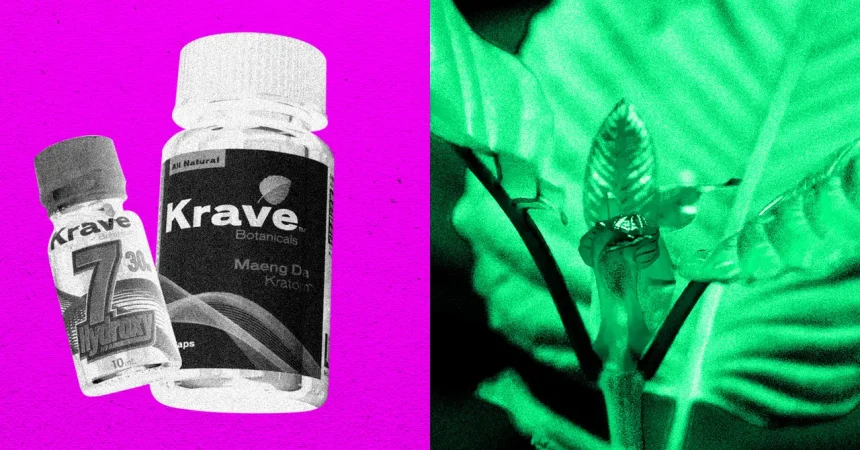
The Drug Enforcement Administration (DEA) has recently taken a significant step toward reshaping the landscape of the unregulated supplement market by moving to temporarily classify 7-hydroxy-mitragynine—commonly known as 7-OH—as a Schedule I controlled substance. This decision, set to be published as a notice of intent in the Federal Register, would place this specific component of the kratom plant in the same legal category as highly restricted drugs like heroin for an initial period of two years. The agency justifies this aggressive stance by citing clear indicators of public health risks, specifically pointing to the increased potential for tolerance, physical dependence, and addiction associated with concentrated forms of this substance. While natural kratom, a Southeast Asian botanical, contains only trace amounts of 7-OH, the recent emergence of laboratory-processed, high-potency gummies, shots, and capsules has fundamentally changed the risk profile of these products, prompting federal intervention.
This move serves as a surprising, yet decisive, victory for the established mainstream kratom industry, which has spent years lobbying against the 7-OH market. By distancing their plant-based products from these modern, synthetic-like derivatives, mainstream industry players are essentially drawing a line in the sand. This regulatory shift is also occurring against a backdrop of high-level political maneuvering. Notably, the current administration has expressed an interest in “approving” natural kratom—which proponents argue offers valid antidepressant and analgesic benefits—while simultaneously cracking down on the concentrated extracts that have flooded local gas stations and smoke shops. This policy tension reflects a broader desire to legitimize the herbal industry by weeding out the more potent, controversial elements that have tarnished its image.
The political dynamics surrounding this ban are perhaps as complex as the chemistry itself, involving influential figures with documented connections to the kratom trade. For instance, Department of Homeland Security Secretary Markwayne Mullin and Secretary of Health and Human Services Robert F. Kennedy Jr. have both faced scrutiny over their historical ties to the industry. Mullin, who once invested significantly in a company hit by federal raids over its kratom-based drink products, has defended these associations by framing the crackdown on 7-OH as a necessary protection against deceptive marketing practices targeted at younger consumers. The narrative being pushed by these officials is that the “gas station” versions of these substances are a fundamental moral and public safety hazard that required urgent, top-down regulatory action.
However, the industry is anything but united on this issue. The American Kratom Association has hailed the move as a logical victory, arguing that chemically manipulated 7-OH is not true kratom but rather a dangerous imposter that has exploited the good name of the natural leaf to move products. From their perspective, the DEA is simply curbing a public health threat that had been allowed to fester due to a lack of oversight. By isolating 7-OH as a specific, dangerous entity, established kratom lobbyists hope to insulate the larger, leaf-based industry from the bad publicity and potential bans that follow high-profile stories of addiction and physical withdrawal that have plagued users of synthetic-heavy supplements like “Feel Free.”
Conversely, there is a vocal and organized resistance emerging from the 7-OH sector, led by advocacy groups like the Holistic Alternative Recovery Trust. These groups argue that the DEA’s impending ban is built upon an insufficient scientific foundation and ignores the lived experiences of thousands of consumers who rely on these products to manage chronic pain, sustain employment, and maintain their daily lives. They contend that the government is rushing to criminalize a substance that has helped a significant portion of the population transition away from traditional, more harmful narcotics. For these users, the crackdown feels more like a betrayal by a government that is ignoring their personal recovery journeys in favor of institutional politics and corporate lobbying within the supplement industry.
As the 30-day public comment period approaches, the debate highlights the difficult intersection of public health, personal liberty, and the unregulated consumer market. Whether the DEA’s temporary ban will truly suppress the market or merely drive these potent substances further into the black market remains to be seen. What is clear is that the landscape of botanical pharmacology is undergoing a volatile transition, where the line between a “natural supplement” and a “controlled substance” is being increasingly defined by laboratory concentration rather than historical use. Both sides are now preparing for a final showdown in the bureaucracy, with the future of millions of dollars in revenue—and thousands of consumers’ daily habits—hanging in the balance.