You can practically hear the collective sigh of relief from home cooks everywhere as the latest Cyclospora lettuce scare fades into memory. But just when you thought it was safe to eat a salad, the summer of 2026 has thrown another curveball our way, and this time, it’s hit closer to home than a leafy green. A wave of salmonella recalls has rippled across the grocery store, affecting everything from jalapeños and granola to dog food and alfalfa sprouts. However, the one that has everyone peering into the crisper drawer with fresh suspicion is the enormous egg recall. Specifically, the recall involves eggs from Midwest Poultry Services, which were distributed under five brand names, including our beloved Kroger and Simple Truth labels. While the immediate recall was limited to Texas Kroger stores, the anxiety is universal—because eggs are a breakfast staple, a baking essential, and the heart of countless comfort foods. So, what do we do? We can either avoid eggs altogether or find a way to make them perfectly safe, no matter what we plan to do with them in the kitchen, whether that’s a gentle scramble, a decadent carbonara, or just a simple slice of toast dipped into a runny yolk.
First, let’s understand the adversary we’re dealing with, because knowledge is the first line of defense. According to Dr. Alan Bulbin, an infectious disease specialist at Catholic Health’s St. Francis Hospital, eggs hold the unfortunate title of being the single food commodity most associated with outbreak illnesses. The culprit is Salmonella enteritidis, a bacterium naturally carried by poultry. It can cling to the shell from contact with droppings, or worse, it can be deposited inside the egg itself from an infected chicken’s ovaries. It’s practically invisible—you can’t tell a contaminated egg by looking at it, and the chickens themselves show no obvious signs of illness. The USDA has estimated that roughly one out of every 20,000 eggs is contaminated. With 67 billion eggs produced annually in the US, that calculates to a staggering 3 million potentially hazardous eggs entering our kitchens every single year. The USDA implemented a strict 72-page safety requirement back in 2009 to combat this, but clearly, perfection remains elusive and contamination continues to slip through the cracks. For the average consumer, the standard advice remains the same: keep eggs chilled below 42 degrees Fahrenheit, wash your hands thoroughly before and after handling them, and, of course, cook your eggs thoroughly. The heat of a firm yolk and a completely set white will destroy the bacteria, giving you a perfectly safe meal.
However, that last piece of advice—cooking thoroughly—presents a serious problem for those of us with a particular culinary style. The firm, dry, fully-cooked yolk is not what many of us crave when we sit down to breakfast. We want a gloriously runny dippy egg, a rich and velvety Hollandaise sauce spooned over eggs Benedict, or a silky, traditional pasta carbonara that relies on raw eggs being emulsified into the hot pasta. We might also have a beloved family recipe for homemade mayonnaise, a punchy aioli for dipping fries, or even a festive batch of eggnog and royal icing for holiday cookies. All of these crave raw or only gently warmed eggs to achieve their signature textures and flavors. The texture of a perfect French omelet is a direct result of not overcooking the delicate curd, and a half-cooked sunny-side-up egg is often the crowning glory of a diner breakfast. Furthermore, if you have kids or teenagers in the house who like to cook for themselves, you know that handwashing after handling raw eggs is often more of a distant suggestion than a strict rule. The lingering fear is real: how can you enjoy the texture and flavor of raw or soft-cooked eggs without rolling the dice on a nasty bout of food poisoning with fever and severe diarrhea? The answer isn’t to swear off eggs entirely or to deny your family their favorite foods; it’s to take control of the safety process right in your own kitchen.
You might think that pasteurized eggs are the simple answer to this dilemma, and you’d be partially right, but the supermarket options are surprisingly limited and creatively awkward. You can’t just walk into most grocery stores and buy a dozen whole pasteurized eggs; those are typically reserved for commercial bakeries, restaurants, and food service suppliers. The liquid eggs you find in those recyclable cartons in the dairy aisle are indeed pasteurized, but they are almost exclusively composed of egg whites, lacking the flavorful and crucial yolks that are absolutely essential for mayonnaise, carbonara, and Hollandaise. As it stands today, the vast majority of whole shell eggs sold in the US are not pasteurized. If you do happen to find some that are, you’ll likely notice a significant price markup alongside a special label proudly announcing their safe status. So, what is the dedicated home chef supposed to do when faced with this frustrating gap in the market? The only guaranteed way to ensure a whole, raw shell egg is safe is to pasteurize it yourself. This process might sound daunting, but it’s actually quite simple in principle: it involves heating the egg to a specific temperature range—between 130 and 140 degrees Fahrenheit—for a prolonged period of time. This duration is long enough to kill any harmful bacteria, but the temperature is low enough to prevent the proteins in the egg from coagulating, which means it doesn’t actually cook the egg.
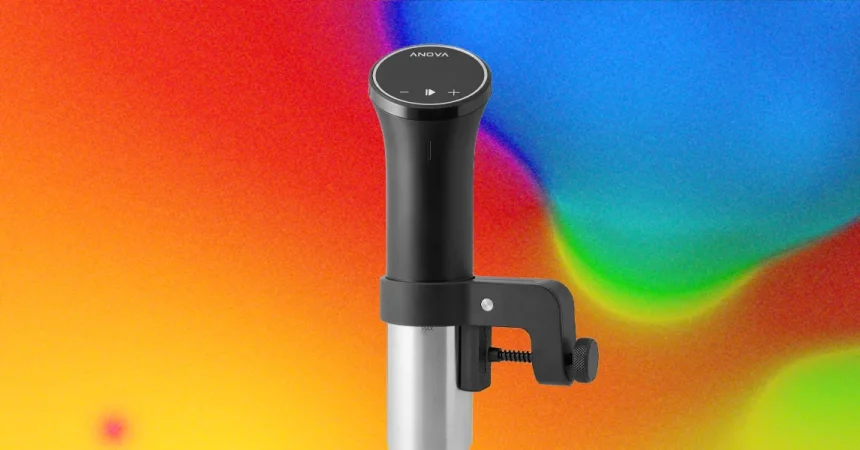
This is where a clever piece of kitchen technology comes to the rescue: the immersion circulator, better known as a sous vide machine. The Anova Sous Vide Precision Cooker 3.0 (1100 Watts) is the perfect tool for this exact task, transforming it from a tricky, risky stovetop guessing game into a foolproof, set-it-and-forget-it science experiment. The science here is beautifully simple. You fill a large pot with water, clamp your immersion circulator to the side, and set it precisely to 135 degrees Fahrenheit. While the water warms up, you can go about your day, make a cup of coffee, or prepare other ingredients. Once the water reaches the target temperature, you gently lower in your eggs—still in their shells, completely intact and ungraded—and let them bathe in this perfectly controlled warm water for about an hour and fifteen minutes. That might sound like a long time to invest, but the low, consistent heat is exactly what does the magic here. It effectively eliminates any Salmonella enteritidis present both on the shell and within the egg itself, while keeping the yolk and white in their raw, liquid state, preserving all the culinary qualities you love. When the timer goes off, you simply transfer the eggs to an ice bath to halt the heating process immediately and prevent any residual carryover cooking. What you’re left with is a dozen perfectly pasteurized, completely safe raw eggs, ready for any culinary application you can dream up.
Adopting this sous vide method completely flips the script on food safety anxiety in the kitchen. Instead of worrying about whether that homemade mayo is going to make your guests sick at your summer barbecue, or whether your kid’s late-night egg scramble is a gamble you shouldn’t take, you can confidently reach for your pre-treated eggs. This technique is not just reserved for professional chefs with expensive lab-grade equipment; it’s an incredibly accessible weekend project that yields huge amounts of peace of mind for a very minimal investment of effort. Spend an hour and a half one lazy Sunday afternoon, and you can stock your refrigerator with safe, versatile eggs for the entire week ahead. And the best part of all? You don’t sacrifice any of the culinary excellence in the final dish. The yolks remain gloriously rich, deep, and runny, perfect for dipping crusty toast, folding into a creamy carbonara, or whisking into a smooth, glossy aioli. The whites remain clear, viscous, and perfectly capable of being whisked to stiff, glossy peaks for a delicate pavlova or a towering meringue pie. While the summer of 2026 might be bringing a relentless parade of risky recalls and anxiety-inducing headlines, we don’t have to surrender the joy of cooking or the simple, profound pleasure of a perfectly soft-boiled egg. With a little patience, a reliable immersion circulator, and this clever technique, you can take the danger completely out of the equation and put the deliciousness back firmly on the plate.