In our current economic climate, the old-world wisdom of preserving food has felt more relevant than ever. Whether you are dealing with a bumper crop from your garden, snagging a bulk deal at the grocery store, or processing the rewards of a successful fishing or hunting trip, the ability to store surplus food is a powerful tool for self-sufficiency. While many people automatically reach for canning jars or chest freezers, those methods can be notoriously demanding when it comes to time, physical space, and energy bills. This is where the humble food dehydrator enters the conversation. By removing moisture from ingredients, you not only drastically extend their shelf life but also shrink their footprint significantly, allowing you to stock your pantry with everything from dried herbs and seasoned vegetables to lightweight, nutrient-dense meals for your next backpacking adventure.
Beyond the practicality of food security, there is a genuine joy and creative spark that comes with owning a dehydrator. It opens up a culinary space where you can create your own high-quality snacks—think perfectly crisp kale chips, chewy beef jerky, or concentrated citrus rounds that elevate a cocktail at home. It is a hobby that encourages experimentation; my own kitchen has become a testing lab for inventive dried snacks, and I have found that a simple mandoline slicer becomes an indispensable sidekick in ensuring uniform drying times. From a more personal perspective, friends—like my fellow reviewer Lisa Wood Shapiro—have turned their dehydrators into DIY workshops for natural pet treats, turning simple sweet potatoes into healthy rewards for their dogs. When you start seeing the potential in a simple bag of discounted fruit or a tray of seasoned meat, you realize that dehydrating is less of a chore and more of an investment in your own creative health.
When we set out to find the best machines on the market, we didn’t just look at spec sheets; we put these appliances through the rigors of heavy, daily use. We processed dozens of pounds of produce and proteins to understand how temperature distribution, fan strength, and tray design impact the final texture. We wanted to move beyond the “bargain-basement” models that often frustrate users with uneven drying and loud, obtrusive motors. Our goal was to identify units that serve the home cook who wants consistent, professional-grade results without needing a dedicated commercial kitchen. By taking the guesswork out of the selection process, we hope to empower others to reclaim their kitchen autonomy with confidence.
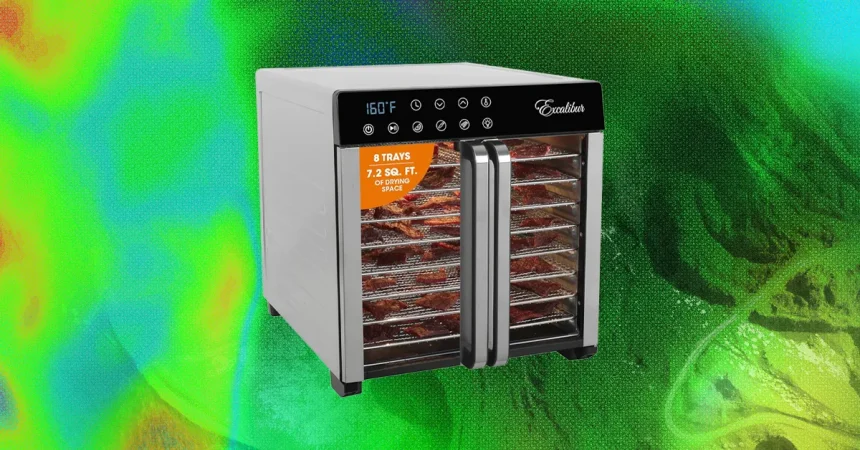
Taking the top spot as our best overall recommendation is the Excalibur DH08SCSS13 Select Digital Food Dehydrator. Excalibur has long been the gold standard in the drying industry, and this consumer-grade model brilliantly bridges the gap between commercial power and home-friendly design. With eight trays and a robust 7.2-cubic-foot capacity, it handles large batches with ease. Its modern interface includes a digital timer that allows for precise control, and the inclusion of both mesh and solid sheets makes it versatile enough for everything from delicate herbs to wet fruit purees. Perhaps my favorite feature, however, is the noise level: at a hushed 40 decibels, this machine purrs quietly in the background, making it perfect for an open-concept home where you don’t want your appliance to drown out your television or conversation.
For those who are just dipping their toes into the world of dehydration without wanting to commit to a major investment, the Cosori Pioneer 5-Tray Food Dehydrator is an excellent entry point. While it leans into a more traditional, stackable plastic design, it manages to deliver consistently impressive results that rival much more expensive units. What truly sets the Cosori apart—aside from its approachable price tag—is the depth of its recipe library. It acts as a comprehensive guide for beginners, teaching you how to tackle ambitious projects like dehydrating entire batches of chili, which can then be rehydrated for a quick, hearty meal later. It may not be the sleekest countertop appliance, but for someone looking to start their preservation journey on a budget, it offers an incredible return on investment.
Ultimately, choosing to dehydrate your own food is a small but meaningful step toward a more resilient pantry. Whether you opt for the high-capacity, whisper-quiet performance of the Excalibur or the practical, recipe-driven utility of the Cosori, you are gaining the ability to control exactly what goes into your family’s body while reducing food waste. In an era of rising costs and fluctuating availability, having these machines on your counter means you are no longer at the mercy of the market. You are choosing to preserve your harvest, honor the ingredients you have, and build a food supply that is both delicious and entirely of your own making. There is a deep, quiet satisfaction in seeing a cupboard filled with jars of food that you dried, safely stored, and prepared yourself.