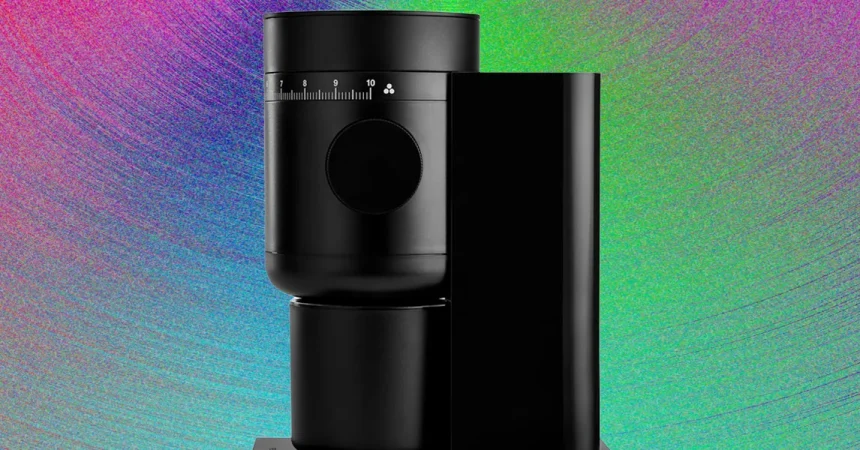
For anyone who genuinely loves coffee—or even just wants their morning cup to stop tasting like a sad, watery afterthought—the grinder is where the magic actually happens. You can buy the most expensive beans in the world, but if you grind them weeks ahead of time or chop them unevenly, you’re basically throwing money into a paper filter. The good news is that you don’t need to empty your savings account to get a grinder that makes a real difference. In fact, the best value in coffee grinding right now is a hand grinder: the Kingrinder K6 manual coffee grinder at about $109. It sounds counterintuitive, but a precisely machined manual grinder can produce grounds that rival electric machines costing several times more, both in consistency and in durability. Yes, you have to crank it yourself, and yes, that takes a little time and effort. But many coffee lovers, including me, have come to adore that slow, tactile morning ritual. It forces you to slow down, to engage with the process, and it gives you an absurd amount of control over your grind size. Still, I completely understand if you’d rather not grind by hand at 6 a.m. Mornings are hard, and electricity is a beautiful thing. For those days—and for anyone who simply prefers the convenience—there are genuinely good budget electric grinders for every style of brew. None of them are going to produce the jaw-dropping clarity and sweetness of our premium top picks, but they are the lowest-cost devices we can actually recommend without wincing. Whether you’re brewing drip, espresso, French press, or cold brew, there is a budget grinder that will make your coffee better than you ever thought possible at that price.
Let’s start with the best budget electric options, because this is where most people should begin. For drip coffee—which includes pour-over, Aeropress, French press, and cold brew—the Oxo Brew Compact Conical Burr Grinder is a standout. It’s cleverly designed like a little layer cake, with the grind cup tucked inside the column of the machine so you can pull it out when you’re done. It’s compact, easy to store, and about $30 cheaper than Oxo’s full-size model, which itself used to be the go-to budget pick. The trade-offs are real: grind consistency and ease of use aren’t quite as good as the larger Oxo, and you shouldn’t attempt espresso with it. But for around $80, it’s the lowest-priced electric grinder I can wholeheartedly endorse for everyday drip, cold brew, or French press. If your heart is set on espresso, the budget situation is trickier, but not hopeless. The Wirsh Geimori T38 Plus, at $150, is the cheapest electric espresso-capable grinder I can recommend without a guilty conscience. It’s a weird little machine—about the size of a Christmas nutcracker and shaped alarmingly like Pinocchio’s left leg—but it has surprisingly low coffee retention, stepless grind adjustments, and far better precision than anything near its price. It grinds at low RPMs, which means it’s slow; you’ll wait more than 30 seconds for a double shot of espresso. That makes it useless for big batches of drip or French press, and it won’t give you the clarity you want for pour-over. But if you want to pull decent espresso on a non-pressurized basket without spending a fortune, this is the one. And because it’s so small, it doubles as a travel grinder. For the truly frugal, there’s the KitchenAid Blade Coffee Grinder, which costs under $50. Blade grinders are crude—they chop the beans with a spinning blade instead of crushing them between burrs, leaving a chaotic mix of powder and boulders. But fresh blade-ground beans are still better than stale supermarket pre-ground coffee. If a friend who isn’t a coffee nerd asks for a grinder cheaper than a nice dinner out, this is the one I suggest, especially for darker roasts and French press.
Beyond just tasting the coffee, I’ve been using science to back up my opinions. I analyze every grinder I recommend using a device called the DiFluid Omni, which measures particle size distribution. The idea is simple: coffee grounds that are all around the same size extract more evenly, leading to clearer, sweeter, more aromatic flavors. Big boulders—particles over a thousand microns—can make a brew taste muddy and under-extracted. Too many fines, the tiny dust-like particles under 100 microns, can make it bitter and over-extracted. The standard deviation gives you a clue to overall precision: smaller numbers mean tighter, more consistent grinds, and usually more clarity. But sometimes a broader distribution can actually be a good thing, adding body and perceived sweetness. Our top overall pick, the Baratza Encore ESP, is a great example. At espresso-fine settings, it’s remarkably precise, with a standard deviation below 200 microns and about 30 percent of particles falling within a single range. That’s genuinely impressive for a $200 machine. But at pour-over settings, its particle distribution is wider and more heterogeneous. In practice, that translates to a full-bodied, rounder cup with slightly less precise aromatics than our favorite drip grinder, the Fellow Ode Gen 2. The Ode’s particle analysis shows a beautiful bell curve around a single high peak, which matches the beautiful, clear flavors I taste in pour-over and drip coffee. Then there’s the Technivorm Moccamaster KM5, a flat-burr grinder that delivered incredibly precise results across the board—rivaling the Encore ESP at fine grinds and the Ode at coarse ones. Its brews can be so clean that they feel almost clinical, with a thinner body, but the clarity is off the charts. The Kingrinder K6 hand grinder also shows remarkable precision, especially for pour-over grinds. In testing, it produced a higher peak than nearly any grinder I’ve tried, with as many as 40 percent of particles being exactly the same size and about 70 percent tightly grouped around that size. That concentration leads to pronounced, intense flavor notes. And at the high end, the Mazzer Philos espresso grinder, at $1,595, achieved the most impressive espresso grind I’ve seen: more than 90 percent of grounds grouped tightly together, with almost no boulders and just enough fines to give every shot a syrupy consistency and delicate clarity.
When I test coffee grinders, I don’t just look at a machine and guess. I grind a lot of beans and make a lot of coffee. I taste drip, pour-over, Aeropress, French press, cold brew, and espresso, using the same baseline beans so I can detect even small differences. I also pay attention to practical things: how loud the grinder is, whether it’s messy, whether static electricity makes coffee grounds fly everywhere, how much coffee gets trapped inside, and how easy it is to clean and adjust. One of the most important questions people ask is why they should grind whole beans instead of buying pre-ground coffee. The answer is freshness. The moment you crack open a vacuum-sealed bag of beans, oxidation begins to degrade the flavor, and aromatic compounds escape into the air. Whole beans stay reasonably fresh for weeks, but ground coffee goes stale in a matter of hours—sometimes minutes. That bag of pre-ground coffee from the supermarket is technically coffee, but all its vibrancy has quietly died. Even if you get beans ground fresh at a café, you should use them within a week and keep them in an airtight container. The only reliable way to get the same vibrant, aromatic, complex cup you’d enjoy at a great coffee shop is to grind immediately before brewing. Grinding whole beans also gives you control over extraction: espresso needs a fine grind, pour-over something a little coarser, and drip coarser still. Lighter roasts generally want a finer grind than darker ones because they’re denser and less porous. It might sound overwhelming, but it’s actually fun to dial in. When you find that perfect combination of grind and bean, on a good grinder, it can turn into the best cup you’ve ever had. It’s like the first time you seared a perfect steak or baked a perfect layer cake. Effort meets reward.
There are three main types of coffee grinders: conical burr, flat burr, and blade. Conical burr grinders are the sweet spot for most people because they offer the best balance of performance, cost, and flexibility. They crush beans between two rings of burrs, producing a much more consistent grind than any blade grinder. They do tend to create more fines than flat burrs, but many people believe those fines add body and a rounder, sweeter flavor. Flat burr grinders are often more precise and are beloved by coffee geeks who want to highlight the delicate notes in single-origin beans. They’re usually more expensive and more finicky, and the beans spend more time in contact with the burrs, which can lead to clearer, more defined flavors. Blade grinders are cheap and simple, but they chop unevenly and produce unpredictable brews. Still, using fresh beans in a blade grinder is better than stale pre-ground coffee, and there are little tricks to improve the results, like pulsing and shaking the grinder. When it comes to the difference between cheap and expensive burr grinders, the expensive ones have better motors, sharper burrs, and more precise adjustments. Cheap burrs can go blunt quickly, and flimsy motors may burn out in months. Over the past decade, grinder design has exploded with innovation—pentagonal, hexagonal, and heptagonal burrs, new generations of flat burrs, and more precise machining. That precision costs money, but it also buys you a wider range of grind sizes and more reliable calibration. One piece of advice: don’t ever run pre-ground coffee through a burr grinder to try to make it finer. It won’t bring the coffee back to life, and it will just gum up your burrs and force you to take the whole machine apart to clean it.
As for espresso, the best grinders are the ones that offer precise adjustments at the fine end of the spectrum. Dialing in espresso requires tiny tweaks to account for different beans, roasts, and machines. You also need a motor sturdy enough to handle the torque required for fine grinding, and a machine that tames static electricity, which can send espresso grounds flying everywhere. High-end espresso grinders can cost thousands of dollars, but for most people, the Baratza Encore ESP at $200 is the best choice, with sturdy construction and twenty grind adjustments just for espresso. If you don’t mind manual work, the Kingrinder K6 hand grinder can tune your grinds even finer for around $109. The budget electric option is the tiny, slow Wirsh Geimori T38 Plus, though you’ll want to stick to medium or darker roasts to protect its motor. There are also plenty of excellent honorable mentions. The original Baratza Encore remains a beloved entry-level grinder at $150, easy to maintain and built to last. The Baratza Virtuoso+ adds a convenient timer for hands-free dosing at $250. The KitchenAid Burr Grinder is stylish and has a nice portafilter holder for espresso lovers. The Technivorm Moccamaster KM5, at $349, offers amazing clarity but is loud and not particularly user-friendly. The Eureka Mignon Filtro is a metal-clad tank of a machine, and the Wilfa Uniform still makes lovely pour-over coffee. The Breville Smart Grinder Pro is a solid value, and the Baratza Vario W+ offers an integrated scale and 230 grind settings. For camping and travel, the VSSL Java manual grinder is rugged enough to survive a zombie apocalypse. And for those considering the budget route, the Hario Skerton and Mini-Slim are okay in a pinch, but newer hand grinders are far better. The Cuisinart burr grinder may look like a deal, but it burns out too quickly, and the Bodum Bistro blade grinder is fine for the absolute cheapest option.
At the end of the day, the perfect grinder is the one that fits your life, your budget, and your favorite way to brew. You don’t have to spend a fortune to taste the difference. Even a cheap blade grinder with freshly roasted beans will beat stale pre-ground coffee, and a decent burr grinder—even a manual one—will open up a whole new world of flavor. If you’re a coffee lover, grinding fresh is the single most impactful upgrade you can make, short of buying a better brewer and better beans. It’s not about being a snob; it’s about getting the most pleasure out of something you do every single day. And there is something genuinely magical about the moment you finally dial in the right grind: the coffee blooms, the aromas fill your kitchen, and the first sip is bright, sweet, and full of life. It’s a small daily ritual that turns a chore into a pleasure. So whether you crank by hand, press a button, or spend a little extra on a beautiful machine, start with whole beans and go from there. Your coffee will thank you, and so will your taste buds. The journey is half the fun, and the reward is a cup that tastes like it was made in a café, right in your own kitchen.