-
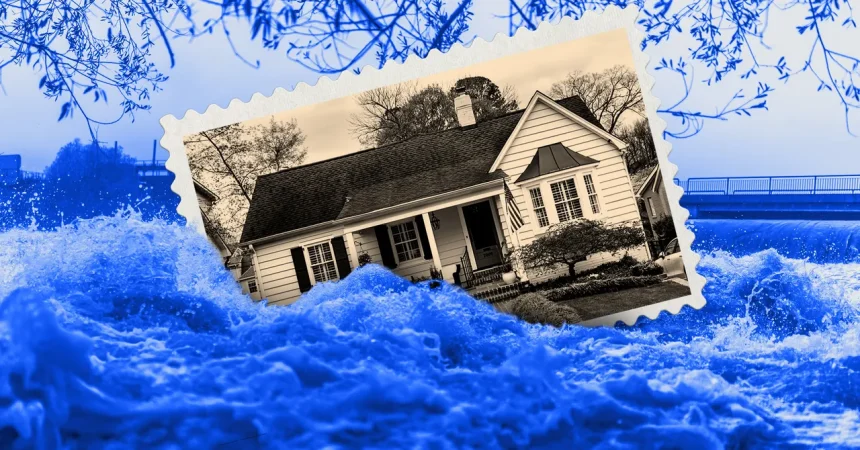
For 26-year-old Sierra Isley, the American Dream was always wrapped up in a picture she had seen a thousand times: a house in the suburbs, a green lawn, and a white picket fence. “The house in the suburbs is just what you’re taught growing up,” she said. “You know, that’s what you see on TV.” When she and her girlfriend, Jamie, decided to leave Philadelphia and start fresh in Asheville, North Carolina, buying their first home felt like stepping into that familiar story. They found a three-bedroom brick house with warm natural light pouring through the windows and a big, welcoming tree out front. With help from their parents, they scraped together a deposit, made an offer, and felt the exhilarating relief of having it accepted. This was the moment Sierra had been dreaming about: a place of their own, a foundation for the future, that “big dream that everybody has as a kid.” But at the closing table, the fantasy suddenly tangled. A huge lien had been placed on the property, and after talking it over with lawyers, they made the painful choice to break the contract. Instead of moving into the brick house, they rented an apartment and began unpacking boxes there, trying to make peace with a plan that had fallen apart.
-
In hindsight, that broken contract may have saved their lives. Barely a month after Sierra and Jamie moved in, the remnants of Hurricane Helene slammed into western North Carolina and turned Asheville into a disaster zone. Rivers swelled, roads washed out, and whole neighborhoods disappeared under water. The basement of their apartment flooded, and they spent anxious hours watching water creep in, wondering how much worse it would get. They were luckier than many of their neighbors, whose homes were destroyed by the storm. But the experience left a lasting mark. They had spent so much energy chasing the security of ownership, only to see people around them lose everything in a matter of hours. It was a brutal reminder that a house is not just a warm, safe place; it is also a fragile thing, sitting in a landscape that is no longer as predictable as it used to be. What was supposed to be a small detour on the road to the American Dream ended up becoming a crash course in how much has changed.
-
For generations, owning a home has been the cornerstone of that dream, not just because it gives you a place to raise a family but because it is a way to build wealth. The idea is simple: buy a house, watch its value grow over time, and then use that equity to send your kids to college, start a business, or fund your retirement. That story was always more precarious than it seemed, but it worked well enough for millions of people. Today, though, the ground beneath that old promise is shifting. Wildfires are incinerating whole communities. Floods are becoming more frequent and more destructive. And as disasters pile up, insurance companies are either raising premiums to dizzying heights or pulling out of high-risk areas altogether. A house in the wrong place is no longer just a home; it is a liability. According to a report called “Property Prices in Peril” from the climate risk firm First Street, climate hazards could knock nearly $1.5 trillion off the value of American homes by 2055. That is not a distant warning. It is a forecast of what is already beginning to happen.
-
The numbers matter, but the real story is about people. Think about a family that has poured every spare dollar into their home, trusting that it would be the safest investment they could ever make. Then a wildfire turns their neighborhood to ash, or a flood destroys the first floor, and their insurance company refuses to renew the policy. Or imagine a young couple like Sierra and Jamie, saving for years for a down payment, only to realize that the mortgage, taxes, and insurance on a home in a high-risk area would be more than they could afford. As climate risks become more visible, homebuyers are starting to ask harder questions. Is the house still worth the asking price if it might flood again? Will a bank even give a mortgage in a place where the next disaster is always looming? The value of homes in vulnerable places is not only threatened by physical damage; it is also being eroded by fear, uncertainty, and the slow withdrawal of the institutions that made homeownership possible in the first place. The dream is becoming a trap for people who cannot afford to leave.
-
Sociologist Rebecca Elliott has described this uncomfortable moment with striking clarity: for some people, “the American dream of homeownership may become a nightmare.” That phrase captures the cruel irony at the heart of the crisis. Homeownership was supposed to be a source of stability, the one reliable way for ordinary families to share in the country’s prosperity. Governments encouraged it, banks financed it, and parents passed down the wisdom of “buy before it’s too late.” But the same system that opened the door to homeownership also created a generation of people whose entire net worth sits in a structure that can be destroyed in minutes. As the climate changes, the risk is no longer evenly spread across the country. A home in the mountains may still feel safe, until the floodwaters come down from the slopes. A home in the suburbs may still seem quiet, until the smoke from a distant wildfire settles on the lawn. The damage is not just physical. It is emotional, financial, and generational.
-
Sierra Isley still hopes to buy a house one day. But after Helene, after the broken contract and the flooded basement, she sees the dream more clearly and less romantically than before. The white picket fence is no longer a symbol of simple safety; it is a reminder that the world around the fence is changing. She has learned that the best-laid plans can be overturned by a storm, that a piece of paper with a lien can be just as powerful as a flood, and that the American Dream has always been more fragile than the movies made it seem. Her story is not one of despair, though. It is a story about adapting, about realizing that home can mean something beyond ownership, and about finding a way to build a future in a world that refuses to stay still. The house in the suburbs is still lovely to imagine. But for millions of people, the real challenge now is figuring out how to hold on to the dream of a safe, stable home—without pretending that the ground beneath it is solid anymore.