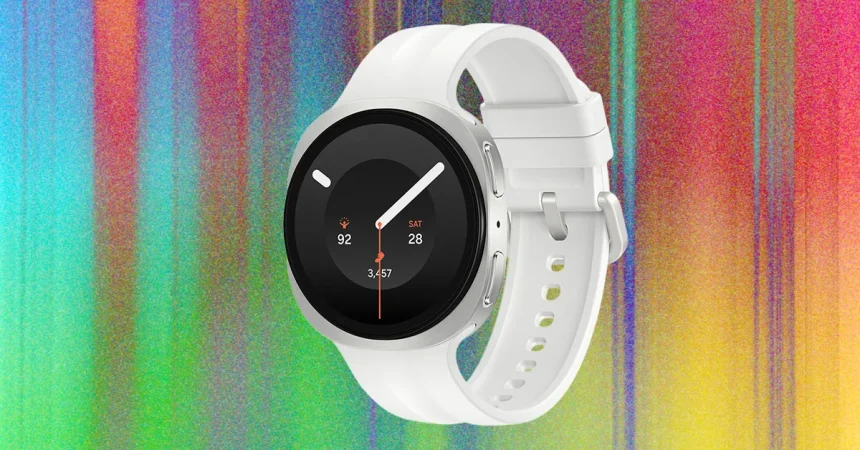
This past summer, Samsung launched two watches at once: the Galaxy Watch9 and the Galaxy Watch Ultra2. They are siblings, but they have very different personalities. The Ultra2 is the rugged, shock-resistant one, built for outdoor adventures, long trails, and people who regularly bash their wrists against the world without flinching. The Watch9 is the everyday option, the one you choose when you want a smartwatch that does a little bit of everything without looking like tactical gear. I spent two weeks wearing the 40mm model, and it left me with a strange mix of appreciation and calm. It’s solid. It’s comfortable. It doesn’t feel generic. There are a few size and color options, too. The smaller watch comes in cream and graphite, while the larger 44mm version comes in graphite and silver. The asking price starts at $80, which sounds like a bargain in a world where premium smartwatches can cost as much as a small laptop. All of that makes the Watch9 an easy thing to like. But for anyone who already owns last year’s Galaxy Watch8, the upgrade is modest. You get a faster processor, a slightly bigger battery, and an expanded suite of wellness metrics. Those are real improvements, but they are not the kind of changes that make you feel like your wrist just got a magical makeover. If you are still on an older Galaxy Watch, or if you are already living inside Samsung’s ecosystem and want a smartwatch that blends in beautifully, the Watch9 is the best choice you can make right now. It doesn’t reinvent the formula, but it polishes it until the rough edges disappear. That may sound like faint praise, but in the smartwatch world, polish is often exactly what separates a useful tool from an annoying toy.
The first thing you notice is that the Watch9 doesn’t upset the design language Samsung has been using for a while. It’s a squircle. Part square, part circle, with a curved face that sits nicely on most wrists and catches light in a way that feels modern without being aggressive. Under the hood, though, things have changed. The watch is now powered by Qualcomm’s Snapdragon Wear Elite platform, and it makes a noticeable difference. I’m not someone who obsesses over processors in a watch, but I instantly noticed how smooth everything felt. Swiping through menus doesn’t feel like wading through jelly. Launching apps is quick. Getting rid of a notification is a satisfying flick of the finger. There’s no awkward pause, no spinning wheel, no moment where you wonder if the watch has actually heard you. The software side has improved too. Wear OS 7 gives you more customizable widgets and a dashboard that feels alive. You can pin the things that matter to you and get live updates from compatible apps, which means you can see when your next meeting starts or whether it’s about to rain without opening a separate app. Then there’s raise-to-talk for Gemini. Samsung’s wearable has finally borrowed a trick from the Pixel Watch, which has had this feature for two recent generations. You lift your wrist up to your mouth, speak naturally, and the Gemini assistant answers. Honestly, the first few times I did it in public, I felt self-conscious. It’s strange to talk to your wrist like a secret service agent. But once you get used to it, it’s genuinely useful for setting timers, sending quick texts, or asking random questions while your hands are full. It’s the kind of feature that feels futuristic at first, then quietly becomes part of your routine.
Battery life is where the Watch9 starts to show some tension. On paper, the battery is bigger. The 40mm model now has a 390mAh battery, up from 325mAh in the previous generation. The 44mm version receives a bump too, going from 435mAh to 445mAh. That sounds like excellent news. You would expect the watch to last longer. But the Watch9 appears to have spent that extra capacity on powering all its expanded health features, not on extending its runtime. Samsung’s official estimate is still up to 30 hours. In my testing, with the Always-On Display enabled, I averaged closer to 25 hours. Let me put that in normal-people terms. The watch will comfortably get you through a full day, including overnight sleep tracking. You won’t have to keep it glued to a charger while you’re at work. But you will still need some kind of charging routine, probably every single day. I started putting mine on the charger while I got ready in the morning, and that became a habit. It’s not the end of the world, but it’s not the kind of battery freedom some other watches are moving toward. Charging is the more annoying part. A full recharge from near-empty took me around 100 minutes on average. The Pixel Watch 5, by contrast, charges fully in about 45 minutes. That difference matters in real life. You wake up, see your watch dead on the nightstand, and have to decide whether you can wait an hour and a half before leaving the house. That’s a small thing, but over weeks, it wears on you.
The health and wellness side of the Watch9 is the reason Samsung could justify some of those design and battery tradeoffs. The wearable now includes an expanded suite of metrics that go far beyond simple step counting and heart rate. I won’t pretend I understood every chart the watch displayed, but I did feel like my wrist had become a tiny coach. It tracked sleep and mapped it against how I felt when I woke up. It monitored my heart rate through workouts and quiet moments. It picked up signs of stress in ways that were sometimes uncomfortable, because yes, I was stressed, and yes, I knew I was stressed. The watch didn’t just dump numbers on me. It gave me context. It made suggestions, like breathing exercises when things got tense, or a nudge to get up and move around when I had been sitting too long. This is the kind of thing that sounds gimmicky until you actually experience it. The extra processing power and the larger battery capacity are hard at work behind those features, which is likely why the Watch9 didn’t deliver longer battery life. All of that processing burns energy. But for anyone who wants to be more in tune with their body, the tradeoff is attractive. It’s not a replacement for a professional medical device, obviously. But for daily wellness, it’s like having a quiet, curious friend on your wrist who is always paying attention to how you’re doing, even when you wish it wouldn’t.
At this point, the natural question is whether you should buy one. The answer depends on what is currently on your wrist. If you have a Galaxy Watch8, the Watch9 is a skip. It’s a nice refinement, but not a revolution. The new processor makes the interface feel snappier, and the additional health metrics are useful, but you won’t have a drastically different experience. The battery capacity may be bigger, but it doesn’t have to be, because the Watch8 already did most of these things well. If you are using an older Galaxy Watch, though, the Watch9 starts to make a lot of sense. It brings all of Samsung’s latest features together in a package that feels modern and efficient. And if you are already invested in Samsung’s ecosystem, with a Galaxy phone, earbuds, maybe a tablet, this is absolutely the best smartwatch you can buy right now. The integration is seamless. The starting price of $80 makes it even more approachable, especially when you consider how many premium features land on your wrist. For a first smartwatch, the Watch9 is also a strong candidate. The 40mm model in cream or graphite is small enough for average wrists and light enough that you will forget you are wearing it. The 44mm version gives you a bigger display and a bit more battery, with a slightly more robust presence. The choice comes down to your wrist size and your personal style. Either way, the Watch9 meets you where you are and tries not to get in your way.
After two weeks, I came away from the Galaxy Watch9 with a healthy amount of respect, but not a sense of urgency. It’s a good smartwatch. It does almost everything right. It’s responsive, it’s comfortable, it’s packed with health features, and it integrates beautifully with Samsung’s world. It catches up with some of its rivals on things like raise-to-talk and live widgets. It has a price that invites you to try it without worrying too much. But it also has weaknesses you will feel daily: battery life that hovers around 25 hours, charging times that need a good hour and a half, and a general sense that this is an iterative step, not a giant leap. If you’re on a Watch8, you’re fine. If you’re on anything older, or you’re new to the family, you will love it. It’s the kind of product you can recommend confidently, and the kind of product that doesn’t make you want to check reviews after the box arrives. You get a familiar design, improved performance, and a wellness suite that is always watching out for you. That’s a good deal, even if it isn’t the most exciting headline. I wouldn’t necessarily upgrade myself, but I would happily wear it—and I suspect a lot of people will feel the same way once they put it on.