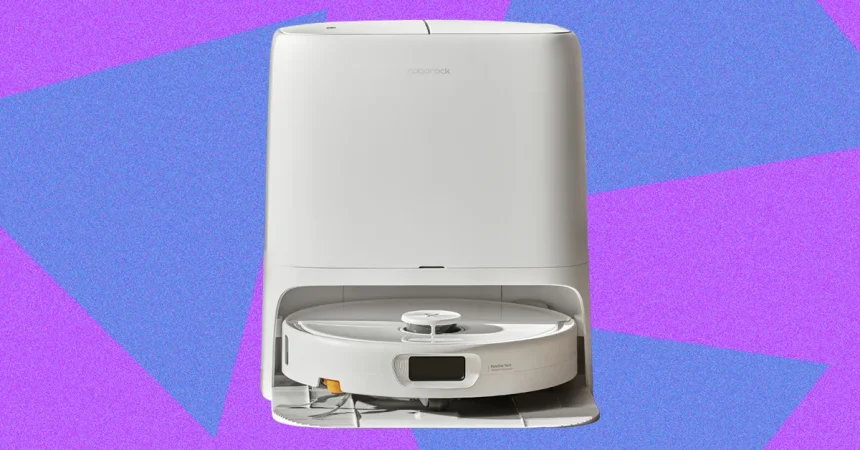
Roborock has been one of the biggest names in the robot vacuum game for a while now, and for good reason. Over the years, WIRED’s reviewers have become longtime fans of the Qrevo line, which has always offered a nice balance of performance and price. When people asked me what robot vacuum they should buy without spending a fortune, the Qrevo was usually the first thing out of my mouth. But here’s the thing: the Qrevo line was left without updates for years. It just kind of sat there while Roborock poured its energy into flashier, more experimental designs. The Saros Z70, for example, has an entire robot arm attached to it, capable of reaching down, grabbing a sock, and carrying it off. It’s a fascinating piece of engineering, but it’s also the kind of feature that feels more like a demo than something you’d actually rely on. These unique designs have a way to go before they’re truly useful in everyday homes. Meanwhile, the Qrevo family, which made Roborock so popular in the first place, was beginning to feel stale. This year, though, the Qrevo line finally got some love again. We saw a new model in the Qrevo Curv line back in January, and then, at the end of August, Roborock launched the Qrevo 2 Pro. I’ve been living with this new robot for the better part of two weeks, and I can already say it’s easily one of my favorite sub-$1,000 robot vacuums. It’s especially impressive when it comes to corner cleaning, and it has the power to rival my current budget pick, the Eufy Omni C28. That’s high praise. My only complaint is about little things, and I mean that literally. This robot is fantastic at spotting furniture and navigating large obstacles, but it won’t spot your cords or cat toys lying on the floor. I’ll get to that in a bit, but let’s start with what this thing is working with.
On paper, the Qrevo 2 Pro has a genuinely impressive set of specs. It comes with a 20,000 Pa digital motor, which is a monstrous amount of suction for a robot vacuum in this price range. To put it simply, it doesn’t just pick up surface crumbs; it digs into carpet fibers and pulls out dirt you didn’t even know was there. The mop pads spin at 200 RPM, which means they’re actively scrubbing your floors instead of just dragging a damp cloth across them. Roborock also included its FlexiArm mop, which promises to get into hard-to-reach spots. In my tests, it absolutely delivered. The mop pad swings out to the side, so it can clean along baseboards and into corners that a round robot would normally miss. The vacuum uses LiDAR navigation to map your home, and the mapping process is quick and accurate. The accompanying app is easy to use, with options to set schedules, choose particular rooms, adjust suction and water levels, and create no-go zones. You can even label rooms and tell the robot to clean just the kitchen or just the bedroom. It also supports Matter, so you can connect it to your smart home system and control it with voice commands if that’s your style. Then there’s the AI-powered SmartPlan feature, which is supposed to learn your cleaning habits and make smarter decisions over time. I haven’t noticed a huge difference between using SmartPlan and just running a regular cycle, but I’ve only had this robot for about two weeks. It’s possible that it needs more time to learn, and in theory it should improve as it gathers more data. Just don’t expect it to spot spills and stains and clean them automatically. This is not that kind of AI. It’s more of a scheduling assistant than a stain-detection wizard.
The real test, of course, is how well it cleans. I ran the Qrevo 2 Pro through a mix of bare floors, low-pile rugs, and carpeted bedrooms, and I was generally impressed. The suction is powerful, and it did a particularly good job with pet hair. My upstairs bedrooms had tufts of cat hair in the corners and along the edges of the carpet, and after the robot made its rounds, the carpet looked clean and fresh. My low-pile rug in the living room came out noticeably fluffier, which was a nice surprise. It handled my long hair as well, though not perfectly. The vacuum did pick it up, but when I looked around after the first run, I found a big ball of my hair curled up near the corner of my bed. Let me be fair: it had been several weeks since the upstairs had been properly vacuumed, and there was an embarrassing amount of hair everywhere. With regular cleaning, I doubt that would happen. My husband didn’t even notice the hairball, and he immediately complimented how nice the upstairs looked, which is not a common occurrence in our house. So in terms of everyday cleaning ability, the Qrevo 2 Pro is a solid performer. It handles crumbs, dust, tracked-in dirt, and pet hair without complaint, and it’s thorough enough that I don’t feel the need to break out a broom after it finishes. The app also shows you a map of where it cleaned, so if you want to send it back to a specific spot, you can. It’s a thoughtful feature that makes the robot feel less like a random dust-kicker and more like a deliberate, capable cleaner.
Now let’s talk about the one area where the Qrevo 2 Pro genuinely surprised me: edges and corners. This has always been the weak spot for round robot vacuums, because a circle can’t physically fit into a 90-degree corner. But the Qrevo 2 Pro attacks this problem with two clever tools. The first is a reversible side brush that spins in a way that pulls debris out of corners and directs it into the suction path. The second is the FlexiArm mop, which swings out to the side so the mop pad can wipe along baseboards and into tight corner spots. In practice, these two systems work together beautifully. I ran my standard Cheerio test, which involves putting Cheerios in awkward places to see how well a robot can clean them up. One of my most challenging tests is a Cheerio placed right in the corner next to my fridge. The Qrevo 2 Pro managed to grab two out of three Cheerios in that corner, which might sound like a failure, but honestly, it’s better than any other robot vacuum I’ve tested in that exact spot. It still left one Cheerio behind, and I’ve yet to meet a robot vacuum that can get all three, but the fact that it gets two is genuinely impressive. The robot is also only 3.8 inches tall, which means it can slip under many kitchen counter toe kicks. You know that dark little recess under the kitchen cabinets where crumbs and dust collect and you can never reach them? The Qrevo 2 Pro slides right under there and pulls everything out. It also cleans right up to the edge of walls, so you don’t get that annoying line of dust along the perimeter of your room. If you’ve ever gotten down on your hands and knees to wipe out that little space, you’ll understand why this feature alone makes it worth considering.
The biggest caveat, as I mentioned earlier, is small objects. The Qrevo 2 Pro’s obstacle avoidance is excellent for big things. It mapped my home confidently and navigated around furniture legs, chair legs, shoes, and even food bowls without getting stuck. But it will absolutely roll over a phone charging cable, a hair tie, or a cat toy if one of those is sitting in its path. I lost a cat toy to this robot once, and I’m pretty sure it wasn’t the first time. The problem isn’t that the robot is stupid; it’s that small, flat objects are genuinely hard for LiDAR and camera systems to distinguish from the floor. A cable lying on a dark rug might as well be invisible. This means you have to do a little bit of pre-cleaning before you let it run. A quick sweep of the floor to pick up loose cords and toys will save you a headache later. If you have kids or pets, this is going to be a fact of life. It’s also important to set your expectations for the AI features. SmartPlan is not a stain-detection system. It won’t notice a splash of juice on your floor and decide to remop that spot. It’s more of a smart scheduling assistant that learns which rooms need attention and when. That’s useful, but it’s not magic. So while the Qrevo 2 Pro is a great vacuum, it still needs a human to keep an eye on the floor before it runs. That’s not a dealbreaker, but it’s something to know going in.
At the end of the day, the Roborock Qrevo 2 Pro is an easy recommendation for anyone shopping in the sub-$1,000 robot vacuum category. It’s been a long time since the Qrevo line got this much attention, and the wait was worth it. The corner cleaning is genuinely class-leading, the suction is powerful enough to handle pet hair and everyday grime, and the app makes it easy to customize exactly how and when the robot cleans. The limitations are real but not fatal. You’ll need to pick up small objects before you run it, and if you have long hair, you should check the brush every once in a while. But those are minor trade-offs for a vacuum that costs this much and performs this well. It also gives me a little pause about my previous budget pick, the Eufy Omni C28. The Eufy is still a great choice, but the Qrevo 2 Pro’s edge and corner performance gives it a clear advantage in homes with lots of tight spaces and messy corners. I’m not ready to say the Eufy is obsolete, but I’m definitely rethinking the rankings. For now, the Qrevo 2 Pro is one of the best sub-$1,000 robot vacuums I’ve tested, and it’s the model I’d suggest to most people who want a robot vacuum that actually cleans the places other robot vacuums ignore. Just remember to pick up your cords and cat toys before you press the start button. Do that, and this little robot will make your floors look great.