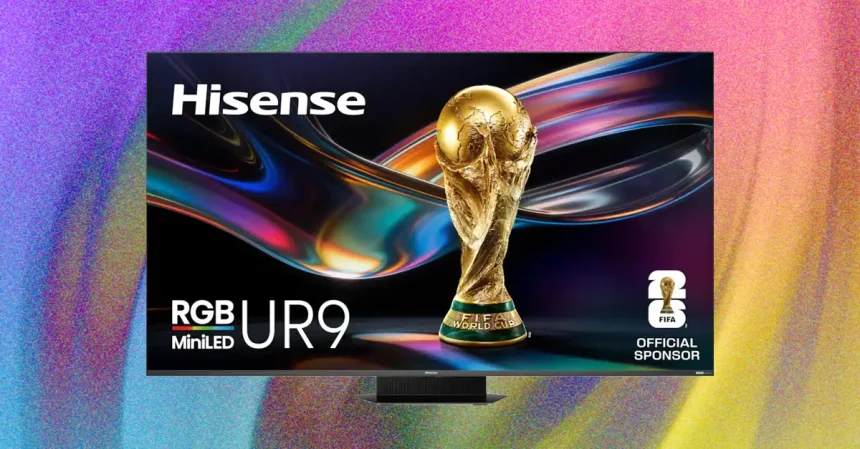
The world of television technology is constantly shifting, often leaving consumers feeling like they need a degree in engineering just to pick out a living room centerpiece. Lately, the industry has been buzzing about RGB Mini-LED technology, spearheaded by the release of the Hisense UR9, alongside new offerings from Sony and TCL. If you feel a bit of “tech fatigue” from keeping up with the endless parade of OLED, QLED, and specialized art displays, you aren’t alone. The good news is that you don’t need to be an expert in the physics of light to appreciate what this shift means for your viewing experience. It’s less about memorizing acronyms and more about the visceral difference you see the moment you turn on a movie or boot up a game.
To understand the leap forward, look at how TVs used to work: traditional LED and QLED sets rely on a backlighting system that pushes white or blue light through an LCD panel. It’s effective, but it has its limitations when it comes to precision. RGB Mini-LED changes the game by emitting red, green, and blue light directly, which offers far crisper color accuracy and much tighter control over contrast and brightness across the screen. While manufacturers like LG and Samsung are pushing “Micro RGB”—a similar, slightly more refined technology with even smaller diodes—the practical result is the same: images that pop with a realism we haven’t seen in this price bracket until now.
For those keeping an eye on the budget-conscious sector of the market, the Hisense UR9 is a fascinating case study. While it is technically the brand’s flagship model, it is priced at $2,000 for the 65-inch version, which stands in stark contrast to the premium, luxury price tags carried by Sony or top-tier Samsung sets. I have spent years testing Hisense’s entry-level lineup, often finding them to share the same limitations as bargain-bin units from Roku or Amazon—frequently struggling with dull contrast and lackluster brightness. The UR9, however, fundamentally breaks that mold, proving that Hisense is ready to play with the big dogs without demanding a premium price for the privilege.
What really sets the UR9 apart is its dual identity as a high-end cinema display and a genuine gaming powerhouse. For the gamers, this set is something of a beast. It features a unique 180-Hz refresh rate that can jump to a blistering 330-Hz variable refresh rate when connected to a high-end PC via the side-mounted DisplayPort. It is rare to find this level of performance in a TV that isn’t specifically marketed as a “gaming monitor.” While it might not quite reach the absolute pinnacle of color science found in the ultra-expensive Micro RGB models from industry giants, it provides a level of immersion that feels significantly more expensive than the price tag would suggest.
The physical design and out-of-the-box experience of the UR9 suggest a company that is finally prioritizing the user journey as much as the display panel. The unit is stunningly thin, measuring in at just 1.8 inches, and it sports an all-black aesthetic that feels modern and minimalist. Assembly is also a major highlight; it is refreshingly straightforward compared to the famously fiddly process involved with competitors like the Sony Bravia 7 Mark II. While I did run into a minor snafu with the Google TV setup—specifically a stubborn QR code bug that forced me to manually type in my credentials—once it was up and running, the experience was smooth and responsive.
Ultimately, the UR9 settles into a sweet spot for the modern consumer who wants top-tier performance without the “luxury tax.” With the inclusion of Wi-Fi 6E, it ensures that your streaming experiences will be as fast and lag-free as the screen’s technical specs promise. While it may not be the single most advanced piece of hardware on the planet, it represents a perfect balance for the serious home theater enthusiast or competitive gamer who refuses to overspend. In an era where TV technology can feel needlessly complicated, the UR9 makes the choice simple by focusing on what actually matters: a brighter, more vibrant, and undeniably faster viewing experience.