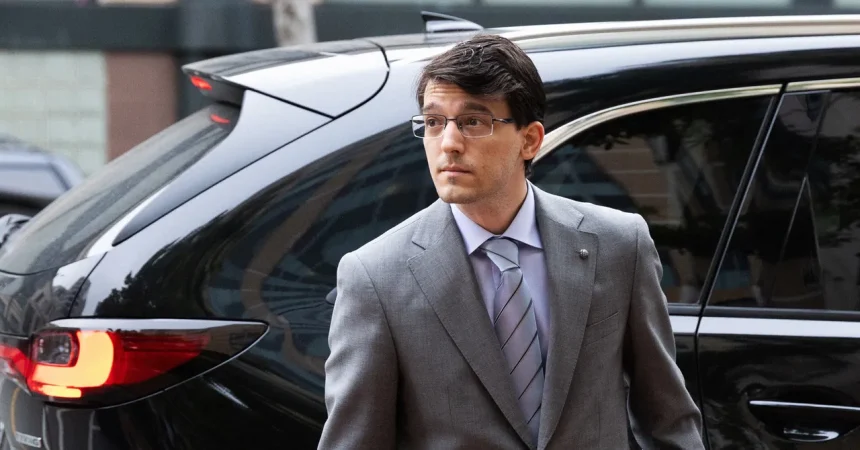
After nearly a decade at the forefront of the artificial intelligence revolution, Joshua Achiam, OpenAI’s chief futurist, is stepping down at the end of the month. His departure marks the end of a remarkable nine-year tenure that saw him grow from an intern into one of the most influential voices within the organization. While his exit has naturally sparked speculation, Achiam has been clear that this is a long-contemplated personal transition rather than a response to any specific internal friction. In a heartfelt farewell note shared with colleagues, he expressed a profound belief that the mission of ensuring AI benefits all of humanity is now so widely understood that it can be championed effectively from outside the walls of a lab. He leaves with a forward-looking vision of a world defined by peace and unprecedented scientific possibility, promising to remain a partner in that quest even after he closes this chapter of his career.
Achiam’s role was uniquely complex, sitting squarely at the intersection of high-level policy, technical safety, and long-term societal strategy. For years, he worked closely with leadership to navigate the precarious balance between rapid technological innovation and the ethical responsibilities of building Artificial General Intelligence (AGI). His mandate involved not just studying the potential harms of powerful models, but actively advocating for a regulatory landscape that aligns technological progress with human values. As OpenAI shifted from an idealistic research lab to a global tech powerhouse, Achiam served as a sort of ideological compass. While the company has not yet named a direct successor, his departure reflects a period of significant structural evolution as OpenAI seeks to bridge the gap between deep-tech research and governmental policy, ensuring that the rules of the future are written in tandem with the code.
The broader context of Achiam’s exit involves significant shifts in how OpenAI manages safety and alignment. Over the past year, the company has increasingly integrated its research and policy departments, bringing researchers like Boaz Barak and Noam Brown directly into the messy, high-stakes world of legislative standards and public policy. This transition is being buoyed by new hires, such as former White House adviser Dean Ball, who joins as the new head of strategic futures. The goal is clear: to move away from siloed safety efforts and toward a more cohesive, cross-functional approach to governing AI. As Achiam prepares for his departure, he passes the torch to a new generation of strategists who are tasked with ensuring that the guardrails of innovation remain as robust as the engines powering them.
It is impossible to discuss this transition without acknowledging the trend of high-profile departures that have defined OpenAI’s recent history. Achiam joins a list of prominent figures—such as Jan Leike, Miles Brundage, and others—who have moved on to new ventures, whether by joining rival labs like Anthropic or by launching nonprofits dedicated to independent safety oversight. These exits are part of a larger, natural evolution for a company preparing for a new phase of public life. While outsiders often view these departures through the lens of organizational turmoil, it is also a sign of the maturing AI landscape. As the industry grows, the talent pool is diversifying, with experts branching out to tackle safety and ethical challenges from various institutional vantage points, effectively creating a broader safety ecosystem.
Achiam’s legacy will undoubtedly be remembered for his unwavering, and at times pugnacious, commitment to safety. He joined OpenAI in 2017 as an intern and quickly earned a reputation as a fierce defender of the company’s original nonprofit ethos. Among his colleagues, he was known for being both a brilliant scientist and a polarizing figure who wasn’t afraid to challenge those he believed were compromising safety for the sake of speed. This uncompromising stance defined his internal persona; he viewed his role as a necessary guardian, sometimes pushing back against the broader AI safety community when he felt their concerns were misplaced or overly alarmist. He operated not just as a researcher, but as a personality who viewed the gravity of AGI development as a cause worthy of intense personal friction.
Perhaps the best anecdote to summarize his time at OpenAI is the story that became legendary within the halls of the company: his confrontation with Elon Musk. During Musk’s departure in 2018, Achiam famously interrupted the billionaire’s exit speech to challenge his approach to AGI, citing concerns that Tesla’s roadmap might prioritize speed over safety. Musk’s salty retort—calling Achiam a “jackass”—became a badge of honor among his peers. Colleagues even gifted him a bronze statue of a donkey’s rear end, inscribed, “Never stop being a jackass for safety.” It is a humorous but telling testament to a man who truly cared about the societal stakes of his work. As he departs, he leaves behind not just policies and research papers, but the memory of someone who was willing to be difficult, persistent, and “a jackass” if it meant keeping the world’s most powerful technology tethered to the greater good.