For the best part of a decade, a creeping, insidious sickness has been spreading through the dark corners of the internet, targeting women with a cruelty that is hard to fathom. It is the world of abusive deepfake pornography, where artificial intelligence is weaponized to strip women of their autonomy, dignity, and safety. Across countless websites, the faces of real women—mothers, daughters, colleagues, and icons—are seamlessly grafted onto the bodies of actors in explicit sexual films, creating horrifying, lifelike videos that suggest they are willingly engaging in the most intimate acts imaginable. These aren’t just harmless pranks; they are psychological assaults, engineered to humiliate, disgrace, and destroy. For years, this digital plague has festered, with thousands of videos depicting high-profile celebrities, politicians, and public figures, while the victims were left feeling powerless, forced to watch their own images be twisted into nightmares that were viewed, shared, and archived by millions. The despair of these women, many of whom have spoken out with trembling voices about the violation of their image, has often been met with a shrug from a legal system that was too slow, too fragmented, and too ill-equipped to fight back. But on a recent Monday, a thunderbolt of justice finally struck, offering a glimmer of hope in a fight that has felt utterly hopeless. In what is likely the largest takedown of explicit deepfake websites to date, officials in Manhattan have seized more than a dozen domains, signaling a powerful shift in the war against this horrific form of digital abuse.
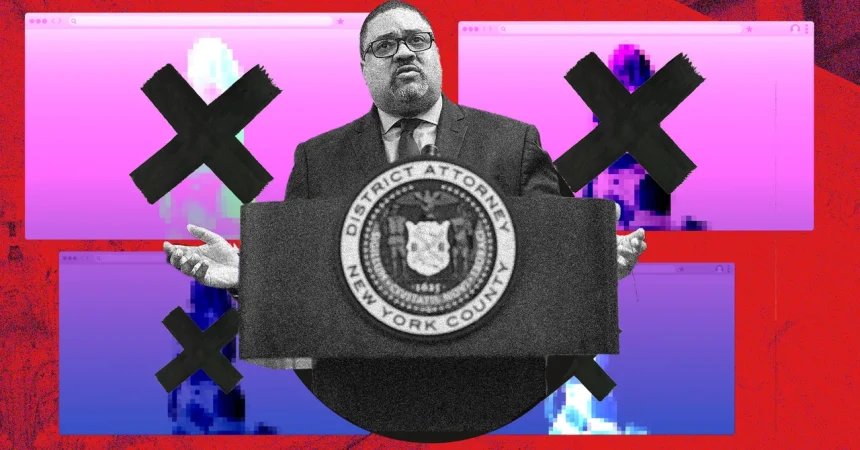
The announcement came from the Manhattan District Attorney’s Office, a body that has now taken a monumental stand. They confirmed the seizure of twelve domains that had been brazenly and illegally used to “unlawfully” share, publish, and sell celebrity deepfake videos. The scale of the violation is staggering—officials estimate that around 1,200 individuals, overwhelmingly women, were depicted in these nonconsensual sexual images and videos. These were not merely random faces scraped from the internet; they included social media influencers who built their lives on their public presence, actors whose careers depend on their craft, activists fighting for justice, athletes who inspire millions, musicians shaping culture, and politicians serving their communities. The sheer breadth of victimization is a terrifying reminder that no woman is safe from this algorithmic violence. As District Attorney Alvin Bragg stated, the violations are horrific, following victims into their careers and personal lives, taking an immense toll on their emotional and mental well-being. His words carry the weight of the endless sleepless nights, the anxiety attacks, and the crushing shame that victims have endured. Bragg urged potential victims to come forward, promising that his office’s cybercrime bureau is ready to listen and act. While the investigation into the unknown masterminds behind these websites and the individuals who uploaded the damaging videos is still ongoing, the seizure itself is a resounding statement—a declaration that these digital predators will no longer operate with impunity.
To truly understand the magnitude of this event, one must appreciate the architecture of the horror itself. These twelve websites were not obscure, hidden corners of the dark web; they were easily accessible domains, likely viewed millions of times by visitors hungry for this exploitative content. Many of the sites used lurid, promising names, flaunting phrases like “sex celebrity” or guaranteeing “real deepfakes” to lure in users. They hosted false videos of some of the most famous women on the planet, with one site even casually stating that “various actresses’ faces are used for deepfakes.” The videos were often several minutes long, seamlessly swapping the faces of celebrities and public figures into pre-existing adult films, creating a grotesque Frankenstein of digital fiction that felt terrifyingly real. Archived versions of these sites reveal the depressing extent of the damage—some of these fabricated videos had been watched tens of thousands of times, and one site claimed to have been operational since 2018, meaning it had been poisoning the digital ecosystem for years. The longevity and popularity of these sites paint a grim picture of a culture that normalizes the violation of women’s boundaries. For victims, seeing their own faces splashed across a website with titles like “sex celebrity” is a gut-wrenching betrayal of their identity, a feeling of being completely stripped of agency. They are not just watching a video; they are watching a version of themselves being publicly raped and shamed, while the world clicks and scrolls by, unaware or indifferent to the real person behind the pixels.
The toxic industry that produced these websites has evolved rapidly since the technology first emerged at the end of 2017. Back then, the deepfakes were crude, easily detectable failures, but the trajectory of artificial intelligence has been terrifyingly fast. Today, a vast, dark ecosystem of websites, apps, and bots exists, specifically engineered to “undress” photos of women or create graphic sexual videos featuring them. This technology is no longer a complex feat of computer science; it has been commodified into user-friendly tools that can be operated by anyone, generating increasingly realistic content in a matter of seconds. While the curtain of celebrity culture often hides the silent suffering of the famous, the reality is that this tool is wielded far more savagely against non-famous women and girls. In private social media groups, on Discord channels, and in encrypted messaging apps, ordinary women—teachers, nurses, students, and neighbors—are targeted by ex-partners, stalkers, classmates, and strangers. A simple selfie from social media is all that is needed to create a fabricated sexual content that can be circulated to destroy a reputation, threaten a livelihood, or simply inflict psychological terror. The constant dread of being targeted, the fear of checking your phone, and the helplessness of knowing the content will never truly be erased—this is the daily reality for millions of women who are not celebrities. While famous names have used their platforms to speak out about the harms, the struggle to get content removed remains a frantic, exhausting game of whack-a-mole. The law has been glacially slow to catch up, but the recent seizure indicates that a shift is underway, supported by new federal mechanisms like the “Take It Down Act,” which increasingly empowers law enforcement to remove images and seize the websites that host them.
The mechanics of this particular takedown are as compelling as the emotional victory they represent. The Manhattan District Attorney’s Office, working under New York’s criminal procedure laws, executed a seizure warrant issued by a New York State Supreme Court. While the names of the websites have not been officially released, independent observers, including tech journalists at WIRED, witnessed the subtle but powerful transformation of the sites’ homepages late last week. Where once there were galleries of violating images, there now stands a simple, official notice: “THIS DOMAIN HAS BEEN SEIZED.” This visual confirmation of law enforcement’s reach is a chilling warning to other operators in the industry. Experts have been quick to analyze the significance of the move. Leonie Oehmig, a researcher at the Institute for Strategic Dialogue (ISD) who has deeply studied the deepfake creation ecosystem, hailed the takedowns as a “significant win in the fight against synthetic nonconsensual intimate imagery.” She noted that the enforcement of state laws demonstrates that this harmful content can be tackled, adding that the seized sites appear to be completely inaccessible, even when using VPNs to try to bypass the block from other locations. Her observation is crucial—it suggests that coordinated, meaningful enforcement is achievable, even in a landscape where regulation remains fragmented across jurisdictions. This legal milestone provides a roadmap for other states and countries, proving that despite the complex, borderless nature of the internet, authorities can and will reach across the virtual divide to pull the plug on these operations.
Ultimately, this seizure is more than just a legal victory; it is a salvaging of human dignity in a digital era that often seems bereft of it. The takedown represents a tiny speck of relief for the women who have lived under the shadow of these viral, fabricated nightmares. It sends a message that their pain has been seen, heard, and validated by the halls of justice. However, the war is far from over. The creators behind these sites remain in the shadows, likely preparing a new domain or a new server in a different corner of the globe. The psychological scars of having your face welded to explicit content do not vanish simply because a server goes dark; the videos are often mirrored, archived, and shared across other platforms, a perpetual reminder of the violation. Yet, the action by the Manhattan DA’s office, coupled with the ongoing investigations into those who uploaded the videos, signals a critical turning point. The plea from District Attorney Bragg for more victims to come forward acknowledges that only through collective testimony can the full scope of this network be dismantled. The fight for digital safety is not a legal one alone; it is a cultural one, requiring us to confront the misogyny that fuels the demand for such content. But for this brief moment, the seizure of those twelve domains stands as a beacon of accountability. It proves that behind the algorithms and the screens, there are real women with real lives, and that the long arm of the law is finally stretching out to protect them, one domain at a time. It is a small, hard-won step toward restoring the agency and peace of mind that this toxic technology has so ruthlessly stolen.