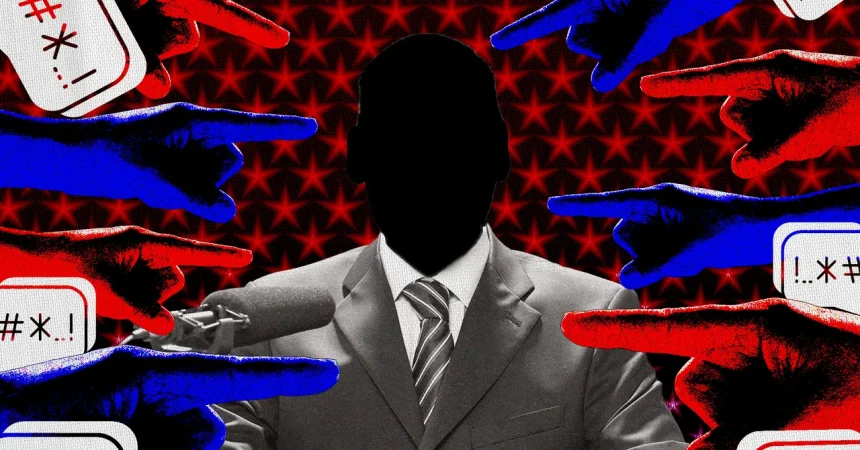
A little over a year ago, Meta made a bold, controversial decision to pull back the curtain on its content moderation. Driven by the belief that their previous approach had become too heavy-handed—effectively silencing legitimate political discourse and frustrating everyday users—the company chose to loosen its grip. Joel Kaplan, Meta’s chief global affairs officer, framed the shift as a necessary course correction, promising a more open environment where the company wouldn’t be the final arbiter of what was “too trivial” or “too controversial” to be discussed online. However, as the dust settles, a new, sobering report from the Center for Countering Digital Hate (CCDH) suggests that this retreat from oversight may have come at a far greater cost than the company anticipated, turning the digital town square into a much more hostile environment.
To understand the real-world fallout of these policy changes, researchers at the CCDH conducted a massive data analysis, sifting through roughly 8 million Facebook comments left on the posts of 100 high-profile members of the U.S. House of Representatives. By selecting 50 Democrats and 50 Republicans with the largest followings, they created a representative sample of how political figures—and by extension, their constituents—interact on the platform. The methodology was straightforward: using an AI system trained to flag content violating Meta’s own standards for violence, hate speech, and harassment, they compared the six months leading up to the policy shift with the six months that followed. The results were not just statistically significant; they were alarming.
The sheer scale of the increase in toxicity is difficult to ignore. In the months following Meta’s policy overhaul, abusive and racist comments directed at lawmakers of both parties tripled, painting a bleak picture of the state of political discourse on the platform. Even more jarringly, categories of content that Meta officially prohibits—specifically violent threats and hate speech—quadrupled in frequency. We aren’t just talking about heated arguments or uncivil disagreement; the study highlights direct, unchecked vitriol, including gendered and racist abuse aimed at individuals like Representatives Jasmine Crockett and Byron Donalds, as well as explicit, felony-level threats of violence against former President Donald Trump.
The data reveals a stark correlation between Meta’s philosophical pivot toward “free speech” and a tangible collapse in platform safety. Meta’s own internal transparency reports from 2025 confirm that the company cut its proactive content moderation enforcement by nearly half during this period. In essence, as the company stepped back from policing its own house, the abuse grew to fill the void. Meta has pushed back against these findings, noting that their own reports don’t reflect an overall increase in hateful conduct and stating they couldn’t fully evaluate the CCDH’s methods without more access to the full dataset. Yet, interestingly, shortly after the researchers flagged specific abusive examples, many of those posts mysteriously vanished from the platform, suggesting that the content was indeed actionable under their existing rules—it just hadn’t been caught.
Legislators are beginning to weigh in, with some expressing deep frustration that Meta’s “free speech” experiment has instead created an enabling environment for harassment. Senator John Curtis of Utah, a member of the Committee on Commerce, Science, and Transportation, pointed out the obvious connection: when a company stops looking for violence and hate, it shouldn’t be a surprise when those things stop being hidden. The criticism here isn’t necessarily that Meta is intentionally promoting this content, but rather that by intentionally reducing its oversight, they have fundamentally degraded the quality of public life on their platform. The “frustration” they hoped to eliminate for users discussing politics has seemingly been replaced by a much darker, more dangerous set of consequences.
Ultimately, this divide highlights a classic tension in the tech world: the battle between the idealistic vision of an unmoderated digital frontier and the messy, often toxic reality of human behavior. While Meta argues they were protecting the right to debate, critics point out that extremist, inflammatory, and abusive content is paradoxically highly “engaging” for algorithms, keeping users logged on for longer. By retreating from its responsibility to moderate, Meta may have inadvertently incentivized the very toxicity that ruins the experience for everyone else. As we move further into this era of “relaxed” moderation, the question isn’t just whether Meta can control its platform, but whether they are truly willing to prioritize safety over the addictive, high-engagement nature of rage.