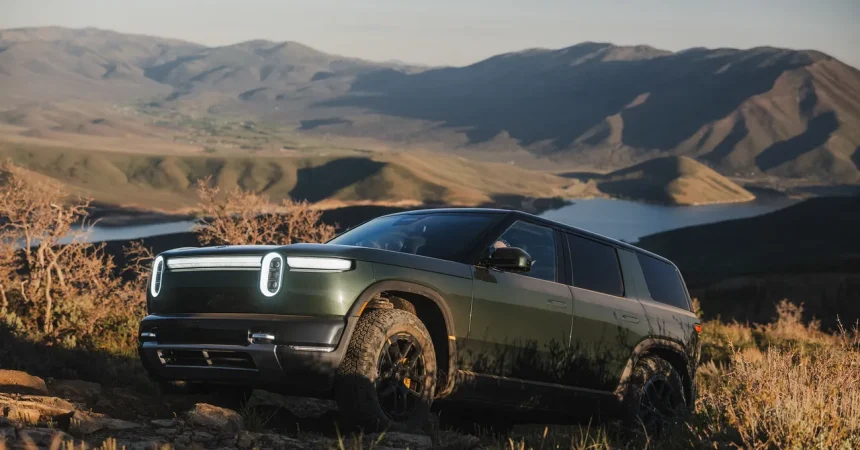
Rivian’s upcoming R2 lineup is shaping up to be a fascinating, albeit slightly complicated, bridge between the rugged, premium image of the brand and the practical needs of the mass market. Starting in late 2026, the company will begin rolling out various iterations, beginning with the $53,990 Premium model—a dual-motor beast boasting 450 horsepower and an impressive 330-mile range. By 2027, the options expand to include both a rear-wheel-drive Standard Long Range version and a base-level Standard model. The latter is arguably the crown jewel of the strategy; with a price tag of $45,000, it positions itself aggressively against established heavyweights like the Volvo EX40 and Tesla Model Y, even with a reduced range of around 275 miles. Across the board, Rivian is committing to the North American Charging Standard (NACS), ensuring that every R2 owner gets seamless access to Tesla’s widespread Supercharger network, with a quick 29-minute charge time from 10 to 80 percent.
However, beneath the shiny marketing veneer lies a strategic hurdle that potential early adopters need to consider carefully. There is a tangible difference in hardware capabilities between the rollout phases. Initially, the R2 will ship with the existing Gen 2 technology, meaning these early vehicles will lack the cutting-edge “RAP1” 5-nanometer chip that Rivian is rolling out for its advanced, Gen 3 autonomy features. Furthermore, those first models will arrive without lidar—a sacrifice in sensing technology that creates a clear gap between early units and those coming just a few months later. While Rivian emphasizes that the Gen 2 platform is still capable of “point-to-point” driving, it is essentially a Level 2+ system, whereas the later versions will be designed for Level 3 autonomy. This creates a classic tech-buyer’s dilemma: do you jump in early, or wait for the “pro” hardware that packs far more computing power?
It is no secret that Rivian is chasing ambitious sales targets, and their messaging is clearly geared toward getting consumers to commit as soon as possible. Yet, the leap in hardware quality scheduled for just a few months after the initial launch turns the R2 into a “wait-and-see” proposition for anyone who prioritizes future-proof technology. Rivian’s senior vice president of electrical hardware has gone on the record calling the upcoming Gen 3 setup the most powerful sensor and compute suite in the North American consumer market. When a company makes a claim that bold about a future iteration, it naturally makes the outgoing tech feel like a shortcut. For the average buyer, this is a nudge toward patience, even if the brand is working overtime to convince us that the current package is more than enough for everyday thrills.
Beyond the internal debate over processors and lidar, the R2 is undeniably impressive when you look at how it stacks up against its older, pricier sibling, the R1S. In a surprising turn of events, the R2 Performance model manages to outpace the base R1S in both raw power and range, all while carrying a much friendlier price tag. While the R1S offers the undeniable utility of a three-row cabin and a sophisticated air suspension system that can elevate the vehicle to nearly 15 inches of ground clearance, the R2 holds its own at 9.6 inches and offers a much more compelling value proposition. It manages to feel like a complete, standalone product rather than just a budget-conscious, shrunken-down replica of the larger SUV.
During real-world testing in the mountains and on the highways surrounding Salt Lake City, the R2 proved that Rivian hasn’t lost its touch. The vehicle carries the “magic dust” that made the R1 a critical darling, retaining a distinct design language that feels both functional and refined. Despite being shorter—measuring in at about 185.9 inches—it avoids the common pitfall of feeling cramped or cheap. It feels substantial, capable, and quintessentially “Rivian” from the second you step inside. The handling on mountain passes and the stability on open highways suggest that the engineers focused on keeping the driving dynamics tight and responsive, successfully translating the R1’s premium feel into this slightly more compact, accessible footprint.
Ultimately, the R2 is a testament to Rivian’s ability to evolve. While the staggered rollout of technology—specifically the jump from Gen 2 to Gen 3 hardware—might frustrate the “early adopter” crowd, the core vehicle itself is a triumph of design and engineering. Rivian has created a five-seat SUV that balances brand identity with market-ready price points in a way that should make its competitors nervous. If you can handle the internal struggle of whether to buy early or wait for the tech upgrade, you are likely looking at one of the most significant EVs of the next few years. The R2 proves that you don’t necessarily need a seven-seater to capture the essence of a premium brand; you just need to pack the right amount of capability into an honest, well-crafted frame.