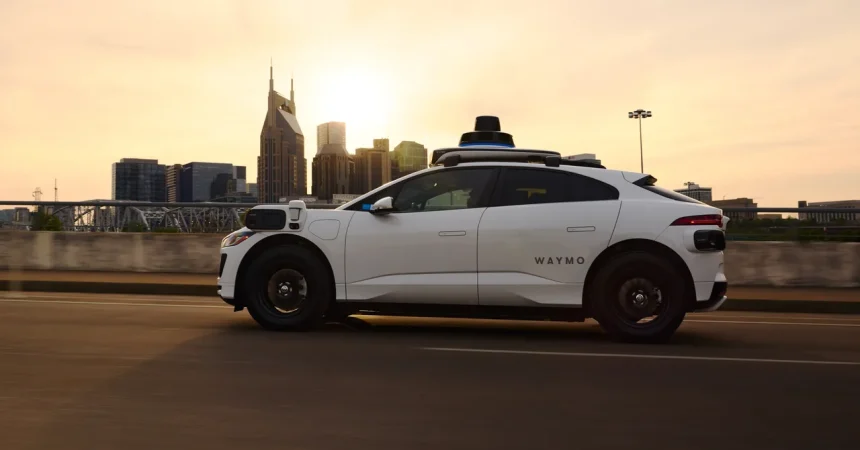
1. The Dawn of a Driverless Ride in Nashville
On a crisp autumn morning in Nashville, Tennessee, a new kind of ride-hailing experience is quietly rolling out. Lyft riders opening the app in Music City might now see a curious option: a sleek, white Jaguar I-PACE with no one behind the wheel. This is the result of a groundbreaking partnership between Lyft and Waymo, the self-driving technology company under Alphabet. The integration marks a significant milestone: for the first time, Lyft is offering fully autonomous rides through its platform in a major U.S. city, following Waymo’s earlier launch in its own app back in April. For riders, it’s a taste of the future—a vehicle that glides through the streets of East Nashville, downtown, and the airport corridor with eerie confidence, its roof-mounted sensors blinking like a calm, mechanical eye. But beneath the surface of this seamless convenience lies a profound transformation of the ride-hailing economy, one that touches the lives of thousands of drivers, the strategies of two tech giants, and the very definition of human work. This isn’t just a new feature; it’s the beginning of a delicate dance between silicon and soul, algorithm and instinct, progress and preservation.
2. A Strategic Alliance in the Race for Autonomy
The partnership itself is a fascinating piece of corporate chess. Lyft, long seen as the scrappy number two to Uber, is not building its own self-driving cars. Instead, it’s renting the technology from Waymo, the undisputed leader in the field, which already operates in fourteen U.S. metros, from Phoenix to San Francisco, and now Nashville. For Lyft, this is a pragmatic hedge: rather than spending billions on R&D with no guarantee of success, they’re leveraging Waymo’s proven hardware and software to offer autonomous rides today, while still maintaining the largest network of human drivers in most cities. For Waymo, the deal opens up a massive distribution channel. Lyft has millions of loyal users who might never download a separate app; now, they’ll encounter robotaxis organically in their daily commute. It’s a win-win on paper, but it also signals a larger industry shift. The old model of gig work—millions of people driving their own cars for pennies per mile—is being challenged by a new economics of scale, where a fleet of self-driving vehicles can operate 24/7 without fatigue, surges, or the need for tips. In Nashville, the rollout is deliberately incremental, confined to a specific service area with careful mapping. But every city that follows brings us closer to a tipping point, where the question is not if human drivers will be replaced, but how they will be repurposed.
3. The Heart of the Matter: What Happens to the Drivers?
The most urgent anxiety in this transition is, of course, the human cost. Lyft and Uber have long insisted that they are not replacing people—they are augmenting them. In Nashville, when the announcement was made, the reaction among the local driver community was mixed. Some, like Marcus, a veteran driver who has completed over 40,000 rides, voiced a weary skepticism. “They told us self-driving would never work here because of the hills and the honking culture,” he said, shaking his head over coffee. “Now look—they’re everywhere.” Others worry about the immediate future. With ride volumes dropping in the short term for humans as the Waymo cars soak up the easiest airport trips, drivers are seeing early signs of the change. But Lyft executives, like Jeremy Bird, the company’s executive vice president of global growth, are quick to strike a reassuring tone. “We’ve got to make sure we’re honest, we’re open,” Bird explained in a recent interview. “We have conversations with drivers and bring them into the journey with proactive communication. We’ve done AV-themed driver forums; we’ve done driver appreciation events to make sure we’re having a conversation. But we’re embracing the transformation in the future of AVs.” Bird’s words reflect a carefully calibrated strategy: don’t deny the change, but frame it as a collaborative evolution rather than a hostile takeover. The reality, however, is more complex. Drivers are being offered retraining programs, some of which lead to roles like the ones emerging in Waymo’s new depot.
4. From Behind the Wheel to Beyond It: Jonathan Baines’s Story
Perhaps the most humanizing element of this transition is the story of Jonathan Baines. In 2016, Baines was a struggling singer-songwriter in Nashville, trying to make ends meet between gigs. He signed up to drive for Lyft, finding that the flexible hours allowed him to write songs in the morning and drive at night. “I liked the extra cash,” he recalled, “but I also kept the people I drove close to my heart. Tourists, locals—they were all part of an unfolding story of my city. It kind of felt like you were hanging out with your friends more than anything.” Baines drove for over six years, accumulating a deep knowledge of the city’s shortcuts, the best time to hit the Broadway strip, and the subtle moods of passengers. When Waymo and Lyft began operations in Nashville, Baines faced a choice: stick with the dwindling human ride-hailing market or pivot. He chose to pivot. Today, Baines works as a fleet operations lead at Waymo’s flagship depot in the city. He oversees a team of vehicle care specialists who handle the mundane but essential tasks that keep a robotaxi fleet running: cleaning the interiors, checking tire pressure, updating software, and responding to the occasional remote-assist call. “It’s the best operations job I’ve ever had,” he says with a smile. “More fun than retail, that’s for sure.” But there’s a poetic irony in his journey. The man who once connected with strangers through brief, intimate rides now finds connection in a different way—by ensuring that the machines which replaced those rides are meticulously maintained. He’s not driving anymore, but he’s still part of the journey, just on the other side of the technology.
5. Inside the Depot: Where Humans Oversee the Machines
The depot itself is a fascinating place—an 80,000-square-foot facility that is set to expand significantly in October. It looks like a cross between a car wash, a mechanic’s shop, and a futuristic command center. In this space, 72 employees—roughly half of whom are former Lyft or Uber drivers—work in shifts to keep the Waymo fleet in perfect condition. Each vehicle comes in for a routine check after a certain number of hours on the road. The workers, many of whom once spent hours sitting behind the wheel, now spend those hours standing, inspecting, and fine-tuning. They wipe down touchscreens, vacuum dog hair, and inspect the lidar sensors for any smudges or debris that might interfere with navigation. Inside, a mission control room flickers with real-time monitors showing the location of every car, along with live video feeds from the vehicle’s cameras. If a car encounters an unusual situation—a construction zone, a parade, a person waving frantically in a clown costume—a remote operator can step in to guide it or take control. This is the hidden human element of autonomy: the “ghost in the machine” is actually a team of skilled technicians and remote operators, many of them former drivers, who possess the local knowledge that algorithms still struggle to fully replicate. Baines points to a map on the wall. “See this intersection? I once spent twenty minutes arguing with a passenger about the fastest way through it. Now I tell the software that the left turn is blocked on Sundays because of the farmers’ market.” It’s a strange yet hopeful vision: the drivers haven’t disappeared; they’ve been absorbed into the system, their tacit knowledge encoded into the very roads they used to navigate.
6. The Road Ahead: Hybrid Networks and the Human Spirit
As Nashville becomes a laboratory for this new paradigm, the question on everyone’s mind is whether the “hybrid network” that Lyft and Waymo envision—a world where robotaxis and human drivers coexist seamlessly—can actually work. Lyft insists that human drivers will remain essential for years to come, especially for complex rides, elderly passengers, or areas where autonomous vehicles struggle. But the economics are relentless. A self-driving car doesn’t need breaks, doesn’t call in sick, and doesn’t demand a living wage. It’s estimated that each robotaxi can operate at roughly 60% of the cost of a human-driven ride in the long run, and that gap will only widen as the technology improves. For Jonathan Baines, though, the transition isn’t a tragedy. Sitting in the break room of the depot, surrounded by former colleagues who now wear Waymo uniforms instead of Lyft lanyards, he reflects on his change in perspective. “I still love people,” he says. “I still write songs about them. But I’ve realized that the most human thing we can do is adapt, to find new ways to care for each other. As much as I love to talk to people, there’s something nice about being alone in a car and relaxing. Not having an obligation to talk with anyone—that’s a nice feature too.” He laughs. “And now I’m helping more people get where they need to go per day than I ever could have as a single driver. We’re moving humanity forward, one clean sensor at a time.” His words capture the bittersweet reality of this moment: the autonomous revolution is not about destroying jobs but about redefining them, requiring empathy, foresight, and a willingness to see opportunity in the hum of the motor. The future of Nashville—and every city following its lead—will be shaped not just by code, but by the resilience, humor, and adaptability of the people who once drove its streets. And in that merging of machine and memory, a new kind of ride begins.