The historic unfolding of this year’s World Cup represents a monumental moment for football, marking the first time eight Arab nations—Morocco, Tunisia, Egypt, Algeria, Saudi Arabia, Qatar, Iraq, and Jordan—have secured spots in the tournament. This represents a doubling of regional representation compared to the 2022 Qatar games, signaling a massive leap forward for the sport’s popularity and competitive growth across the Middle East. However, the excitement of these teams and their devoted supporters has been sharply overshadowed by a harsh geopolitical reality. As the tournament kicks off, it does so against the backdrop of an intense, ongoing conflict involving the U.S., Israel, and Iran. This instability has rippled across the region, turning the simple act of traveling to support one’s national team into a logistical minefield characterized by security fears and bureaucratic hostility.
For many, the dream of witnessing their team play on the world stage has been systematically dismantled by the U.S. State Department’s broad suspension of visa services for several participating nations. The impact is most visible for Iranian nationals, who have faced a cascade of obstacles, from the mass revocation of tickets to the humiliating requirement that players commute to their American match sites from Mexico to avoid direct entry. Yet, this is not an isolated case. From the denial of entry to the head of the Palestinian Football Association to the staggering 40 percent visa rejection rate for first-time tournament participants like Jordan, the tournament has become an exclusionary space. These are not merely administrative hurdles; they are personal and financial losses for thousands of families who invested months of time and life savings into a trip that, for many, was ended by a single, unexplained government rejection.
The obstacles extend far beyond the Middle East, highlighting a systemic difficulty for the Global South. Fans from African nations, including Ivory Coast and Senegal, have faced similar patterns of rejection. Even when individuals secure the proper documentation, the border remains an unpredictable space; in one distressing instance, a Somali referee with a pre-approved visa was denied entry upon landing in Miami. This serves as a stark reminder that in the current climate, an official stamp from a consulate is no longer a guarantee of entry. The lingering shadow of “entry bonds”—financial deposits as high as $15,000 intended to ensure fans return home—further alienated many supporters. While the State Department eventually walked back some of these requirements for specific ticket-holders, the narrow deadlines for eligibility ensured that the most vulnerable fans were largely left behind, unable to navigate the shifting goalposts of U.S. migration policy.
Behind these denied entries lies a dense, opaque web of administrative caution that prioritizes security vetting over the spirit of international cultural exchange. While the U.S. government maintains that visa policies are applied consistently, applicants from these regions are increasingly subjected to “enhanced” screening that delves into their digital lives, including deep-dive reviews of private social media activity. This process frequently disappears into “administrative processing”—a black hole of security checks with no defined timeline and no clear path for appeal. By the time a decision is finally rendered, the match for which the fan had traveled has often already concluded, rendering the entire endeavor a fruitless, expensive, and deeply alienating ordeal.
Even more troubling is the quiet, pervasive role of emerging technology in these exclusions. Experts like Petra Molnar, an anthropologist at Toronto’s York University, point to the rise of “visa-triaging algorithms” and automated decision-making systems that operate behind the scenes of national borders. These AI-driven tools are being used to automate immigration and security screenings, essentially dehumanizing the process by reducing complex human lives and histories to data points managed by opaque software. As these technologies are integrated into border security, they are quietly reshaping who is allowed to participate in global events and who is deemed a risk, often without any meaningful transparency or accountability for the people whose dreams are being discarded by an algorithm.
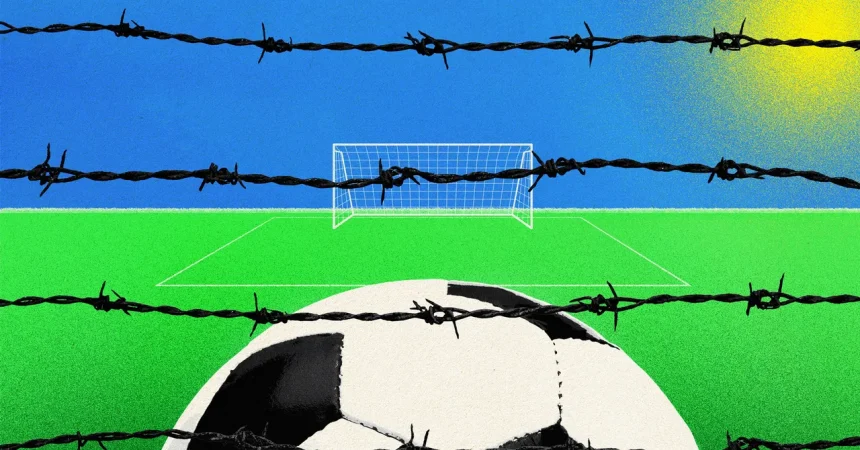
Ultimately, this year’s tournament serves as a painful illustration of how geopolitical friction can dismantle the bridge-building power of sports. The World Cup is intended to be a celebration of unity, where flags from every corner of the globe fly together to honor human achievement. Instead, the current restrictions have transformed the event into a restricted space, heavily curated by the anxieties of major powers. When we look at the faces of the fans left behind in their home countries, reading through rejection notices or watching matches from thousands of miles away, it becomes clear that global diplomacy has failed the spirit of the game. For the fans who managed to make it, the triumph is significant, but for the millions represented by the absent, this tournament will be remembered less for its goals and more for the invisible walls that kept them out of the arena.