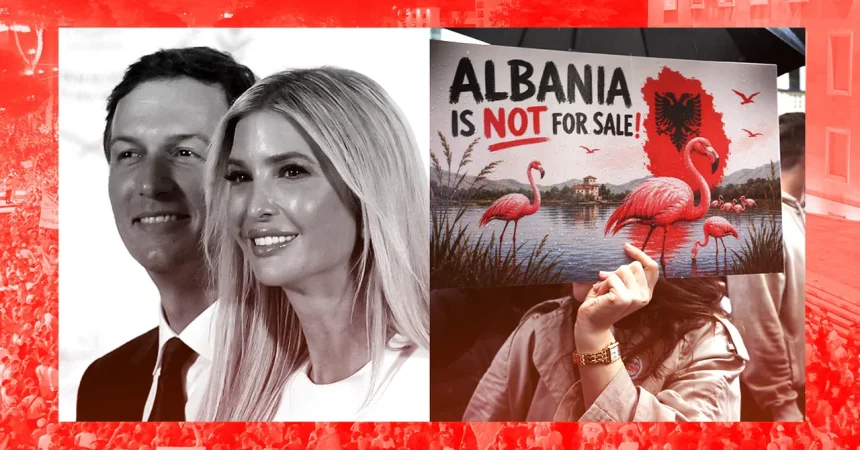
The unfolding situation surrounding the Zvërnec South Adriatic Development project has become a lightning rod for broader anxieties about Albania’s future, transparency, and the intersection of politics and private industry. At the heart of the controversy is a shroud of mystery: reports indicate the development company is managed through a complex web of Dutch-registered entities, leaving the public in the dark regarding the true identity of its beneficiaries. The involvement of the Kastrati Group—the country’s largest private conglomerate—has further fueled speculation, yet the company and the government remain tight-lipped, failing to respond to inquiries about the project’s scope or its ultimate impact on the local landscape. For many observers, this lack of clarity is not just a regulatory oversight; it is a manifestation of the deeper, systemic issues that continue to plague public trust in Albania’s governance.
The Albanian government maintains that these developments are the linchpin of a mandatory economic evolution, an ambitious quest to pivot the nation into a premium Mediterranean tourism destination. Prime Minister Edi Rama has consistently championed these investments, presenting them as sophisticated mechanisms for long-term modernization, increased state revenue, and heightened global prestige. However, the tone of this defense has shifted drastically. While the Prime Minister initially suggested a spirit of dialogue, the rise of organized public resistance prompted a move toward confrontation. Rama now openly dismisses the opposition, using inflammatory metaphors to cast protesters as irrational “flamingos” who refuse to engage with the “facts,” while framing them as pawns manipulated by shadowy “crows and ravens” intent on obstructing progress.
This rhetorical strategy has become a hallmark of the government’s response to any form of dissent. Over the months, the narrative used to invalidate the protesters has evolved from accusing them of acting as agents of foreign powers to dismissing their movement as the byproduct of social media algorithms and shallow influencer culture. By framing the demonstrations as manufactured or extremist, the administration attempts to divorce the protesters from the reality of the community’s genuine civic concerns. This tactic, however, seems to have backfired. Rather than silencing the opposition, these dismissals have only deepened the resolve of local citizens who feel that their landscapes—and their democratic rights—are being quietly auctioned off to the highest bidder under the guise of progress.
Importantly, the friction in Zvërnec has acted as a catalyst for a much wider wave of civic defiance across Albania. Inspired by the symbolic act of tearing down fences that restricted public access, citizens in areas like Rrjoll, Librazhd, and the pristine Kakome Bay have taken direct action to reclaim their common spaces. For nearly twenty years, landmarks like Kakome Bay had been sequestered behind property disputes, effectively barring the public from their own coastlines. Seeing these physical barriers fall has created a “domino effect,” turning local grievances into a cohesive national movement. The message is clear: the struggle is no longer just about a single construction project, but about the right of the public to access and enjoy its own geography, free from the encroachment of opaque corporate interests.
The international dimension of this issue adds another layer of complexity, particularly following remarks from figures like Ivanka Trump regarding investments in Sazan. Prime Minister Rama has moved to distance himself from international commentary that suggests or implies that Albanian islands or protected zones are being handed over in private, secretive deals. He asserts that the process is robust, legal, and transparent, characterizing all public concern as a series of fundamental misunderstandings. Yet, the disconnect between the government’s polished, confident rhetoric and the skeptical reality perceived on the ground remains vast. For the protesters, these assurances fall on deaf ears, as their primary demand for accountability continues to be ignored by those in the halls of power.
As the movement matures, it is gravitating toward a more political posture, signaling that the era of simple protests may be yielding to a period of institutional demand. The public is no longer satisfied with mere explanations or public relations campaigns; they are now actively organizing for a nationwide mobilization, calling for a technical government and the scheduling of early elections. This escalation reflects a total loss of confidence in the current administration’s stewardship of the nation’s natural and economic future. The Zvërnec controversy has evolved from a local environmental dispute into a fundamental challenge to the status quo, setting the stage for a critical collision between an immovable government and a public that is no longer content to stand by.