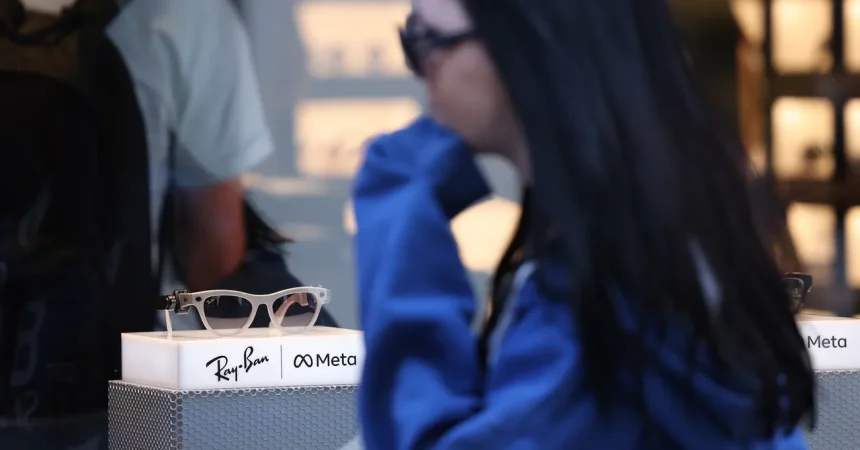
The race to dominate the “face computer” market is currently moving at a breakneck pace, with tech giants and scrappy startups alike scrambling to claim their piece of the smart-glasses gold rush. It feels like we are standing on the precipice of a new era in wearable technology, where the line between our natural vision and digital augmentation is rapidly dissolving. While the potential for innovation is massive, this sudden surge of interest has predictably sparked a firestorm of controversy. At the heart of the debate is a simple, uncomfortable reality: when everyone is potentially wearing a camera on their face, the unspoken social contract of public privacy begins to fracture, leaving many to wonder if we are trading our fundamental right to anonymity for the convenience of a hands-free life.
Meta has found itself in the eye of this privacy hurricane, serving as the primary lightning rod for criticism due to their popular smart glasses that allow users to capture photos, videos, and audio of everything they see. For the average person, the idea of being secretly recorded by someone walking down the street is chilling, and Meta has struggled to balance the product’s functionality with public trust. While they have implemented indicator lights to signal when recording is active, the revelation that some users have found ways to bypass these safeguards has only deepened the public’s anxiety. Even though Meta has since introduced “anti-tamper” measures to prevent such meddling, the incident has highlighted how fragile these safety features really are in the hands of bad actors.
The situation escalated significantly when it was revealed that Meta had experimented with facial recognition technology—a feature dubbed “Name Tag”—which would have allowed users to identify strangers in real-time. The outcry following a report by WIRED was swift and severe, forcing the company to pivot and remove the code entirely. Meta’s CTO, Andrew Bosworth, eventually acknowledged that this technology was indeed being explored, underscoring the reality that these companies are pushing the boundaries of what is socially acceptable. This episode served as a wake-up call for privacy advocates, reinforcing the fear that smart glasses could eventually transform into tools for mass surveillance, turning every social interaction into a data-mining opportunity.
Despite these significant ethical hurdles, the industry is not slowing down; if anything, it is accelerating. With tech titans like Google, Samsung, and eventually Apple poised to enter the market, the cultural conversation around “face computers” is set to explode. Apple, in particular, is reportedly treading carefully, delaying their own smart glass initiatives specifically to address the complex privacy concerns that their rivals are currently fumbling. This suggests that the tech world is beginning to realize that if they want these devices to reach true, mainstream ubiquity, they have to move past the “move fast and break things” mentality and actually earn the public’s confidence—or face a regulatory backlash that could stall the entire industry.
Paradoxically, despite the widespread hand-wringing, the market is voting with its wallet, and the results suggest that consumers are more interested in utility than in existential privacy dread. Meta has moved millions of units, with users finding genuinely transformative ways to integrate the technology into their daily lives. Beyond the novelty of filming mountain bike runs or quick social media clips, there is a profound human side to this story. For many, these glasses are becoming essential accessibility tools; through partnerships with platforms like Be My Eyes, AI-powered glasses are providing visually impaired users with a newfound sense of independence, narrating the world around them in real-time. It is a powerful reminder that technology often contains a duality: it can be a tool for intrusion, but also a bridge to inclusion.
Ultimately, this period of friction is exactly what the industry needs to mature. Newer, privacy-conscious players are already carving out their own niches, offering camera-free frames or physical, pop-on privacy shutters for those who want the connectivity without the surveillance baggage. As industry leaders like Vuzix have noted, the fact that we are arguing so intensely about these ethics is a sign of progress; it means the technology has reached a point of critical mass where it can no longer be ignored by society. We are currently in the messy, growing-pains phase of this wearable revolution. As we move forward, the challenge for companies won’t just be building better lenses or faster processors, but proving that they can build technology that respects the privacy of the people standing on the other side of the camera.