Here is a summary and humanization of the Zanskar geothermal story, expanded into six reflective paragraphs.
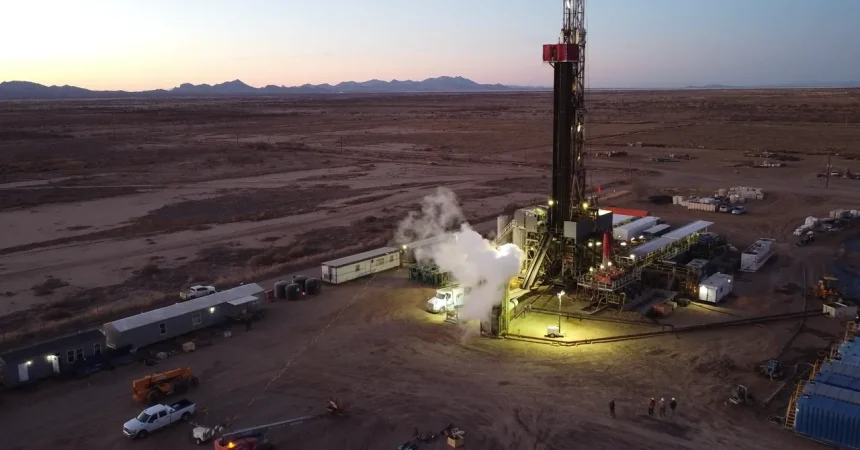
The story of the Lightning Dock power plant in New Mexico serves as a powerful testament to the idea that with the right perspective, even the most neglected assets can be revitalized. When Zanskar acquired the site in 2024, it was widely viewed as a failing enterprise. Its shallow wells were cooling at an alarming rate, struggling to provide the steam necessary to keep the plant’s turbines spinning. To the casual observer, it looked like a chapter coming to a forced close in the slow-moving world of geothermal energy. However, Zanskar saw not a terminal case, but a challenge waiting for a modern solution. By looking past the obvious decline, they chose to see the potential buried beneath the earth, setting the stage for what would become an industry-defining moment.
After a full year of strategic drilling and operational discipline, Zanskar has effectively flipped the script. The numbers, shared exclusively with WIRED, indicate that the Lightning Dock site has been transformed into one of the most productive pumped geothermal wells in the entire country. The plant is now humming along with a consistent, reliable thermal supply that has completely silenced prior concerns about its viability. Joel Edwards, the company’s cofounder, notes that this turnaround “fundamentally changes how people think” about geothermal systems. It proves that the limitations we previously accepted as fixed—perhaps incorrectly—can be shattered with the right combination of fresh strategy and advanced technological application.
This success arrives at a pivotal moment for the geothermal sector, an industry that has spent decades in the shadows of faster-growing renewable sources like wind and solar. For years, geothermal has been plagued by a reputation for being geographically restricted, prohibitively expensive, and plagued by unpredictable heat decline. Because these plants must be located specifically where the Earth’s crust is thin or particularly hot, they have historically accounted for less than 1 percent of the United States’ total energy mix. The Lightning Dock project serves as a much-needed wake-up call, demonstrating that existing, “tapped out” sites may still hold significant, untapped value if approached with modern engineering rigor.
The core dilemma that Zanskar tackled is a classic engineering obstacle: the nature of heat degradation. Most geothermal wells inevitably see a drop in productivity over time, but Lightning Dock was an outlier, losing heat five to 10 times faster than the industry average. Before Zanskar’s intervention, temperatures at the site had plummeted from the levels required to power a 15-megawatt plant down to temperatures that rendered the facility barely functional. The conventional wisdom suggested that to fix this, one simply had to drill deeper. However, as Stanford professor Roland Horne points out, the economics of deep drilling are punishingly steep; doubling your depth often quadruples your costs, leading many operators to abandon sites rather than invest in the unknown.
Zanskar’s “secret sauce” for defying these economic realities lies in the marriage of artificial intelligence and lessons learned from the oil and gas industry. By applying advanced AI modeling to find “hidden systems”—geothermal pockets that show no surface-level indicators—the company was able to map out exactly where to strike beneath the Lightning Dock site. They didn’t just guess; they used data-driven precision to bypass the rock formations that usually make deep drilling a financial nightmare. Furthermore, by adopting high-performance drill bits refined in the fossil fuel sector, they managed to complete their new 8,000-foot well 35 percent faster than traditional methods, keeping costs competitive while accessing pristine, high-heat reservoirs.
Ultimately, this success story is about more than just electricity generation; it is a shift in the human relationship with legacy infrastructure. It stands as an optimistic case study for how we can rehabilitate tired energy sites rather than constantly breaking ground on new ones. The fact that an 8,000-foot well can now provide steady, reliable power for an entire year—outperforming the site’s original, more shallow infrastructure—proves that our mastery over geothermal energy was not limited by the earth, but by our tools. As the industry looks toward a greener future, the lesson from New Mexico is clear: the energy we need is often right beneath our feet, provided we are creative enough to reach for it.