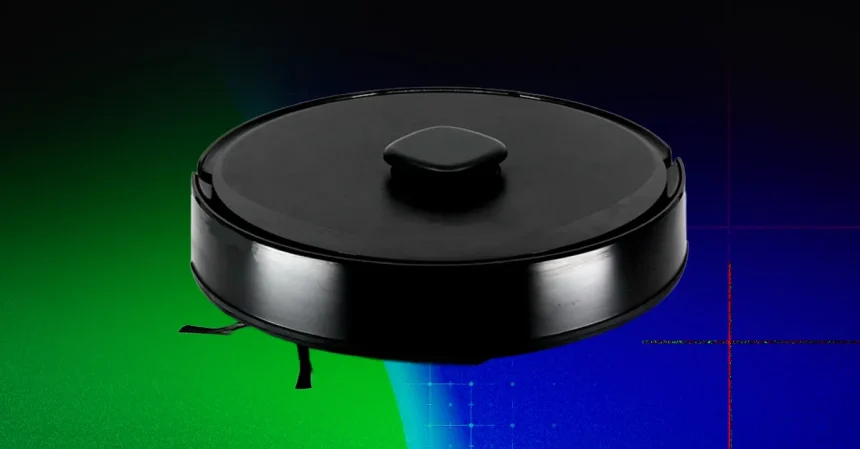
The U.S. Federal Communications Commission (FCC) recently sent a ripple through the tech world by effectively banning the import of foreign-made “advanced mobile robots.” While the agency’s language specifically highlights the futuristic, sci-fi imagery of humanoid and quadrupedal robots, the fine print reveals a much more domestic reality: this ban squarely targets the humble robot vacuum that scuttles across your living room floor. While the policy is effective immediately, there is no need to panic and toss your current cleaning companion in the trash. The ruling is forward-looking, meaning it blocks new models from gaining the necessary FCC certification to enter the U.S. market, rather than forcing homes to surrender the devices they already own. For now, your daily routine remains undisturbed, but the landscape of the consumer robotics market is about to undergo a significant, perhaps permanent, transformation.
To understand why a vacuum cleaner is suddenly being framed as a national security threat, one must look at the “Covered List” maintained by the FCC. Under the Secure and Trusted Communications Networks Act of 2019, this list identifies technology deemed an “unacceptable risk” to U.S. security. The government’s definition of an “advanced mobile robot” is deceptively broad: it includes any autonomous device that weighs over 4.4 pounds, navigates uneven terrain, relies on sensors to perceive its surroundings, utilizes wireless connectivity like Wi-Fi or Bluetooth, and runs on software or AI. By these technical standards, the vast majority of modern robot vacuums, robotic pool cleaners, and automated lawn mowers fall into the same category as sophisticated surveillance hardware, effectively grouping your household helper with high-tech espionage tools.
The government’s primary concern lies in the vulnerability inherent to “smart” devices. Advanced robotics rely on high-resolution cameras, laser-based LIDAR, and microphones to map your home and navigate around furniture. The FCC posits that these networked capabilities create a backdoor for potential exploits, suggesting that if these systems are compromised, they could be used to manipulate both local data and the physical operation of the device. Essentially, the fear is that a foreign-manufactured robot could serve as a “Trojan Horse,” gathering detailed floor plans or audio data and transmitting it to servers outside of U.S. jurisdictional control. The National Security Determination acknowledges that while vehicles and planes remain exempt, the sheer ubiquity of these smaller robots makes them a uniquely persistent, private target for potential adversaries.
It is undoubtedly strange to consider a vacuum cleaner a geopolitical liability when your home is likely filled with other devices that possess the same, if not more, intrusive hardware. From smart speakers that listen for commands to security cameras that monitor your front door, many of the devices we invite into our homes are constantly connected to the internet and utilize advanced sensing technology. The FCC’s documentation acknowledges this broader landscape, explicitly citing scenarios like hacked humanoid robots and live-camera surveillance, yet it remains notably silent on concrete examples of robot vacuums being used for espionage. This has left many consumers and tech experts scratching their heads as to why the agency has chosen this specific sector for such a sweeping regulatory crackdown.
For the average American consumer, the immediate impact will be felt in the marketplace rather than the living room. Since many of the most innovative and popular robot vacuum brands are manufactured overseas, we are likely to see a tightening of supply for new, high-end models. As existing inventory clears out, the vacuum market in the U.S. may become significantly smaller, dominated by domestic firms or specific international manufacturers that can navigate these new certification hurdles. While we won’t wake up to a world where our old vacuums suddenly stop working or get “bricked” by a remote command, the era of choosing from a vast array of high-tech, budget-friendly imports appears to be drawing to a close. Innovation, in this specific niche, is about to be heavily filtered through the lens of national security.
Ultimately, this move reflects a growing trend in American policy to treat consumer hardware as a critical component of national infrastructure. We are moving toward a reality where the “Internet of Things” is no longer just about convenience; it is being scrutinized for its potential to serve as a bridge for cyber-interference. While it feels like an extreme measure to group a household cleaning tool with restricted telecommunications equipment, the FCC is clearly looking to proactively “harden” the American home against potential threats. Whether or not this proves to be a necessary safeguard or an overextension of regulatory power, the message is clear: the devices we bring into our domestic spaces are increasingly being viewed as extensions of the global digital battlefield, and the days of buying smart-home tech without a second thought are effectively coming to an end.