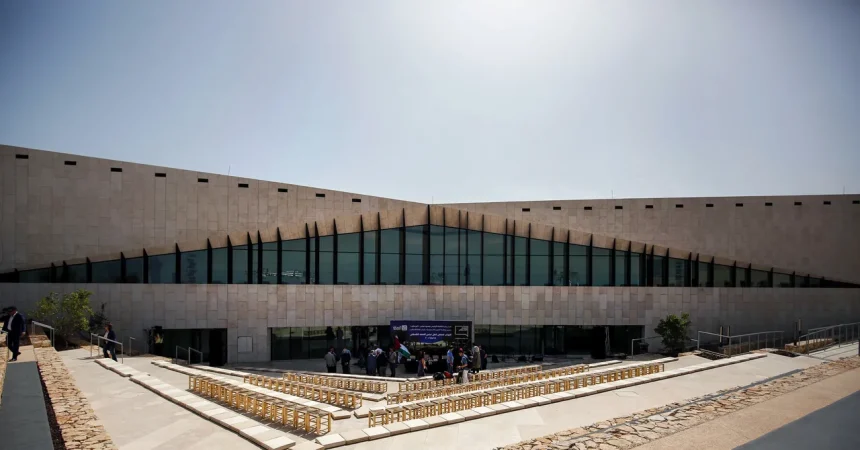
The Palestine Museum Digital Archive stands as a testament to the power of human resilience in the face of erasure. At its core, this project is defined by a seemingly simple but deeply moving mission: to ensure that the stories of a people, often caught in the crosshairs of conflict, are never truly lost to time. What began as a humble, grassroots effort—with team members knocking on doors across the West Bank, asking families for the privilege of scanning their frayed photographs, handwritten letters, and tattered identification papers—has blossomed into a monumental digital repository. These are not merely artifacts; they are the tangible remnants of lives lived, representing a collective memory that, for decades, has been vulnerable to displacement and physical destruction. By digitizing over 500,000 items, the project has effectively created an “unlootable” archive, shielding the heartbeat of a culture from the instability of its physical surroundings.
The architecture of this project is as innovative as it is essential, functioning as a decentralized, “bottom-up” history that defies the traditional, state-controlled archive model. Because it is decentralized, the museum has successfully stripped power away from those who might wish to censor or destroy the narrative of a people. A dedicated team of full-time staff, supported by passionate volunteers and international partnerships, works tirelessly to curate, translate, and organize this vast ocean of information. They are even employing cutting-edge technology, such as AI bots designed to read Ottoman Arabic, to bridge the gap between ancient records and modern accessibility. This approach transforms history from a singular, static narrative held behind museum walls into a dynamic, living web of data that belongs to everyone, regardless of where they reside on the map.
Perhaps the most poignant aspect of this archive is its existential commitment to survival. Recognizing that the digital space is as volatile as the physical one, the museum has engineered a distributed network of backups stored across the globe. This represents a modern form of resistance; even as the project fends off relentless, near-monthly cyberattacks, the staff remains unflappable. Their philosophy is simple but profound: “We can’t protect it from being hacked, but we can protect it from disappearing.” By ensuring that if one server falls, ten others stand ready to take its place, the archive has become virtually indestructible. It is a striking example of how technology, which is so often used to surveil and control, can conversely be harnessed by vulnerable communities to secure their own immortality against the forces of war and occupation.
Beyond the technical brilliance of its preservation, the archive is designed for meaningful, global engagement. One of the project’s most creative initiatives is an “Ikea-style” exhibition box—a downloadable, portable, and low-cost kit that has empowered people from Tokyo to San Francisco to host their own exhibitions. By making the museum portable, the team has removed the economic and geographical barriers that usually prevent people from interacting with history. This modular approach has enabled the collection to be shared 260 times worldwide, translated into five languages, and woven into local dialogues wherever it lands. It invites the world to step inside the Palestinian experience, turning a repository of documents into a bridge for international empathy and understanding.
The impact of this work is perhaps most visible in the emotional responses of those who encounter the archive in person. Artists like Leyya Mona Tawil have utilized these collections to craft immersive experiences, such as her music-focused exhibition in San Francisco. For audiences who have felt alienated from their own heritage or who seek to understand a distant conflict, the experience of viewing these “fragments” often leads to tears and deep gratitude. As Tawil notes, this is not just a cold collection of music or dusty objects; it is a “living archive” that represents a society currently under threat. The archive serves to validate existence, proving that the culture, music, and daily life of Palestinians remain vibrant and worthy of being seen, heard, and remembered, despite the overwhelming pressure to render them invisible.
Ultimately, the Palestine Museum Digital Archive is a defiant act of reclamation. In an era where history is often written or erased by those with the most power, this project allows ordinary families to hold the pen. It restores a sense of agency to a population that has long been defined by external narratives. By painstakingly linking one family’s diary to another village’s map, the project weaves a tapestry of truth that is resilient, accessible, and deeply personal. It reminds us that history is not just a list of dates or state-sanctioned events; it is a collection of memories, and by safeguarding these fragments, the museum ensures that the future—no matter how uncertain—will always have a clear, undeniable record of the past.