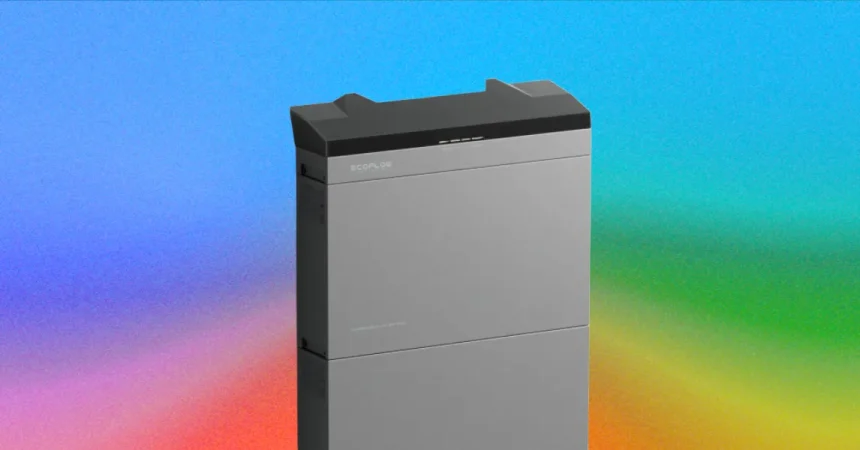
With electricity prices showing no signs of slowing down, the concept of a home battery has transformed from a futuristic luxury into a practical, money-saving necessity for many. Whether you are looking to squeeze every drop of value out of your rooftop solar panels or simply want to arbitrage the grid by charging up when electricity is cheap and drawing from that supply when rates peak, a home battery acts as a personal reservoir. Having spent months researching these systems and navigating the installation process myself, I’ve found that while the market is teeming with options, the decision-making process doesn’t have to be overwhelming if you know what to look for and what your specific goals are.
At its core, a home battery functions like a massive power bank for your living room. Technically, most modern units utilize lithium iron phosphate (LFP) chemistry, which is the industry standard because it balances safety, longevity, and a reduced risk of overheating. While experimental sodium-ion batteries are emerging as a potentially cheaper and more cold-resistant alternative, they haven’t quite reached the reliability of established LFP systems. It is also important to dispel the myth that you can just plug your electric vehicle (EV) into your house to act as a battery; while vehicle-to-home technology is improving, for now, you want a dedicated stationary storage system that won’t leave you stranded with an empty car in the morning.
Understanding the “plumbing” of a home battery is the next hurdle. You need an inverter to bridge the gap between stored direct current electricity and the alternating current your appliances need. If you already have solar, seeking out a hybrid inverter is crucial, as it streamlines the flow from your panels directly into your batteries. Beyond the chemistry, you must pay attention to power ratings. If your household is a power-hungry environment with heat pumps or EV chargers, a standard 3.6-kW inverter will likely leave you frustrated. You need to size your system for your peak usage—the sum of everything you might turn on simultaneously—to ensure the battery can handle the load without tripping your circuits.
When you start comparing spec sheets, four key metrics should guide your shopping: capacity, output, depth of discharge, and efficiency. Capacity tells you the total pool of energy (kWh), while output (kW) dictates how quickly you can tap into it. Depth of discharge is the “healthy” limit of how much you can drain the battery before it starts to degrade, and efficiency accounts for the inevitable energy loss during the conversion process. Additionally, don’t ignore the warranty. You aren’t just buying a box; you’re buying a decade or more of performance. Look for brands that promise long-term capacity retention, as that is the true measure of your investment’s life cycle.
Determining how much power you actually need can feel like solving a puzzle, but it comes down to your personal strategy. If your main goal is surviving a grid outage, you must carefully calculate your “baseline” load and ensure your battery capacity is sufficient to keep your freezer running and your lights on for as long as needed. If you are an “energy arbitrageur” purely chasing cheaper overnight rates, the math is simpler: go as big as your budget allows. Because professional installation is a labor-heavy (and expensive) requirement, trying to “add on” more capacity later is often more costly than just getting a larger, modular system installed right from the start.
Finally, keep in mind that the hardware is only half the battle; the physical and regulatory integration with your home environment is where things get real. Your electrician may discover that your current electrical panel lacks the space or the safety capacity for a new battery, necessitating breaker box upgrades. Furthermore, you can’t just plug these systems in and forget about them; many local utility companies require notification or prior approval for the installation of inverters, especially if they exceed certain power thresholds. By planning for these administrative hurdles alongside the physical installation, you can successfully transition your home into a resilient, efficient, and cost-effective energy hub.