1. The Billionaire’s Midterm Bet
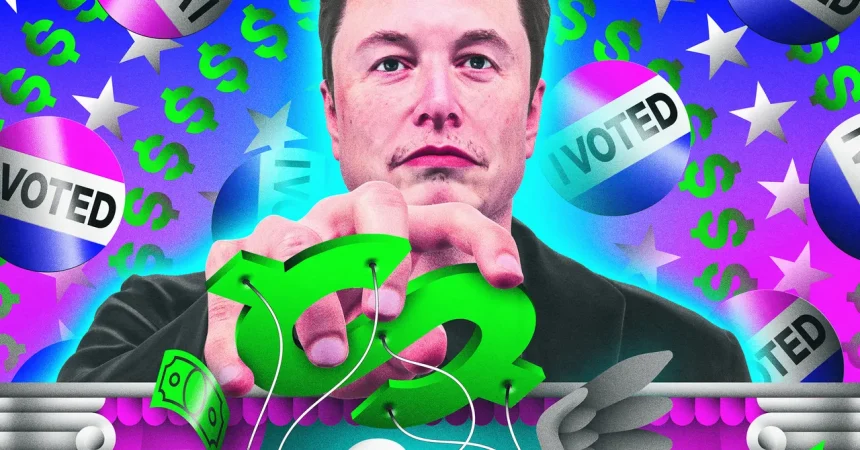
If you’ve been scrolling through political headlines and wondering what Elon Musk is actually doing with his money this election season, the short answer is: he’s putting it where the power is. According to a detailed analysis of federal campaign finance data by WIRED, Musk’s main political vehicle, America PAC, is no longer spreading its cash around in a wide, scattershot way. Instead, it has zeroed in on the most consequential races on the ballot—the U.S. Senate contests that could decide which party controls the chamber. As of October 6, America PAC had already spent roughly $21 million of its total $26.7 million for the year on just seven Senate races. Those seven races are not random; they are the ones that political insiders have been watching with sweaty palms for months. They are competitive, tight, and in many cases, genuine toss-ups. And for Democrats, they represent a narrow but very real path to holding onto or expanding their power in Washington. This isn’t just about one billionaire flexing his financial muscle for fun. It’s a coordinated, data-driven operation aimed at shaping the balance of power in the United States Senate—and by extension, the entire federal government. What makes this even more interesting is that it’s a shift from how Musk played the game before. Two years ago, his super PAC was a different beast entirely: bigger, broader, and almost entirely focused on the White House. Now, with the presidency off the ballot, Musk has recalibrated. He’s not trying to be everywhere at once. He’s concentrating his resources where the math matters most. For anyone trying to understand modern political influence, this is a case study in how a single wealthy actor can target the system with surgical precision. And thanks to publicly available filings with the Federal Election Commission, we can follow every dollar in near real time. It’s not always pretty, but it’s transparent—and that transparency reveals a strategy that is both calculated and ruthlessly focused on outcomes.
2. A Slimmer, Sharper Machine
To really understand what America PAC is doing now, you have to look back at what it was before. The group first registered with the FEC in May 2024, and in that election cycle, it was a financial monster. It spent an eye-watering $261 million, and nearly all of that money—about 95 percent—came directly from Musk himself. That kind of spending is almost unprecedented for a single donor outside of a presidential campaign. But here’s the twist: this year, America PAC is a much smaller operation. As of the same point in the cycle, it had spent about $26.7 million, which is roughly a third of the $85.9 million it had already burned through by this time in 2024. But don’t let the smaller number fool you. The strategy is actually more focused, not less. In 2024, more than 90 percent of America PAC’s money went to the presidential race, with almost none going to Senate contests. The presidential race was the whole ballgame, and everything else was an afterthought. This year, the equation has flipped. With no presidential election to dominate the airwaves, Musk’s political operation has turned its attention to Congress—specifically, the Senate. And it’s not just that the total pot is smaller; the way the money is being spent is completely different. Instead of trying to influence a single national outcome, America PAC is now engaged in a series of targeted, localized battles. It’s buying ads in specific media markets, sending mailers to specific voters, and texting households in states where the outcome could go either way. It’s a much more granular approach, and it requires a different kind of political machinery. This isn’t about branding or national messaging. It’s about winning individual elections. The shift from a massive, top-heavy operation to a leaner, sharper one suggests that Musk and his team learned something from the last cycle. They realized that pouring billions into a single race doesn’t guarantee success, but carefully targeted spending in the races that actually decide control of the Senate might be a smarter use of resources. In other words, they’ve traded sheer volume for strategic depth. And that makes America PAC arguably more dangerous, politically speaking, than it was when it was throwing money at the presidential race.
3. The Attack Machine
One of the most striking findings from WIRED’s review of the campaign finance data is just how negative Musk’s political spending has become. This is not a happy-go-lucky operation trying to promote hopeful visions of the future. It’s an attack machine. As of October 6, for every dollar that America PAC spent supporting a Republican candidate, it spent more than two dollars opposing a Democrat. In Senate races specifically, that ratio jumps to three-to-one. In plain English, this means the overwhelming majority of Musk’s political money is not being used to build anything up—it’s being used to tear things down. The ads paid for by America PAC are overwhelmingly negative, featuring pointed criticism, harsh contrasts, and sometimes outright fear-mongering about what would happen if the Democratic candidate wins. This is a deliberate choice. Negative ads are a well-known political tactic because they work, especially in close races. They can depress turnout among the opposing side’s supporters, sway undecided voters through doubt, and define a candidate before they have a chance to define themselves. When you combine that with the concentration of spending in seven key Senate races, the picture becomes clear: Musk is not trying to build a lasting movement. He’s trying to tip the scales in the narrowest, most brutal way possible. The fact that the negative-to-positive ratio is even more skewed in the most competitive races suggests that his team has identified where the pressure points are and is pressing down hard. In these battleground states, voters are likely seeing wave after wave of attack ads, each one designed to chip away at the Democratic candidate’s credibility. It’s not subtle, but it doesn’t have to be. In modern politics, the goal of a super PAC like this is not to persuade everyone. It’s to move a small percentage of voters in a handful of districts and states. And negative messaging, while unpleasant, is often the most efficient way to do that. By spending so heavily on opposition rather than support, America PAC is signaling that its primary goal is not to elect a specific person, so much as to prevent certain other people from getting elected. That’s a different kind of political power, and it’s one that doesn’t require popularity—just money, repetition, and timing.
4. Why the Senate Matters So Much
To understand why Musk is so focused on these Senate races, you have to look at what’s at stake. For Republicans, the 2025 midterm elections are a high-wire act. The possibility of Democrats taking control of the Senate is very real, and the consequences would be enormous. Democrats need to flip four battleground races and hold onto three of their currently held seats to gain the majority. That might sound like a tall order, but in an environment where several Republican incumbents are struggling, it’s not out of the question. And a Democratic-controlled Senate would change everything in Washington. It would mean Democratic chairs for every committee, Democratic control over the legislative agenda, and—perhaps most importantly—the ability to block, shape, or advance legislation that directly affects the business world. For Musk specifically, the implications are even more personal. As the head of multiple companies that are heavily regulated by the federal government, Musk has a direct interest in what kind of legislation passes and who is overseeing hearings. A Democratic-controlled Senate could mean congressional investigations into his business practices, his companies’ safety records, or his interactions with government agencies. It could also mean new regulations on artificial intelligence, the auto industry, or social media platforms—all areas where Musk has major financial interests. In other words, this isn’t just about politics for Musk. It’s about protecting his empire. The Senate is the institution that confirms presidential appointees, sets the rules for hearings, and often acts as the gatekeeper for major legislation. If Democrats control that chamber, Musk loses a lot of his leverage. He would no longer have friendly committee chairs to block investigations or soften regulatory language. He would be on the defensive, potentially fighting off subpoenas and scrutiny from lawmakers who are not inclined to give him the benefit of the doubt. That’s a terrifying prospect for a man who has built his public persona on being untouchable. So his super PAC’s spending should be seen for what it is: a defensive investment. Every dollar spent attacking a Democratic candidate is a dollar spent trying to keep the Senate in friendly hands. It’s a classic example of how political spending is often driven not by ideology, but by self-interest. And in Musk’s case, the stakes could not be higher.
5. Going for the Jugular in the Tightest Races
What’s particularly revealing, though, is the way that spending is distributed across the individual races. In the most fraught Senate contests—the ones where the Republican candidate is clearly on the back foot—the ratio of negative to positive messaging becomes even more extreme. The filings show that America PAC is not just dumping money into every competitive state. It’s concentrating its firepower on the races where the GOP is most vulnerable. This is the kind of strategic decision that comes from polling, focus groups, and a deep understanding of the electoral map. It’s not random. It’s almost as if the super PAC’s operatives have identified which Republican candidates are drowning and are throwing them anvil—sorry, lifelines—made of attack ads aimed at their opponents. The logic is simple: if you can’t make your guy more popular, make the other guy look worse. In these tight races, where every point matters, a sustained barrage of negative advertising can make the difference. It can push undecided voters off the fence, demoralize the base of the opposing party, and create a sense of inevitability around the Republican candidate. But there’s a risk, too. Overly negative campaigns can backfire, especially if voters feel that the ads are unfair or if they fatigue of the constant negativity. Still, the data suggests that Musk’s team is willing to take that risk. They’re going for the jugular. In several of these races, the spending on opposition research and negative ads appears to be outweighing any effort to present a positive vision. This isn’t about policy debates or hopeful futures. It’s about digging in, playing defense, and trying to hold onto every last seat in a difficult political environment. For voters in those states, the experience of watching TV or checking the mailbox during campaign season may feel like being in a war zone, with every ad break bringing another attack. And that’s exactly the point. The more negative the message, the more likely it is to stick in people’s minds. The more it sticks, the more likely it is to influence their vote. It’s cold, calculated, and effective—even if it leaves a sour taste in the mouths of the electorate.
6. Tracking the Money in Real Time
For those who want to see exactly where the money is going, WIRED has created a live tracker that does the heavy lifting. The tracker updates daily and draws directly on America PAC’s filings with the Federal Election Commission, which the agency processes on a continuous basis. These filings list every payment the super PAC has made for ads, mailers, and texts, giving the public an unprecedented window into how a mega-donor’s money is being used. The tracker highlights not just the total amount spent, but also how that spending is distributed—across individual races, between support and opposition messaging, and in comparison to previous election cycles. It’s a powerful tool for journalists, researchers, and voters alike. Instead of relying on press releases or spin, you can look at the raw data and see exactly what is happening, day by day. What that data reveals is a political operation that is smaller but sharper than it was two years ago, one that is laser-focused on the Senate, deeply negative in its messaging, and clearly driven by a desire to protect both Republican control of the chamber and Musk’s own business interests. The broader lesson is that the influence of billionaires in American politics is not just about how much they spend, but about how strategically they spend it. Musk’s America PAC might not be throwing around hundreds of millions of dollars this cycle, but it is still placing a huge bet on a handful of races that will shape the country’s future for years to come. Whether that bet pays off will depend on the voters in seven states—and on whether all that negative advertising actually moves the needle. But one thing is certain: Elon Musk is not sitting on the sidelines. He is in the game, playing as hard as ever, and using every tool available to him to reshape the political landscape in his image. And thanks to public data and live tracking, we can all watch it unfold in real time. It’s a fascinating, unsettling, and ultimately human story about power, money, and what people will do to hold on to it.