1. The Quiet Machine Behind the Midterms
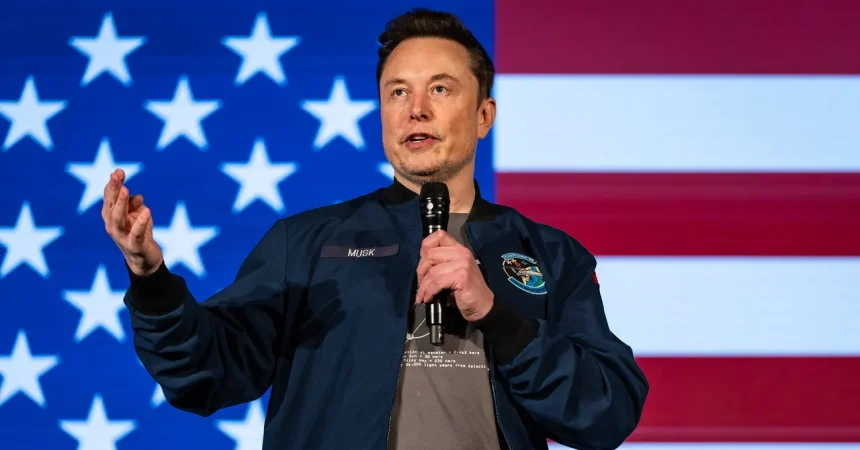
For all the noise and spectacle that usually defines American politics, some of the most consequential moves happen in the shadows, away from cameras and rallies. That is exactly what happened this week when federal filings revealed that Elon Musk, the world’s wealthiest man, has been quietly pouring hundreds of millions of dollars into a sophisticated, nationwide canvassing operation aimed at boosting Republican candidates in the upcoming midterm elections. According to filings posted Thursday night, the scale of this effort is not just large; it is genuinely unprecedented for a non-presidential election year. It rivals, and in some ways surpasses, the extraordinary operation Musk built for Donald Trump’s 2024 presidential bid. To put the sheer magnitude into perspective, WIRED has created a live-updating tracker that pulls federal filings daily, allowing anyone to watch Musk’s influence on the November elections grow in real time. The picture that emerges is not that of a casual donor writing checks from a distance, but rather of a deeply engaged political operative who has effectively built a parallel political infrastructure. Musk’s America PAC, the super PAC at the center of this effort, spent a staggering $76.7 million in the third quarter of 2026 alone. That is not money going to vague ideological advertisements or glossy mailers. The largest portion of it, $35.8 million, has been spent on a ground-level field operation designed to drive turnout among President Trump’s core base of supporters. This operation is not confined to one or two friendly states; it is actively running in all seven Senate battleground states and in a number of competitive House races. In other words, while the public conversation has focused on polling, debates, and campaign ads, a quiet, door-knocking army has been assembling across the country, funded by a single individual who seems determined to reshape the Republican Party in his own image.
2. A Presidential-Scale Ground Game in a Midterm Year
The most striking aspect of this revelation is not just the raw amount of money, but how it compares to Musk’s own past behavior. At the same point in the 2024 election cycle, America PAC had spent roughly $45 million to build out its field operation. In the current midterm cycle, that figure has already climbed to $35.8 million in just one quarter, putting the total on a trajectory that will easily dwarf the presidential effort. This is deeply unusual. Midterm elections typically see less national coordination and smaller ground games than presidential years, when the sheer scale of the electoral map demands massive investments. But Musk is treating this midterm cycle with the intensity of a presidential campaign, and perhaps even more so. In 2024, America PAC effectively ran the vast majority of canvassing for Trump’s presidential campaign, a controversial arrangement that blurred the lines between the official campaign and outside groups. Now, Musk is doing the same for the midterms, but without the protective cover of a candidate at the top of the ticket. This has led political operatives to describe his operation as a kind of shadow Republican National Committee. He is not merely supporting the party; he is, for all practical purposes, running a significant portion of its get-out-the-vote effort. With three weeks remaining until Election Day, the contributions are only set to rise even higher. Campaign finance reports only capture a snapshot in time, and political operatives expect Musk to continue injecting cash at a furious pace. The message is clear: Musk is not dabbling in politics. He is building a durable, permanent machine that can be deployed in any election, regardless of whether Trump is on the ballot. This represents a fundamental shift in how political power is exercised in America, moving away from party institutions and toward a handful of hyper-wealthy individuals with their own infrastructure.
3. The Canvassing Strategy and the New Political Army
What exactly is all this money buying? The filings show that canvassing has been America PAC’s largest single expense, a deliberate and strategic choice. Canvassing involves hiring real people to knock on the doors of likely Trump or Republican voters, reminding them to register, to vote early, and to show up on Election Day. It is labor-intensive, expensive, and deeply personal. Unlike a television ad that reaches millions but persuades few, a doorstep conversation can have an outsized impact on voter turnout. Musk’s operation is relying primarily on outside firms to conduct this paid canvassing, a model that allows for rapid scaling and flexibility. But the scale here is what matters. This is not a small get-out-the-vote effort in a few key districts; it is a coordinated, multi-state field operation that touches every competitive Senate race and many House races. The $35.8 million spent on canvassing is larger than the $23.7 million spent on a combination of digital ads, campaign literature, and phone bank efforts. That is a significant departure from the traditional playbook, where outside groups often blow most of their money on negative advertising. Musk’s operation is clearly betting that personal, in-person contact is the most effective way to mobilize the voters who will decide these races. The practical implications are enormous. In a close election, turnout is everything. A well-run canvassing operation can mean the difference between a candidate winning by two points or losing by one. By building a field operation that rivals a presidential campaign, Musk is giving Republican candidates a structural advantage that cannot be easily replicated by their Democratic opponents, who are largely reliant on traditional party committees and labor unions. This is not just about money; it is about having a permanent, trained workforce of door-knockers who are out in the streets every day, carrying the message that Musk and his allies want to amplify.
4. The Texas Obsession and the Flow of Hundreds of Millions
While the canvassing operation is the most visible part of Musk’s political spending, it is far from the whole story. In an effort to save the Republican Senate majority, Musk has also given a massive $158 million to the Senate Leadership Fund, the main super PAC supporting Republican candidates in the Senate. That alone would make him one of the most consequential donors in the country. But the filings reveal an even more fascinating detail: the same amount appears to have been funneled into a newly registered PAC called Texas PAC, which is backing embattled Republican candidate and Texas Attorney General Ken Paxton. The fact that this money is moving in such large, coordinated amounts suggests a level of strategic coordination that is rare even among mega-donors. Musk has been particularly focused on the Senate race in Texas this cycle, and it is not hard to understand why. He lives near Austin, and his businesses, SpaceX and Tesla, are deeply rooted in the state. The outcome of the Texas Senate race will directly affect the regulatory and legal environment for his companies, and he has a personal stake in seeing a friendly candidate win. According to the filings, Musk accounted for nearly 60 percent of the $273 million that the Senate Leadership Fund raised for Texas PAC. That is an extraordinary concentration of financial power. It means that one individual is effectively underwriting a major Senate campaign. This kind of investment goes beyond simple political preference; it is a calculated business decision. Musk is not just trying to help Republicans generally; he is trying to protect his own interests and ensure that Texas remains a welcoming home for his corporate empire. The same pattern is likely playing out in other states where his businesses have a presence, as he uses his fortune to shape the political landscape in ways that benefit his bottom line.
5. The Largest Donor in the Midterms and the New Political Reality
Taken together, the $76.7 million from America PAC, the $158 million to Senate Leadership Fund, and the additional funding for Texas PAC represent a stunning war chest that makes Musk the largest known donor in the midterm elections, among both Republicans and Democrats. No single individual has ever attempted to exert this level of influence over a non-presidential election cycle. His contributions touch all seven battleground Senate races and, to a lesser degree, a number of competitive House races. This is not the behavior of a passive observer; it is the behavior of someone who wants to be the central figure in the Republican Party’s electoral machinery. The traditional party structures, the RNC and the state parties, have been increasingly sidelined as super PACs have grown in power. But Musk has taken this to a new level. He is not just funding the party; he is replacing it. His America PAC has become a shadow party in its own right, with its own field staff, its own data, and its own strategy. This raises profound questions about accountability and influence. When one individual controls hundreds of millions of dollars and a nationwide canvassing army, they have an outsized say in who gets elected and what policies they pursue. Voters may not realize that the friendly person who knocks on their door is not a volunteer for a local campaign, but an employee of a super PAC funded by a single billionaire. The humanization of politics, the idea that elections are won by communities coming together, is being replaced by a more corporate, top-down model where a few powerful people pull the strings. This is not unique to Musk, but he is by far the most extreme example of the trend, and his success or failure will likely set the template for future election cycles.
6. The Next Three Weeks and the Long Shadow
With just three weeks left before Election Day, the full impact of Musk’s spending has yet to be felt. The filings released Thursday night are a snapshot, and political observers expect the numbers to grow even larger as Musk and his allies rush to solidify support for their preferred candidates. The total contributions are only set to rise, and the canvassing operation will only intensify as early voting expands and election day approaches. This is a critical moment for American democracy. On one hand, political engagement by citizens, even wealthy ones, is protected by the First Amendment, and there is nothing illegal about what Musk is doing. He is playing by the rules of the modern campaign finance system, a system that has been shaped by Supreme Court decisions like Citizens United to allow unlimited spending by individuals and corporations. On the other hand, the sheer scale of his influence raises uncomfortable questions about the health of representative government. When a single individual can spend more than many countries’ entire political budgets, the idea of one person, one vote begins to feel more like one dollar, one vote. For the Republican candidates who benefit from Musk’s generosity, this is a welcome lifeline. For their Democratic opponents, it is a daunting obstacle. For the average voter, it is a reminder that the forces shaping their choices are often invisible and immensely powerful. As we head into the final stretch of the campaign, the quiet machine that Musk has built will be humming in neighborhoods across America. The door knocks, the phone calls, and the mailers are all part of a carefully calibrated strategy designed to mobilize a specific segment of the electorate. Whether it works will depend on the voters themselves, but one thing is certain: Elon Musk has fundamentally changed the game, and the consequences of his involvement will be felt long after the votes are counted.