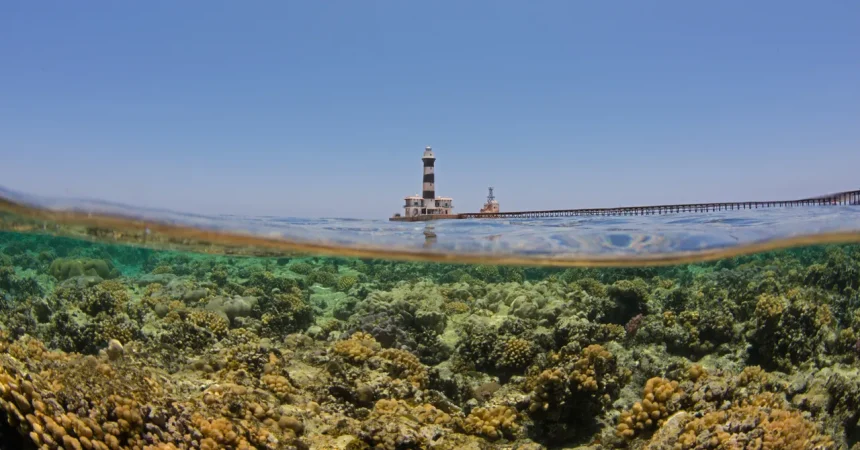
The Red Sea off Egypt’s coast is a world unto itself—a crystal-clear, sun-drenched underwater garden that teems with life in shades of electric blue, neon orange, and deep magenta. For decades, these coral reefs have been a sanctuary for marine biodiversity, a living laboratory for coral scientists, and a cornerstone of local tourism and livelihoods. Yet what has truly astounded researchers is not just their beauty, but their stubborn refusal to die. While reefs from Australia to the Caribbean have been decimated by rising water temperatures, bleaching in vast swaths, and often collapsing into rubble, the northern Red Sea reefs have largely endured, even thriving in conditions that would typically kill corals elsewhere. This resilience has become a scientific puzzle, a source of hope, and a subject of intense debate. Why should these particular corals be so tough? Is it something deep in their evolutionary DNA, a biological armor passed down through millennia? Or is it something more environmental—a lucky set of ocean currents that happen to shield them from the worst of the heat? And if that is true, what happens when those currents fail? The answers, as researchers are discovering, are both reassuring and profoundly unsettling.
For years, the dominant explanation for the Red Sea’s remarkable coral health has been evolutionary adaptation. The idea is straightforward: corals in this region have lived in extreme heat for a very long time, perhaps longer than anywhere else on Earth. Their symbiotic algae—the tiny organisms that provide the corals with energy through photosynthesis—have evolved to tolerate temperatures that would kill their cousins in other oceans. Scientists like Mohamed Osman, a coral reef researcher who has spent years studying the Red Sea, have documented this thermal tolerance in the lab. They’ve shown that these algae can keep functioning normally at water temperatures that would cause other corals to expel their partners and turn ghostly white. This adaptation is a kind of biological inheritance, a hard-won resilience built from centuries of survival in a harsher environment. For many biologists, this made perfect sense: the Red Sea is a natural fortress, a haven of heat-tolerant life. It’s an optimistic story, suggesting that nature has already found a way to cope with a warming world, and that these reefs might serve as a seed bank for repopulating devastated areas elsewhere. But not everyone is convinced.
Mahmoud Hanafy, a marine biologist with decades of field experience along the Egyptian coastline, takes a different view. He looks not at the coral’s genes, but at the ocean itself. Hanafy points to the unusual circulation patterns in the northern Red Sea, where the currents are not simple, steady flows but dynamic, shifting bodies of water. These currents can cause vertical mixing—a kind of ocean choreography where cooler, deeper water rises to the surface. In effect, this acts like a natural air conditioner for the reefs, keeping the water temperature around the corals buffered even when the air above is scorching. He argues that this physical feature, rather than any biological magic, is what has been quietly protecting these reefs. The distinction is crucial. If resilience is about the corals themselves, then they can be bred, transplanted, or used to restore other reefs. If it’s about water circulation, then the protection is fragile, tied to the whims of a changing climate. Hanafy’s concern became starkly real in 2024, when the Red Sea saw its most significant bleaching event in recorded memory. The sea, he says, was unusually calm for about a month and a half during the heat wave. That stillness interrupted the vertical mixing, cutting off the natural cooling mechanism. The corals were left exposed to the full force of the heat, and they began to bleach. The HEPCA (Hurghada Environmental Protection and Conservation Association) report later noted weak water circulation as a contributing factor, alongside exceptionally low tides in July that piled additional stress onto shallow reef communities.
Osman, however, doesn’t completely dismiss Hanafy’s explanation, but he remains cautious. He acknowledges that calm seas could have exacerbated the bleaching, but he insists that the root cause was the sheer extremity of the temperature. “I’m not denying the possibility of that,” he says, “but what I’m saying is, the temperature was the main issue.” The two explanations are not mutually exclusive—it could be that both played a role, with the calm seas removing the final line of defense while the heat did the real damage. Understanding the relative weight of these factors is not just an academic exercise. It has profound implications for how we predict the future of these reefs. If circulation is the main shield, then any change in current patterns due to climate change could be catastrophic. If the corals’ biology is the shield, they might survive even if the currents shift, as long as temperatures don’t exceed some critical threshold. The stakes are high, and the scientists are honest about their uncertainty. But there is also a glimmer of good news. A year after the 2024 bleaching event, HEPCA’s preliminary estimates suggested that recovery rates were remarkably high—between 75 and 88 percent, depending on species and location. That is a far stronger rebound than anything seen in other global reef systems, where recovery is often slow, incomplete, or entirely absent. This suggests that, for now, the coral communities retain a remarkable ability to bounce back, at least from a single heat shock.
This resilience, however, does not mean the battle is won. Conservation efforts are underway, and they are gaining momentum. The Egyptian government has designated new protected areas along the Red Sea coast, aiming to safeguard these ecosystems from overfishing, pollution, and unregulated tourism. It has also partnered with international bodies, including the United Nations Development Program and the Global Fund for Coral Reefs, to fund sustainable management strategies and research. These initiatives are welcome, but Osman warns that they require long-term commitment. “We definitely need more stable financial resources, because conservation is not a single-year act.” He knows from experience that a one-off grant can plant a few mangroves or set up a buoy line, but real protection demands sustained investment in monitoring, enforcement, and community engagement. Hanafy adds a more ominous caution: whatever explains the reefs’ current resilience, local conservation cannot stop the global warming that drives the heat waves. The circulation patterns that have perhaps been keeping the corals alive are themselves vulnerable to climate disruption. If the currents change, or if the sea’s temperature rises beyond a point where mixing can compensate, even the hardy Red Sea reefs could collapse. “Therefore, the key is to reduce carbon dioxide and greenhouse gases,” he says. “Any other solution will just buy time.” It’s a sobering truth, but also a clarifying one.
In the end, the story of Egypt’s reefs is a human story as much as a scientific one. It’s about researchers who spend their lives staring at coral polyps and current meters, hoping to decode a mystery that could save millions of livelihoods. It’s about local divers and fishermen who see the reefs as their heritage and their future, and who watch with hope and worry as the colors fade or return. It’s about a global community that looks to the Red Sea as a possible refuge, a place that might teach us how to protect other reefs or even restore them. But the reefs themselves are not static monuments; they are living, breathing communities that respond to the environment in ways we are only beginning to understand. The resilience they have shown so far is both a gift and a warning. It proves that nature can be tougher than we think, but it also shows how fragile that toughness can be when the conditions that support it are disrupted. As the planet continues to warm, the Red Sea reefs stand as a test case, a chance to learn how to adapt, and a reminder that buying time is not enough. We must also find the will to address the root cause. The scientists agree on that much, if little else. And so the fate of these dazzling underwater cities rests not just on ocean currents and coral genetics, but on human choices—the daily decisions of governments, corporations, and individuals who, knowingly or not, hold the fate of the world’s reefs in their hands.