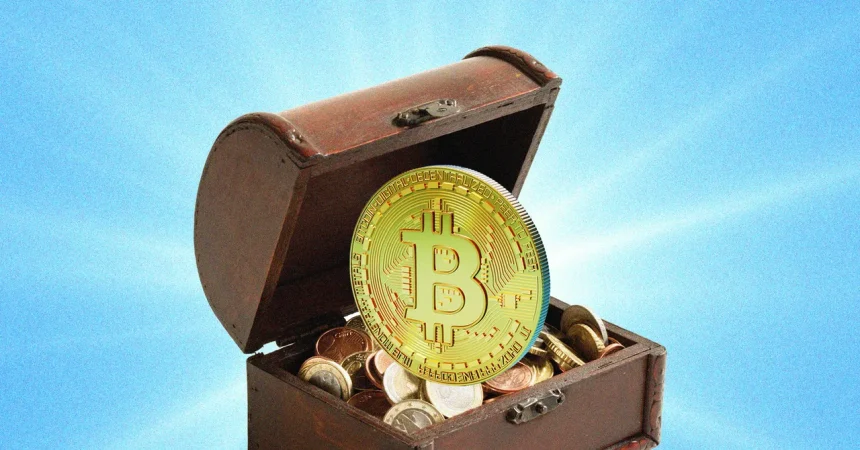
Ahoy matey! If someone you know owns cryptocurrency and you expect to inherit it, I hope you have a good map, a sturdy shovel, and a hearty dose of pirate patience—because retrieving those digital doubloons may be a genuine treasure hunt. And if you are the one holding the crypto, listen closely: if you do nothing, those coins may very well die with you. In the United States, cryptocurrency gets treated as a digital asset, not as money, when it comes to probate and estate law. That sounds like a dry technical detail, but it matters enormously when someone passes away. With ordinary money and physical possessions, you can sign a beneficiary form, write a last will and testament, or create a living trust that says exactly who gets what when you die. The law is comfortable with that. But with digital assets—emails, photos, social media accounts, and yes, cryptocurrency—the law takes a much more cautious approach. It basically says we should not assume that a dead person wanted their private digital life handed over to someone else simply because that person is a family member or appears in an old will. Unless the deceased explicitly said, “Here are my digital keys, and I want you to have them,” the legal presumption is often the opposite. That puts cryptocurrency in an awkward, dangerous gray area. It can be treated like a secret diary: private, protected, and off-limits. And yet, unlike a diary, cryptocurrency can be worth a small fortune. So the whole thing becomes a perfect storm of good intentions, legal caution, and technical complexity. You can have the most loving family in the world, and still lose everything simply because you didn’t leave a clear trail of instructions.
To make sense of your options for passing on crypto after death or incapacitation, you first have to understand one huge dividing line: whether the crypto sits in a custodial wallet or a noncustodial wallet. Let’s talk about those two types in plain language. A custodial wallet means a third party—like a bank, a financial institution, or a cryptocurrency exchange—holds and manages the assets for you. You might log in, see your balance, and even trade, but the actual private keys are in someone else’s vault. For everyday users, that feels familiar, sort of like leaving your money in a checking account. A noncustodial wallet, on the other hand, eliminates the middleman entirely. You hold your own private keys, and therefore you have full control—and full responsibility. If you are a crypto enthusiast who got into Bitcoin or Ethereum because you distrust the traditional banking system, a noncustodial wallet is kind of the whole point. You don’t want a bank peeking over your shoulder. You want to be your own bank. As the old crypto saying goes, “Not your keys, not your coins.” That ethos is beautiful, but it makes inheritance a nightmare. Because if you are your own bank and you die without leaving the key to your vault, the vault stays sealed forever. No customer service line, no court order that magically unlocks it, no friendly banker to help your grieving widow. Just a string of code and silence.
Now let’s look at the more comfortable path first: the custodial wallet. When you use a third-party custodian to hold your cryptocurrency, you can choose one that has a beneficiary process in place. This is one area where big, well-known financial institutions shine. Charles Schwab and Chase, to use just two examples, now offer cryptocurrency services within their existing brokerage and banking systems. They have been handling wills, estates, and beneficiary designations for generations. If you open a brokerage account and buy crypto through it, the same beneficiary form you fill out for your stocks and bonds can apply to your crypto holdings. One form, one account, one smooth transition when you die. Your grandchild won’t have to hack your password or decode your riddles. They can simply call the bank, provide the right documents, and eventually the crypto moves to them. That is the closest thing crypto inheritance has to a walk in the park. But there are caveats. Even with a custodian, if you never fill out a beneficiary form, your crypto still goes into probate. It becomes part of your estate, and the courts get involved. A good estate plan is still essential. And custodial wallets have their own risks: the company might collapse, the account freeze, or the courts might decide that the digital asset is managed under a different state’s laws and treat it differently. Still, if your priority is making things easy for the people you leave behind, a custodial wallet with a named beneficiary is a solid and sensible approach. It may not be the pure crypto dream, but it is a practical compromise between pirate independence and human reality.
On the other side of the divide sits the noncustodial wallet, and this is where things get truly adventurous. A noncustodial wallet can be a software app on your phone, a hardware device that looks like a USB stick, or even a simple piece of paper with a set of words and passwords printed on it. I use “password” here to mean any string of letters, numbers, or words needed to access the cryptocurrency—passwords, PINs, recovery phrases, whatever. With a noncustodial wallet, there is no company to call, no account number to trace, and no regulatory database storing your information. Three entities might know about your regular bank account: your bank, the government, and the credit bureaus. That gives your family avenues for finding your money after you’re gone. But with a noncustodial wallet, nobody knows anything unless you told them. Your crypto could be sitting on a hardware device in your desk drawer, locked behind a twenty-four-word recovery phrase, and if you never explain that to anyone, it might as well be buried in a sunken chest at the bottom of the ocean. This is not a minor concern. One of the most tragic realities in the crypto world is the huge amount of Bitcoin that has been permanently lost because owners died, became incapacitated, or simply forgot their keys. The coins are still out there, algorithmically waiting, but the private keys are gone. No magic process can recover them. That’s the trade-off for being your own bank: there is no “forgot password” link, and there is no one to rob at gunpoint. You are the sole guardian of your own treasure, and if you don’t pass on the key, the treasure is lost to everyone forever.
The good news is that you can absolutely plan ahead, even if you use a noncustodial wallet. You just have to be deliberate, organized, and willing to have a few honest conversations about death—which, let’s face it, nobody really wants to have. But the alternative is losing your hard-earned assets and leaving your loved ones with nothing but regret. So here is what you can do. First, make a complete inventory of every cryptocurrency you own, every wallet you use, and every exchange account you’ve ever opened. Don’t rely on memory. Write it down, or better yet, use a password manager. Second, decide how you want your crypto to be shared after your death. Do you want everything to go to one person? Should it be split among your children? Do you want a portion donated to a cause you believe in? You can put these wishes into a will or a trust, and you can even create a small guide that explains how to find and unlock your digital assets. Third, think about storage. Some people use a safe deposit box for their hardware wallets and recovery phrases. Others give a sealed envelope with the seed phrase to a trusted family member or lawyer. Some people use “multi-signature” wallets, where two or three keys are required to access the funds, and those keys can be divided among people you trust. You could even set up a “dead man’s switch,” a digital service that automatically sends your keys to someone if you don’t check in for a certain period of time. That sounds clever and futuristic, and it can work, but it also creates new security risks. If the system is activated incorrectly or the keys fall into the wrong hands, your treasure could sail away before you’re even dead. So for most people, the simplest, most reliable approach is still a combination of a well-drafted estate plan, a written or digitally stored set of instructions, and one or two trustworthy people who know exactly where those instructions are.
Let me leave you with this. Whether you’re the one who might inherit crypto or the one who owns it, the time to act is now. If you are the inheritor, start the conversation gently but honestly. Ask if your loved one has a plan for their digital assets. Don’t be afraid to say, “I love you, and I want to honor your wishes. But I also need to know how to access things if something happens to you.” If you are the owner, swallow your pride and your discomfort. You might be fiercely independent, and you might despise banks and the whole traditional financial system. Fine. You don’t have to give your crypto to a bank. But you do have to give your family a clue. You don’t have to tell them everything all at once, but you must leave a trail—a map, a key, a set of instructions. Treat your digital keys just like physical keys. If you owned a house and hid the only key in a secret location, you wouldn’t want to die without telling anyone where it was. Cryptocurrency is no different, except it’s invisible, weightless, and utterly unforgiving. It doesn’t care how much you love your children. It won’t open itself. The law won’t protect you. The market won’t wait. So if you want your treasure to reach the people you care about, you must actively build the bridge between your death and their future. No one else can do it for you. You can’t take it with you, as they say, but you can absolutely leave it behind—provided you’re brave enough to plan, honest enough to share, and wise enough to understand that true ownership includes the responsibility of passing it on. So sit down, write down your passwords, talk to a lawyer, and have the hard conversation. Your future heirs will thank you. Your crypto will not lose value. And your peace of mind will be worth more than any coin, token, or stubborn illusion that you can keep it all forever.