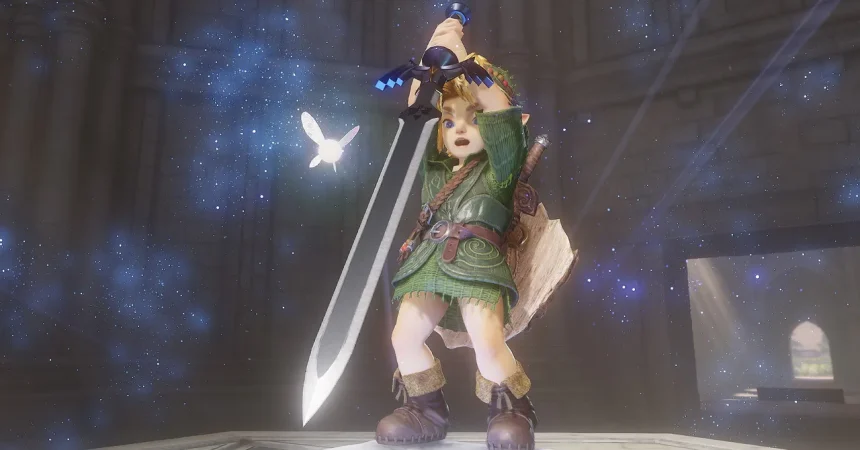
The video game industry has changed profoundly over the past three decades, and the expectations we bring to major releases have shifted along with it. It is no longer enough for a game to simply function well or look charming; contemporary AAA titles are judged against an incredibly high bar. Players now expect interconnecting level designs that reward exploration, intricate storylines that weave together emotional and thematic complexity, and highly realistic environment and character model details that make the world feel alive. These are the table stakes for any major studio hoping to capture the public imagination. But technology alone does not explain this transformation. Video games have become a mainstream cultural force, and the tastes of the wider culture have been reshaped by media that were once considered niche or regional. Anime and manga, for instance, have evolved from passionate subcultures into global phenomena over the past thirty years, influencing everything from fashion to filmmaking to the way players interpret visual storytelling. When a new game character is designed, or an old one is reimagined, the audience is not just comparing it to previous installments in the franchise; they are holding it up against a vast, interconnected web of global pop culture influences. This is the context in which the recent reveal of a new look for Link, the legendary hero of the Zelda series, has ignited so much conversation. It is not simply about nostalgia or aesthetics; it is about what the character represents in a massive, modern entertainment landscape.
There is a tendency among fans to assume that creative decisions like character redesigns are made casually, perhaps by an individual artist with a particular vision. But Clayton Lundgren, a former quality assurance tester for the developer Naughty Dog who now streams Ocarina of Time and other games on Twitch, offers a more grounded perspective. He points out that a change as significant as the key art for a main character would never slip through without intense scrutiny from multiple levels of management. It is the kind of decision that goes far beyond the person who drew it, passing through a gauntlet of quality inspection and strategic review. When a studio commits to a new design, they are not just making a creative choice; they are making a long-term commercial commitment. As Lundgren puts it, this is twenty-plus years of merchandising that the company is committing to. Action figures, lunchboxes, posters, clothing, animated adaptations, and countless other products will all bear this new image. The character is an intellectual property, a brand asset that must carry the weight of countless products and future releases. By acknowledging this reality, Lundgren humanizes the decision-making process, reminding us that developers are not just artists but also custodians of a beloved franchise. There is a deep sense of responsibility involved, one that balances the desire to innovate with the need to preserve what fans recognize and love. This is not a decision made lightly or in a vacuum; it is a calculated, heavily examined choice that reflects both the values of the studio and the demands of the market.
To understand why any alteration to Link’s appearance feels so significant, it helps to look back at the character’s long and surprisingly varied history. Since The Legend of Zelda launched the franchise in 1986, Link has existed in many forms. His long hat, pointy ears, blond hair, green tunic, and the iconic Master Sword are often thought of as the staples of his design. Yet none of these characteristics have remained completely stable across his nearly forty years of existence. He has had pink hair, a decision that now seems almost rebellious compared to the familiar blond locks. His tunic has also changed color, appearing in shades of blue and red depending on the game. He has even been a tree in one of the more bizarre interpretations of the character. These transformations show that Link has always been a fluid figure, a hero that can be reimagined while still retaining a certain essence. The remake of Ocarina of Time, however, takes this evolution a step further. Rather than simply updating the textures or smoothing out the polygons, this new version appears to be a ground-up rethinking of the game’s visual language. The character model is different, the lighting is more dynamic, and the world geometry has been altered in subtle but meaningful ways. It is not just a fresh coat of paint; it is a reinterpretation of what Ocarina of Time means in the context of modern gaming. This kind of bold transformation can be jarring, but it also reflects the same spirit of reinvention that has kept the Zelda franchise alive for decades. Link has always been a character who changes with the times, and this latest iteration is just another chapter in his long and storied journey.
Lundgren, who has spent at least a thousand hours in Ocarina of Time across speed runs, challenge runs, and community competitions, is uniquely positioned to notice the differences between the original and the remake. When he watched the new trailer, the reveal was immediate and unmistakable: this is not the same Ocarina that players have been revisiting for years. Many fans focused on the rich detail of the underbrush and the sunbeams filtering through the trees in Kokiri Forest, interpreting those visual flourishes as proof that this was a comprehensive remake rather than a simple remaster. But Lundgren saw something more telling. He noticed that the undulation in the ground was different, a subtle but crucial detail that only someone with thousands of hours of experience would catch. This is a beautiful illustration of how deeply players can internalize a game’s geography. For the average player, the ground might just be the surface their character runs across, but for someone like Lundgren, it is a familiar landscape, a place that exists in memory as vividly as a real home. When the shapes of that landscape shift, even slightly, it is a profound change. His observation also speaks to the level of craft involved in the remake. The developers are not just copying and pasting old assets; they are reshaping the environment to feel more organic, more natural, and more alive. This attention to the smallest details is what separates a passionate remake from a lazy cash-in. It shows a genuine commitment to honoring the original while bringing it fully into the present.
The fan reaction to this remake is a reflection of the complicated relationship players have with nostalgia and progress. On one hand, there is a deep desire to revisit the games that shaped our childhoods, to recapture the magic of a simpler time. Ocarina of Time is not just a game; it is a cultural touchstone, a defining experience for an entire generation of players. On the other hand, there is a curiosity about what these beloved worlds could look like with modern technology and contemporary design philosophies. The remake attempts to satisfy both impulses, offering a familiar story and structure while presenting it with the richness and complexity that players now expect. It is a delicate balancing act, and not everyone will be pleased. Some fans will miss the slightly awkward, minimalist qualities of the original graphics, seeing them as part of the game’s charm. Others will embrace the new level of detail, finding that it brings the world closer to what they imagined when they first played it. Lundgren’s perspective suggests that the people working on the remake understand this tension deeply. They know that they are not just updating a game; they are handling a piece of cultural heritage. Every decision, from the way the grass bends to the angle of the sun, is made with the awareness that millions of players have their own memories of this world. That sense of responsibility can be daunting, but it also drives developers to create something that feels both respectful and innovative.
In the end, the conversation around Link’s new look and the Ocarina of Time remake is really a conversation about the nature of video games as living cultural forms. Games are not static artifacts preserved in amber; they are constantly being reinterpreted, remastered, and reimagined as technology evolves and audiences change. This is what allows the medium to remain vibrant and relevant. A character like Link endures not because he is unchanging, but because he is capable of growth and adaptation while still carrying the values that make him beloved. His courage, his sense of adventure, his dedication to protecting those who cannot protect themselves—these are the qualities that remain constant no matter what color his tunic is or how the landscape bends beneath his feet. The remake of Ocarina of Time is a celebration of that spirit, a reminder that the stories we love can always be told anew. As players, we are invited to engage with these changes, to argue about them, to embrace them or reject them, but ultimately to keep the conversation going. That is the beauty of a franchise like Zelda; it belongs to all of us, the players who explore its worlds and the creators who build them. By humanizing the development process and considering the choices made behind the scenes, we can appreciate both the artistry and the strategy that go into every significant decision. The new Link is not a betrayal of the past; he is a continuation of a long tradition of reinvention. And if the past forty years are any indication, he will continue to evolve for decades to come.