Chess is a fascinating paradox of logic and emotion, often described by grandmasters like Garry Kasparov as a form of “mental torture.” It is a game defined by near-infinite possibilities, where the search for the perfect move can keep a lifelong student humble, yet the thrill of a hard-won victory is truly addictive. In our modern era, the barriers to entry have vanished; you no longer need a local chess club or a dedicated partner waiting in the living room. Whether you are battling a global opponent online or analyzing positions against a sophisticated computer engine, the game has evolved. Over the past month, my eldest child—a burgeoning chess enthusiast—and I have immersed ourselves in the world of smart chess boards, exploring how these devices bridge the gap between soulful, tactile tradition and the high-speed convenience of the digital world.
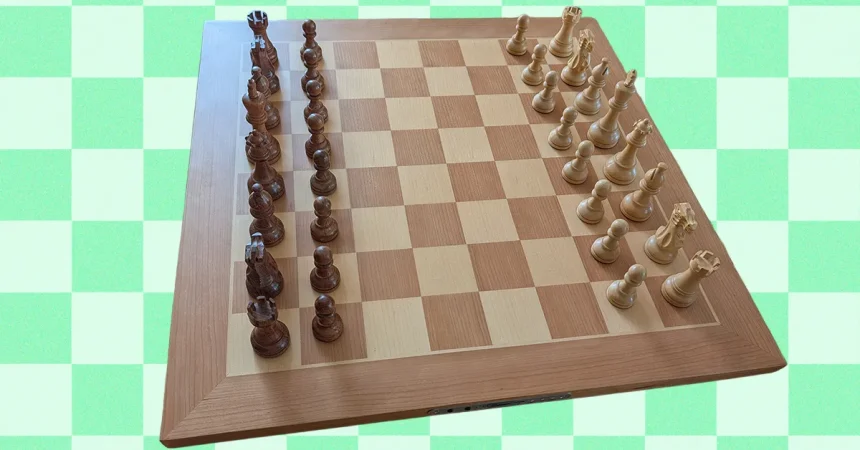
My top recommendation in this space is the Chessnut Pro, a board that successfully manages to hide cutting-edge technology behind a mask of timeless elegance. Crafted from beautiful beechwood, it feels like a serious, professional setup, featuring weighted pieces that have that distinct, satisfying “thud” which anchors the game in reality. It is a full tournament-sized board, commanding space and respect on a desk, yet it carries a sleek, minimalist aesthetic. Unlike older technology that required you to aggressively press down on squares to register a move, this board uses sophisticated sensors to detect piece movement seamlessly. The clever integration of subtle red LEDs within the squares is brilliant, guiding your play without disrupting the classic look that makes a physical board so appealing in a home environment.
The real magic of the Chessnut Pro lies in its versatility, particularly its ability to translate physical moves into digital play. Through a simple Chrome browser extension, we were able to bring our physical board to life on popular platforms like Chess.com and Lichess.org, pitting our tangible pieces against faceless opponents from all over the world. There is something profoundly satisfying about looking at a physical board rather than a glowing screen while you contemplate your next sacrifice or positional squeeze. However, perfection is elusive; we did encounter some occasional hiccups with connectivity that necessitated quick reconnects, and the built-in app’s AI opponents left much to be desired. While the hardware is top-tier, the software environment—at least officially—benefits from a little bit of experimentation and community-driven workarounds to unlock its full potential.
For those who find the price point of a full-scale professional board a bit intimidating, the market offers practical alternatives that don’t sacrifice the “chess feel.” The Chessnut Air serves as the entry-level gateway, offering a compact, portable design that is perfect for smaller spaces or travel. While it is smaller and lighter than its professional counterpart, it provides the same fundamental sensory experience that makes playing with wood so much more enjoyable than dragging a mouse across a computer screen. Stepping up to the Air+ bridges the gap, offering those premium weighted pieces and the more refined, subtle lighting of the Pro model. These variations ensure that regardless of your budget, you can find a device that respects the ancient weight and history of the game while plugging it into the modern, interconnected world.
Living with these boards has changed the way my family interacts with the game. Before our testing began, chess was often a sedentary, internal pursuit—either done via a screen or through a dusty set in the attic. With these smart boards, chess has drifted back into the center of our living room. It has become a performance, a shared activity that mimics the intensity of a tournament hall while allowing us to tap into the endless library of online matches. The battery life on these devices is robust enough to last through long, rainy weekend sessions, even if the recharge time requires the patience of a true strategist. It is a delightful evolution of a game that has survived centuries precisely because it allows for these kinds of technological augmentations without losing its soul.
Ultimately, choosing a smart board comes down to what you value more: the immersive, large-scale experience of a tournament-grade board or the flexible, pocket-sized convenience of a traveling set. While the software glitches and required tinkering might keep things interesting, the emotional reward of moving a physical Knight with your fingers while your opponent sits thousands of miles away is unmatched. These boards aren’t just gadgets; they are conduits for human connection. In a world increasingly saturated with virtual noise, having a tangible, wooden piece of history that lights up to help you think is a rare luxury. Whether you are a casual player or a dedicated strategist, these devices offer a unique way to honor a game that provides not just “mental torture,” but a lifetime of quiet, fascinating growth.