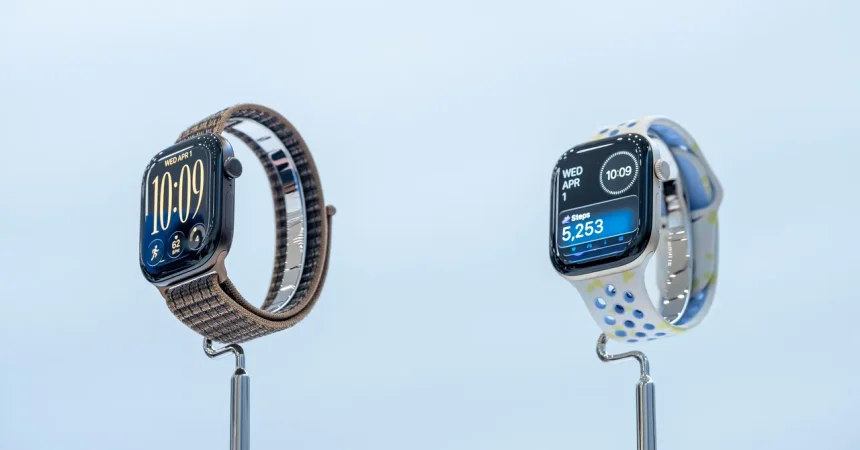
As WIRED’s resident wearable tester, I’ve strapped, clipped, and tapped my way through more smartwatches than I can count. I know there’s life beyond the Apple Watch—plenty of it, in fact. And yet, somehow, I keep coming back to Apple’s wearable. It’s not entirely rational. I joined the Apple ecosystem when I was 10 years old, and I’ve been quietly indoctrinated ever since. I speak iOS, macOS, and watchOS fluently, and for better or worse, that makes the Apple Watch my default. So when someone asks me which Apple Watch they should buy, I get it: the choice is genuinely confusing. There are now three models in the lineup, and on paper the differences can look tiny even when the price gap isn’t. But I’ve tested all of them, worn them through workouts, sleep, travel, and the kind of days where the only notification that matters is the one telling me to stand up. Here’s how the current lineup actually stacks up, in human terms rather than spec-sheet terms. The headline act is the Series 12, Apple’s flagship watch. It’s the one most people should probably buy, but it’s not the only one worth considering. The Ultra 4 is the rugged, long-lasting alternative for people who want to leave the charger at home. And the third model in the lineup is the one you pick if you’re shopping on a budget and don’t need every sensor Apple can cram into a case. The trick is figuring out which of those people you are. Over the years, I’ve learned that the best smartwatch isn’t the one with the most features; it’s the one you actually want to wear. That sounds obvious, but it’s easy to forget when you’re staring at a wall of specs. So let’s talk about what these watches feel like in real life, what they do differently, and where your money is actually going.
The Series 12 is Apple’s flagship watch, and its biggest upgrade is the new Health Sensing System. That name doesn’t sound exciting, but it’s a real leap forward in how often and how accurately the watch keeps tabs on your body. The ECG, for example, now uses 32 electrodes instead of two, which means better skin contact and more reliable readings when you’re checking for irregular heart rhythms. The optical heart-rate sensor has also been improved, with more efficient LEDs that deliver cleaner data. But the most noticeable change is frequency. The Series 12 tracks your heart rate every five seconds throughout the day, and it checks heart rate variability every five minutes or so. To put that in context, the previous generation measured heart rate every five minutes and HRV only about every two hours. That’s not a minor tweak; it’s a completely different level of awareness. Your watch is essentially taking your pulse constantly, which means it can spot trends and catch problems much faster. All that data feeds into Apple’s Readiness score, a new feature that gives you a snapshot of how prepared your body is for the day ahead. It’s not a mystical wellness score; it’s based on your recent activity, sleep, and recovery signals. If you had a rough night and a hard workout yesterday, your Readiness score might tell you to take it easy. If you’re rested and recovered, it’ll nudge you to push harder. It’s the kind of feature that sounds gimmicky until you start using it, and then it becomes part of your morning routine. You wake up, check your score, and adjust your plans accordingly. It’s a little like having a coach who lives on your wrist, except this coach doesn’t judge you when you decide to skip the gym and have an extra coffee instead.
Another major addition to the Series 12 is Audio Intelligence, though two of its headline features—Live Rewind and Siri Recap—won’t arrive until later this year. So if you buy the Series 12 today, you’re getting a watch that’s ready for future software updates, not one that does everything out of the box. Battery life is rated at up to 24 hours, which is the same as before, but charging is faster. Fifteen minutes on the charger gets you up to 12 hours of normal use, and five minutes gets you up to 10 hours of sleep tracking. That’s genuinely useful if you’re someone who forgets to charge overnight. You can just plug it in while you brush your teeth and get through the day. The one thing the Series 12 doesn’t have is satellite connectivity, which is the kind of feature you only miss if you’re hiking off the grid. For everyone else, it has everything you need. Let’s be honest: the Series 12 is the Apple Watch for most people. It’s not the cheapest, but it’s the one that does everything well without making you think about it. The health tracking is more comprehensive than ever, the screen is bright and responsive, and the software is polished in a way that other wearables still can’t quite match. If you’re upgrading from an older Apple Watch, the Series 12 is the model that will make you notice the difference within the first day. The faster heart-rate tracking alone is enough to change how you look at your health data. And if you’re new to the Apple Watch, this is the one to start with. It’s not the flashiest choice, but it’s the one you’ll be happiest with a year from now.
The Ultra 4 is the watch for people who think 24 hours isn’t enough. Its biggest upgrades are longer battery life, faster charging, and the same new health-tracking capabilities as the Series 12. It lasts up to 50 hours on a charge, up from 42 hours on the Ultra 3, and up to 84 hours in Low Power Mode. That’s more than three days of normal use, which is huge for a wearable this capable. Fast charging also gets a boost: 15 minutes on the charger provides up to 18 hours of normal use, and five minutes gives you up to 10 hours of sleep tracking. So even if you forget to charge it, you can get through a night of sleep tracking with a quick top-up. The Ultra 4 also has the new Health Sensing System and the faster S11 chip, so it does the same frequent background heart-rate and HRV tracking as the Series 12. You get the Readiness score, Audio Intelligence, and all the rest. The Ultra 4 is bigger, tougher, and more expensive, but it’s not just for athletes. It’s for anyone who hates charging their devices every day. If you’re the kind of person who wears a watch to bed, tracks workouts, and still wants battery left on day three, the Ultra 4 is worth the extra money. It’s also the one to pick if you spend time outdoors, because the case is more durable and the screen is brighter. But you pay for that in size and weight. It’s a chunky watch, and it doesn’t disappear on your wrist the way the Series 12 does. You have to be comfortable with the fact that you’re wearing a tool, not a piece of jewelry. I’ve worn it through long hikes and weekend trips, and it never let me down. But I’ve also caught myself glancing at it and wondering why my wrist feels so heavy. That’s not a dealbreaker, but it’s something to think about before you spend the extra money.
Choosing between the Series 12 and the Ultra 4 comes down to how you live. If you’re a normal person who charges their phone every night and doesn’t think twice about it, the Series 12 is the smarter buy. It’s lighter, less expensive, and does 95 percent of what the Ultra 4 does. The faster heart-rate tracking, the Readiness score, and the improved ECG are all there. You’re not missing out on much unless you need multi-day battery life or satellite connectivity. If you’re a hiker, a backpacker, or someone who just wants to stop worrying about battery anxiety, the Ultra 4 is the one. It’s also the better choice if you’re a serious athlete who wants to track long training sessions without a charger in your pocket. But honestly, for most people, the Series 12 is the best Apple Watch. It’s the one I’d recommend to a friend who asks me which Apple Watch to buy, because it hits the sweet spot between features, comfort, and price. Then there’s the third model, the budget option. It’s for people who want the core Apple Watch experience—notifications, workouts, sleep tracking, and basic health monitoring—without paying for the premium sensors and the latest processor. You don’t get the Readiness score or the frequent heart-rate tracking, and the battery life isn’t as good. But if you’re upgrading from an old Apple Watch or buying your first one, it’s a perfectly good entry point. The problem is that it’s hard to go back once you’ve seen what the higher-end models can do. I’ve tested all three, and I can tell you that the extra money is real. The question is whether you’ll actually use the extra features. If you won’t, save your money. If you will, don’t hesitate.
At the end of the day, the best Apple Watch is the one you’ll actually wear. I’ve spent years testing smartwatches, and I’ve learned that specs don’t matter if the watch is too big, too ugly, or too annoying to charge. The Series 12 is the most balanced Apple Watch Apple has ever made. It’s not perfect, but it’s the one I keep coming back to. The Ultra 4 is the one I’d choose if I were heading into the mountains for a weekend. And the budget model is the one I’d recommend to someone who just wants notifications on their wrist without spending a fortune. As for me, I’m still an Apple Watch person. I’ve tried the alternatives, and I’ve appreciated them for what they are. But after all these years, the Apple Watch is still my default. It’s not because I’m lazy or stuck in my ways. It’s because Apple has built a wearable that fits into my life in a way that no other device has managed to do. That’s not a spec. It’s a feeling. And it’s why, when someone asks me which Apple Watch to buy, I can answer without hesitation: get the Series 12 if you want the best all-around experience, get the Ultra 4 if you need more battery, and get the budget model if you just want to dip your toe in. You can’t go wrong with any of them, but you’ll know which one is right for you the moment you put it on. The best advice I can give is to be honest with yourself about how you’ll actually use the watch. Don’t buy the Ultra 4 because it looks cool if you never leave the city. Don’t buy the Series 12 if you’re going to be frustrated by charging it every night. And don’t buy the budget model if you know you’ll be jealous of your friend’s Readiness score. Buy the watch that fits your life, not the one that fits someone else’s. That’s the real secret to choosing the right Apple Watch, and it’s the same advice I’d give for any piece of technology. The best device is the one you stop thinking about, because it just works. For me, that’s still the Apple Watch. For you, it might be a different model, a different brand, or even no watch at all. But if you’re reading this, you’re probably already leaning toward Apple. Trust that instinct, pick the model that makes sense for your routine, and enjoy the feeling of having a tiny, helpful, endlessly capable companion on your wrist. It’s a good feeling. I’ve had it for years, and I don’t see it going away anytime soon.