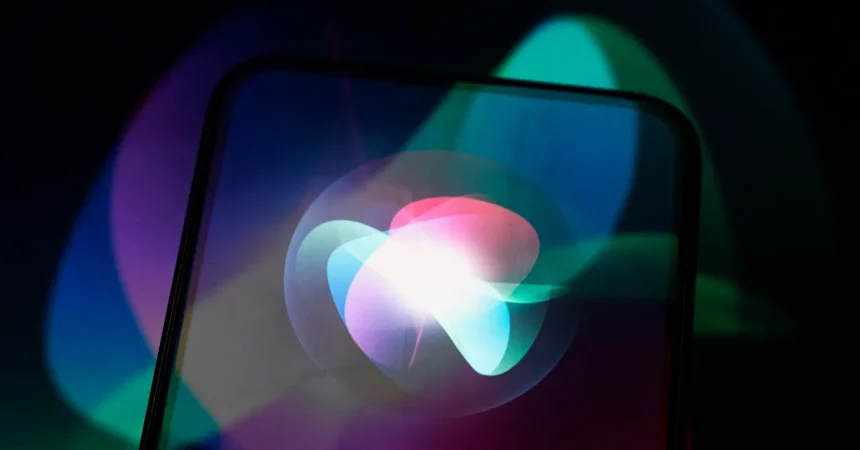
At the 2026 Worldwide Developers Conference (WWDC), Apple finally unveiled the long-awaited, total overhaul of Siri, signaling an end to the era of the assistant’s comparative stagnation. By embedding advanced generative AI—fueled in part by a strategic partnership with Google Gemini—Apple is shifting Siri from a simple, command-driven tool into a deeply proactive, intelligent companion. This isn’t just a minor patch; it’s a fundamental reimagining of what an iPhone assistant should be. The update, slated to roll out later this year, introduces a dedicated Siri app, allowing users to engage in ongoing, ChatGPT-style conversations that feel more like a human dialogue than a series of isolated voice commands.
The core philosophy of this new Siri is “contextual intelligence.” Unlike its predecessor, which often struggled to connect the dots between different apps, the new version is designed to synthesize information across your entire Apple ecosystem. If you’re trying to draft an email or respond to a group chat, the revamped Siri can now pull relevant details from your Notes app or search through your personal data to provide tailored, meaningful assistance. By giving the AI permission to “see” what is on your screen and understand your personal workflow, Apple is betting that users will trade a bit of privacy for an assistant that finally feels like it actually knows them.
This pivot comes at a critical time, as Apple has spent the last few years watching competitors like OpenAI’s ChatGPT, Anthropic’s Claude, and Google Gemini seize the spotlight with their rapid advancements in large language models. For a long time, Siri felt static and programmatic, leaving many tech users to wonder if the company that once pioneered the digital assistant had lost its touch. As analyst Avi Greengart noted, Siri had fallen into a rut of limited, transactional functionality while the rest of the tech world moved toward dynamic, generative problem-solving. This overhaul is Apple’s definitive response to that criticism, aiming to reclaim its territory on the devices it defined.
To understand why this is such a high-stakes moment, one must look back at the original debut of Siri in 2011. Back then, Siri was a cultural phenomenon—the quintessential “future” of the iPhone that could set timers or check the weather with a simple voice prompt. For years, being the default assistant gave Apple a massive competitive edge, but as time went on, that excitement waned. The frustration reached a breaking point following a failed rollout of AI features announced in 2024, which led to a $250 million settlement over concerns that the company had over-promised and under-delivered. Learning from that friction, Apple is now moving with a more calculated focus on execution.
Despite the skepticism surrounding Apple’s delay, industry experts like IDC research director Ramon Llamas argue that the company still has a unique advantage: the ability to refine and platform-ize new technology better than almost anyone else in the industry. Apple has a storied history of entering a market late, observing the flaws of early competitors, and delivering a version that feels more polished and integrated into the user’s life. The question is no longer whether Apple can innovate, but whether they can make this new, aggressive version of Siri feel indispensable rather than just another flashy feature that clutters the interface.
Ultimately, by integrating not just its own model but also platforms like ChatGPT and Google Gemini, Apple is signaling a shift toward a more modular, flexible ecosystem. The new standalone Siri app is designed to meet the modern expectations of a 2026 user—supporting text-based requests, file uploads, and long-term conversation threading. This is a move away from the “one-shot” query model and toward a relationship-based model of computing. If Apple can successfully balance this newfound power with the privacy its users expect, the new Siri may finally bridge the gap between a simple voice-controlled gadget and a true, intelligent digital assistant.