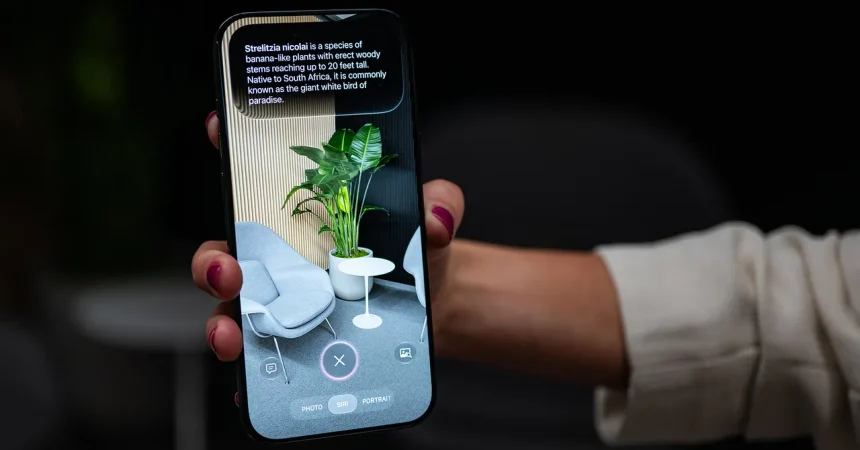
The fundamental nature of photography is undergoing a seismic shift, leaving many of us to wonder: what does it actually mean to take a “real” picture anymore? For as long as we’ve had cameras, a photograph has served as a digital anchor—a tether to a specific moment, location, and person that existed exactly as we saw it. Today, however, our smartphones are evolving into sophisticated creative studios where the line between reality and computation is becoming increasingly porous. With tech giants like Google and Samsung leading the charge, we now have the power to erase strangers from our vacation shots, relocate a loved one to a different part of the frame, or even conjure new objects out of thin air. What was once the domain of expert graphic designers using complex desktop software is now a one-tap solution in our pockets, fundamentally changing how we record our lives.
Apple stands at a fascinating crossroads in this narrative. As the company prepares to introduce its latest wave of artificial intelligence features in iOS 27, it finds itself balancing the desire for modern convenience against the necessity of maintaining “provenance.” Jon McCormack, Apple’s vice president of camera software engineering, has been clear about his company’s strategy: they aren’t interested in chasing the “AI for the sake of AI” frenzy that has gripped the industry. Instead, Apple is positioning its features as “superpowers” for the average person, meant to solve the common, frustrating limitations of mobile photography. By allowing users to fix a crooked frame or extend the borders of an image, Apple argues they are providing utility rather than encouraging total fabrication.
The new features, particularly “Extend” and “Spatial Reframe,” demonstrate just how advanced these generative tools have become. When you use the “Extend” tool, the iPhone’s internal models analyze the existing image, “think” about what kind of landscape or background should logically exist beyond the current edges, and craft entirely new, fake pixels to fill that space. While this offers incredible flexibility for composition, it also underscores the growing distance between the raw light that hit the camera sensor and the final image appearing on our screen. These tools aren’t just adjusting exposure or contrast; they are actively inventing visual information that was never there, transforming the iPhone from a simple recorder of truth into a generator of digital possibilities.
Despite these capabilities, Apple is intentionally placing guardrails around their tools, likely to mitigate the ethical concerns that accompany the rise of generative media. Unlike some third-party apps that allow users to generate bizarre, hyper-realistic, or misleading scenes entirely from scratch, Apple’s native Photos app keeps the edits grounded in the original data. For instance, the system prohibits users from using AI to alter the facial features of the main subject or to remove a person who is central to the shot. Furthermore, they’ve limited the “Extend” tool, allowing only a single expansion of up to 25 percent rather than letting users infinitely stack AI-generated additions. This creates a sandbox environment where users can clean up a “messy” photo, but are effectively prevented from turning their camera roll into a repository of total misinformation.
To further address the potential for deception, Apple is implementing Google’s SynthID technology, which will embed an invisible digital watermark into images edited with these generative tools. This is a critical step toward transparency—a way for Apple to “sign” an image, acknowledging that while it may look authentic, it contains synthetic elements. If these photos are shared across social media or other platforms that support the standard, the system can ideally flag them as AI-altered. However, as the tech community has pointed out, no watermark is entirely foolproof, and the race between digital detection and ever-improving AI will surely be a defining struggle of the coming decade. Even so, the inclusion of this tech signals that Apple recognizes that the “sanctity” of our digital archives is worth protecting.
Ultimately, internal and external skepticism about these tools comes down to a simple, human philosophy: memories should be honest. McCormack’s conviction—that a photograph is meant to be a bottle in which we capture a moment that truly happened—is the core argument for why these limits exist. By offering powerful tools to fix minor annoyances while restricting the ability to fundamentally rewrite the truth, Apple is attempting to navigate a path that keeps our personal histories “authentic.” As we move further into an era where AI can generate anything, the value of an unedited, “honest” photograph may actually increase. Perhaps the next generation of photography won’t be defined by how much AI we can pack into our phones, but by our ability to curate and protect the moments that don’t need to be generated at all.