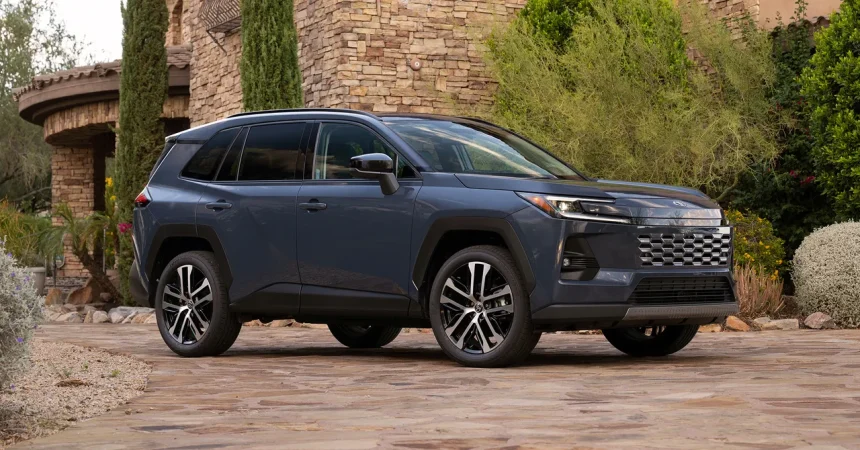
You’ve heard it a thousand times: buying a new car is one of the worst financial moves you can make. The moment you drive it off the dealership lot, it depreciates faster than a carton of milk left out in the sun. Cars, we’re told, are not investments—they’re expenses with wheels. So when something comes along that flips that logic completely on its head, it’s worth paying attention. Right now, that something is the 2026 Toyota RAV4. According to fresh data from the online automotive marketplace CarGurus, some used RAV4s are actually being listed for $3,000 to $6,000 more than brand-new ones sitting on dealer lots. Let that sink in for a moment. A car that should be losing value by the mile is instead aging like a fine wine, holding its worth and then some. It’s the kind of market quirk that makes economists scratch their heads and ordinary buyers wonder if they should have bought two. But there’s a real story behind this strange phenomenon, and it says a lot about where American driving habits are heading.
The big reason for the RAV4’s bizarre behavior is that Toyota made a bold move: the company dropped the gas-powered RAV4 from its lineup and went all-hybrid. That decision, combined with the country’s insatiable appetite for fuel-efficient vehicles, has created a perfect storm. The RAV4 is one of the best-selling SUVs in America, and suddenly the only version you can buy is one that pairs a traditional engine with an electric motor. Hybrid demand has been so strong that Toyota simply can’t make new models fast enough. Kevin Roberts, director of economic and market intelligence at CarGurus, says the situation reminds him of the pandemic-era chip shortage, when new car supply dried up and used car prices shot through the roof. Back then, some people bought cars and sold them months later for a profit—an almost unheard-of scenario. Now, with the RAV4, we’re seeing echoes of that same upside-down economy. Roberts puts it plainly: “Hybrid demand is so strong, the RAV4 is still in that 2021 world.” In other words, what happened during the pandemic wasn’t just a one-off freak occurrence; it’s a pattern that can reappear whenever supply can’t keep up with desire.
The timing couldn’t be more telling. As the leaves change and the air gets crisp, what started as a hot hybrid summer has turned into a toasty hybrid autumn. Toyota reported that its hybrid sales jumped 29 percent in the third quarter of 2026. Kia said its hybrid sales more than doubled. According to Cox Automotive, nearly one in six new cars sold in the United States is now a hybrid. That’s a massive shift for a country with a long-standing reputation for loving gas-guzzling trucks and SUVs. But Roberts thinks that reputation is starting to crumble. “The American market has a reputation for gas guzzlers, but we’re starting to shake that reputation because of how much we like hybrids,” he says. And what’s driving that affection? One word: gas prices. They have skyrocketed since the start of the Iran war and the ensuing conflict in the Strait of Hormuz, a vital global artery for oil and gas production and shipping. National average gas prices hit $4.40 a gallon, a 40 percent jump from the same time last year, according to AAA. In California, drivers are paying an average of $6.36 a gallon. That kind of pain at the pump changes people’s priorities quickly. When filling up your tank starts to feel like a luxury purchase, fuel economy becomes less of a nice-to-have and more of a survival tactic.
Car buyers, Roberts says, are a simple bunch. When gas prices rise, they immediately start thinking about fuel-efficient cars. And soon enough, they actually start buying them. This is where hybrids have a huge advantage over their fully electric cousins. The US electric vehicle market is struggling right now, and hybrids are the clear beneficiaries. New EV sales are down almost half from last year, largely because the Trump administration cut a federal tax credit that had made the often-expensive electric powertrains more affordable. Without that financial cushion, many buyers are hesitating. Hybrids, on the other hand, don’t force drivers to change their habits in any dramatic way. You still pull into gas stations, you still fill up, and you still go about your day. You’re just doing it a lot less often. Even plug-in hybrids, which can run mostly on electricity, still have a gas tank as a safety net. That’s comforting for people who worry about charging infrastructure, range anxiety, or simply the unfamiliarity of going all-electric. There’s also the simple matter of choice. A few years ago, if you wanted a hybrid, your options were limited to a handful of compact sedans. Now, nearly every major category of passenger vehicle—three-row SUVs, pickups, minivans, luxury cars—comes in a hybrid version. You don’t have to compromise on space, style, or capability to get better fuel economy anymore.
That wave of enthusiasm has spilled over into the used car market, and the numbers tell a striking story. According to iSeeCars.com, hybrid prices on the used market are up almost 5 percent over last year. The average used hybrid now sells for about $34,500, which is actually higher than the average used electric vehicle or used gas-powered car. That’s a remarkable reversal of the traditional pricing hierarchy. Used car buyers, it seems, are especially focused on long-term fuel savings. They might not be able to afford a brand-new hybrid, but they’re willing to pay a premium for a used one because they know the money they’ll save on gas over the next several years will more than make up for the higher upfront cost. It’s a rational calculation, but it’s also an emotional one. There’s a certain peace of mind that comes with knowing your car is working with you, not against you, especially when the world feels economically and geopolitically unstable. A hybrid feels like a small act of control in a situation where so much is out of your hands. You can’t control the price of oil or the conflicts in faraway straits, but you can control how many times you visit the gas station each month. That feeling is worth something, and the market is reflecting it.
In the end, what we’re witnessing with the Toyota RAV4 and the broader hybrid boom is more than just a market trend. It’s a glimpse into the future of American driving. The old stereotype of the American driver as someone who wants nothing but enormous, thirsty trucks is giving way to something more pragmatic. People are still buying SUVs and pickups—they haven’t given up on comfort or utility—but they want those vehicles to be smarter about fuel. Hybrids offer the best of both worlds: the familiarity and convenience of gasoline, with the efficiency and environmental benefits of electricity. And for the lucky few who bought a RAV4 at the right moment, there’s an even more unexpected benefit: a car that didn’t depreciate like a brick, but instead held its value like a prized asset. It’s a reminder that conventional wisdom isn’t always right. Sometimes, in the strangest of times, a car can be more than just a way to get from point A to point B. It can be a smart investment, a statement about your values, and a shield against the unpredictability of the world. The RAV4’s upside-down pricing is a weird, wonderful anomaly—and maybe, just maybe, a sign that the American love affair with the car is evolving into something a little more thoughtful. So the next time you hear someone say cars are always bad investments, tell them about the 2026 Toyota RAV4. Tell them about the used models selling for more than new ones, about drivers who bought hybrids and watched their resale value climb, and about a country that finally started paying attention to the cost of every mile. The conventional wisdom might not be changing overnight, but for hybrids, the road ahead looks brighter than ever.