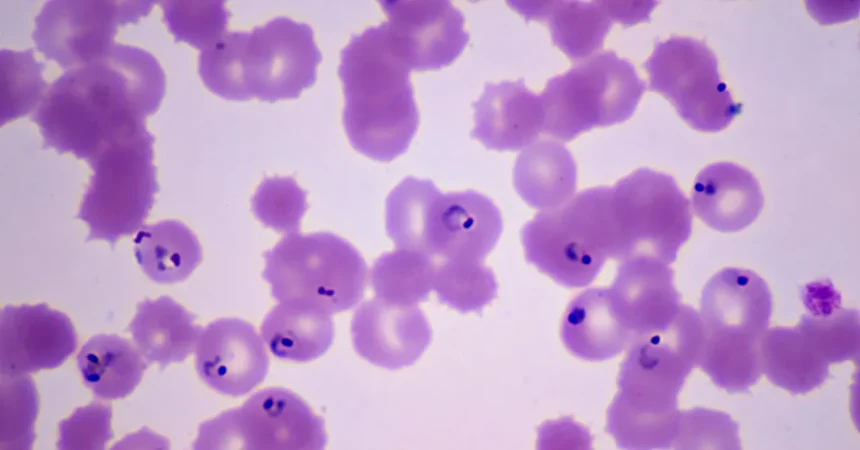
For decades, the frontline defense against malaria in sub-Saharan Africa has been a class of drugs known as Artemisinin-based Combination Therapies, or ACTs. The most common of these, a duo called artemether-lumefantrine, has been a lifeline, saving millions of lives since its rollout in the early 2000s. But that lifeline is now fraying. A new and deeply concerning threat has emerged from the heart of East Africa: the malaria parasite is evolving resistance, not to the fast-acting artemisinin component, but to its crucial partner, lumefantrine. To understand why this is so terrifying, one must understand the partnership. Artemisinin works like a rapid-strike bomb, destroying the parasite’s defenses within the first hours of an infection, but it leaves the body quickly. Lumefantrine is the clean-up crew; it persists in the bloodstream for days, mopping up any surviving parasites. If the parasite learns to shrug off lumefantrine, the clean-up crew fails, and artemisinin is left fighting alone. When a drug combination breaks down in this way, it historically heralds a full-scale collapse of malaria treatment, a collapse that public health officials have dreaded for years.
Now, a landmark study published in the prestigious journal Nature Medicine has sounded the clearest alarm yet. A team of researchers led by Jeffrey Bailey, a professor of pathology and laboratory medicine at Brown University, and Karamoko Niare, the paper’s lead author, conducted a massive genomic surveillance operation in Uganda. They collected and performed whole-genome sequencing on 157 malaria parasite samples taken from infected patients between 2016 and 2024. Their goal was to hunt for the genetic fingerprint of resistance. What they found was a shock. They identified a completely novel variant of a gene already infamous in malaria circles—the Kelch13 (or K13) gene. Previously, mutations in K13 were the hallmark of artemisinin resistance, particularly in Southeast Asia. But this new variant was entirely different. It consisted of three specific amino acid changes paired with two deletions—segments of the parasite’s DNA that were entirely missing. This unique cluster of mutations, which they dubbed the “PIN” mutation lineage, was unlike anything seen before in Africa. The discovery immediately shifted the focus from a known enemy to a strange, new invader with a terrifying level of geographic momentum.
The researchers then performed a form of genetic archaeology, digging through historical DNA databases collected between 2001 and 2015 from across the globe. The results painted a stark picture of this mutation’s explosive rise. Among thousands of historical samples, the PIN mutation was virtually absent—found in only five samples, all from neighboring countries like the Democratic Republic of Congo and Kenya. More tellingly, it was completely undetectable in any of the 13 samples taken from Uganda as recently as 2010. Yet, when they turned to the modern samples from Uganda, the PIN mutation was everywhere. By 2023, it had already reached 50% prevalence in northern Uganda and 55% in the east. By 2024, the numbers had skyrocketed to 84% in the north and 55% in the east. How could a mutation spread so fast? The answer lies in the parasite’s genetic code. The DNA surrounding the PIN mutation was remarkably intact, showing very few signs of recombination—the genetic shuffling that typically breaks up chromosomes over generations. This absence of recombination means the mutation did not slowly smolder in the population. Instead, it emerged recently and spread rapidly as a dominant, clonal wave, likely carried by a single mosquito that hitched a ride along trade routes, sweeping through the country like a viral pandemic within a species. It is a case of evolutionary sprint, not a marathon.
Correlation, of course, is not causation. Seeing the mutation rise in tandem with drug failures was one thing; proving the mutation caused the resistance was another. To do this, the Brown team utilized a clever reverse-engineering experiment. They took genetically engineered malaria parasites created in a previous study, where the K13 gene had been intentionally disrupted or knocked out. Then, they exposed these “disabled” parasites to lumefantrine and other antimalarials in the lab. The results were nothing short of definitive. The parasites missing the functional K13 gene were highly vulnerable—they were killed off easily by standard doses of lumefantrine. In stark contrast, the parasites carrying the intact PIN mutation showed robust survival, demonstrating a clear reduction in sensitivity to the drug. Critically, when they tested these same parasites against pure artemisinin alone, there was no significant difference in resistance. This single experiment isolated the exact mechanism: the PIN mutation is a highly specialized armor specifically designed to neutralize lumefantrine, the partner drug, leaving the entire ACT regimen crippled or severely weakened. This validated the PIN mutation as the first confirmed molecular marker for lumefantrine resistance—a smoking gun in the fight against malaria.
The implications of this finding are catastrophic, yet they come with a crucial window of opportunity. Looking back at the history of malaria, we see a pattern of resistance to chloroquine in the 1960s and sulfadoxine-pyrimethamine in the 1990s, both of which led to millions of preventable deaths when the drugs ultimately failed. ACTs are the last remaining bulletproof defense we have. If lumefantrine fails, and artemisinin is left to fend for itself, we risk creating a superbug for which there is no effective oral treatment. However, the sheer precision of this study offers a powerful tool. Because we now know the exact genetic fingerprint of this resistant strain, public health agencies can build and deploy rapid genomic surveillance systems. They can begin monitoring blood samples from rural clinics and mosquito populations across Africa right now, watching for the PIN mutation in real-time. This is no longer a passive observation; it is an active early warning system. If the mutation is detected spreading into new regions, governments can pivot their drug policies, switching to alternative ACT combinations or rotating treatments before the parasite becomes entrenched and the death toll spikes. The researchers, including Niare, stress the urgency: we didn’t have this marker before, but now we do, and it must be incorporated into every surveillance panel immediately.
But behind the cold, hard sequence data and the statistical charts lie the human stories that drive this urgency—the mothers in rural Ugandan villages, the children in crowded clinics, and the farmers whose lives are shattered by cyclical fevers and anemia. While this study measured reduced drug sensitivity in a laboratory dish, the real-world consequence is a longer illness, a higher chance of severe disease, and a child who may not recover despite taking the “blue pills” that used to work. The researchers are careful to note that this is a laboratory-based finding; they haven’t yet quantified the exact clinical failure rate in actual patients, but the trajectory is unmistakable. Still, there is a profound sense of hope woven into this discovery. The fact that an international team could identify a novel mutation, trace its origins back a decade, and prove its function within a single study showcases the incredible power of modern genomic science. It is a testament to human ingenuity in the face of an evolving biological enemy. As this news spreads from the pages of Nature Medicine into the global health community—originally reported by WIRED Japan—it serves as a clarion call. The mutation is out there, but with this knowledge, we are no longer fighting in the dark. We can see the threat, we can track it, and we now know exactly what new drugs and strategies must be developed to outpace it. The fight for malaria control is entering a new, more dangerous, yet more hopeful chapter.