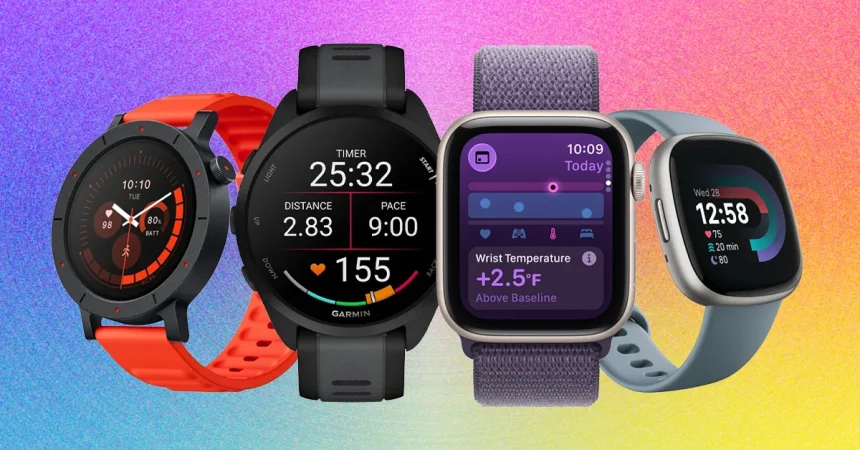
When you’re looking for a reliable, everyday wearable that balances style with function, the Fitbit Versa 4 consistently earns its spot on the recommended lists. Its design hits that sweet spot of being gently curved and comfortable, remaining true to the classic Versa look while reintroducing the physical button that many users desperately missed. The 1.58-inch AMOLED display is arguably a standout feature, offering a vibrant, crisp interface that is easy to read at a glance, whether you’re indoors or out. With a battery life that stretches up to six days, it is a practical companion for those who don’t want to be tethered to a charging cable every single night, letting you focus more on your daily routine and less on your power percentage.
Beyond its aesthetics, the Versa 4 serves as a comprehensive health partner thanks to its refined tracking capabilities. It comes with built-in GPS, which is fantastic for runners or cyclists who want to map their outdoor sessions without dragging their phone along. For swimmers, the integrated motion sensors do a solid job of logging laps in the pool. Perhaps the most modern touch is the integration of Google Health Coach. Rather than just spitting out cold, hard numbers, this AI-powered feature offers personalized insights and coaching that give you a more holistic picture of how your habits—from sleep to stress management—are impacting your overall wellness. Plus, with tools like Google Maps, Amazon Alexa, and Google Wallet built right in, it effectively bridges the gap between a fitness tracker and a true smartwatch.
However, no device is perfect, and the Versa 4 does have a few quirks that might be dealbreakers depending on your personal needs. While it tracks 40 different exercise modes, that number is actually lower than many other specialized trackers on the market, which might frustrate power users who want a massive library of activity types. Most notably, the device is a bit of a “walled garden.” You won’t find support for third-party apps or onboard music controls, and if you’re an iPhone user, you’ll find that voice and texting features are disappointingly limited, favoring those already deeply embedded in the Android ecosystem. Additionally, while it is water-resistant up to 50 meters, it isn’t an adventure watch for deep-sea diving, so keep it strictly to pool laps and casual swimming.
If the Versa 4 doesn’t quite fit your vision, the budget-friendly space offers some compelling honorable mentions. If you’re watching your wallet, the Amazfit Bip 6 is a striking option for just $79. It boasts a beautiful AMOLED screen and a design that punches well above its weight class, supported by a week-long battery and a massive selection of 140 sport modes. It isn’t perfect—the specialized fitness data can occasionally be hit-or-miss compared to higher-end gear—but for the price, it’s a stylish entry point. If you like the look of that but want a more reliable performance, stepping up slightly to the Amazfit Active 2 is a worthwhile investment for the improved accuracy and software experience.
For those who want a tried-and-true fitness companion, the Fitbit Charge 6 remains a gold standard for “getting the job done” without unnecessary complexity. Launched in 2023, it is the perfect middle-ground device; its heart rate tracking is remarkably accurate, often rivaling devices that cost significantly more. A cool bonus for gym-goers is its ability to sync directly with equipment like Peloton bikes and NordicTrack treadmills, making it a favorite for those who frequent the gym. If you’re looking to save even more and don’t need a fancy screen or built-in GPS, the Fitbit Inspire 3 serves as a fantastic, ultra-affordable option that manages to keep all the essential tracking features you actually need for a healthy lifestyle.
Finally, for users who prefer the full “smart” experience over a dedicated fitness tracker, the Samsung Galaxy Watch FE provides a solid bridge into the Wear OS world. Priced at $226, it is a streamlined version of Samsung’s top-tier watches. While it does come with some compromises—like a slower processor, a smaller display, and a battery that will definitely need to be charged every single day—the core health sensors remain excellent. Its heart rate and sleep tracking performance hold their own against its pricier counterparts, making it a great choice for someone who wants the deep integration of a Samsung device without the premium price tag. Ultimately, whether you prioritize longevity, advanced smart features, or pure budget value, the current landscape of wearables has something to help you stay on track.