Paragraph 1: The Pragmatic Courtship of an Unlikely Ally
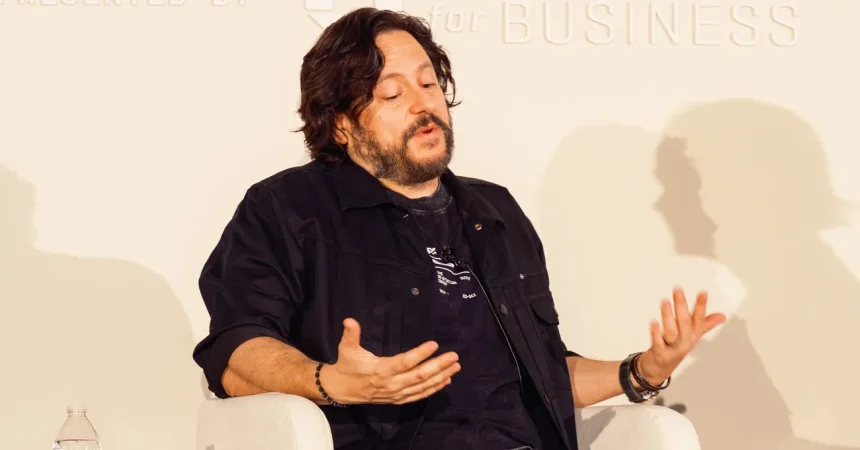
In the sprawling, often chaotic ecosystem of biotech innovation, there exists a strange and fascinating intersection where visionary ambition meets the bluntest forms of political pragmatism. This was on full display when Ben Lamm, the charismatic CEO and co-founder of Colossal Biosciences, took the stage at the WIRED World Fair. Lamm, a self-styled “disruptor” who talks about genetic resurrection with the casual confidence of a tech mogul pitching a new app, has managed to do something that would have seemed impossible just a few years ago: he convinced an administration deeply skeptical of traditional conservation—one that has consistently prioritized resource extraction over habitat preservation—to actively support his initiatives. How did he do it? Lamm explains with a knowing smile that the current administration has a very specific set of priorities. “They like technology, they like to make money, they like to save money—and they also really like to take exciting wins,” he said. For Lamm, this isn’t a critique; it’s a blueprint. He understands that to get a win for his own radical agenda, he has to package it in a language that resonates with the decision-makers in Washington. Instead of pitching the project as merely the preservation of biodiversity—a cause that often falls on deaf ears in political circles—he framed the collection of DNA samples from endangered species as a technological breakthrough and an economic opportunity. The result is a partnership that, while ideologically uncomfortable for many environmentalists, demonstrates Lamm’s relentless focus on getting things done. He isn’t interested in ideological purity or aesthetic preferences; he is interested in outcomes. By aligning the project with the administration’s love for financial efficiency and technological dominance, Colossal has successfully inserted an ounce of genetic conservation into the bloodstream of a policy agenda that otherwise ignores it.
Paragraph 2: The Venture-Backed Ambition and the Rise of a Biological Conglomerate
To understand why the Trump administration might listen to Ben Lamm, one only has to look at the sheer scale of the capital he commands. Colossal Biosciences isn’t just a lab; it’s a financial behemoth designed to monopolize the future of genetic engineering. The company raised a staggering $230 million in its Series C funding round last year, a figure that vaulted its valuation to a breathtaking $10.2 billion. But Lamm isn’t satisfied with that. According to reporting from Axios, the startup is now on the hunt for a new round of funding that would value the company at an astronomical $20 billion to $30 billion. This isn’t just about reviving a mammoth; it’s about building a diversified biological infrastructure empire. Lamm has strategically spun out multiple companies from the Colossal core, each designed to monetize a different application of the proprietary technology they are developing. One such venture uses engineered microbes to break down plastic—a practical, environmentally relevant application of their genetic toolset. Even more controversially, Colossal holds a significant stake in Warhound, a startup co-developed with Palmer Luckey, the founder of Anduril Industries, which is notorious for its defense-oriented hardware. Warhound aims to create genetically enhanced dogs for the military, law enforcement, and first responders. This blending of cutting-edge gene editing with a defense-preneur ethos is what makes Lamm the perfect candidate to navigate the modern political landscape. He doesn’t view the military infrastructure or government contracts as a contradiction to conservation efforts; he views them as symbiotic revenue streams that fund the larger, flashier project of resurrecting extinct megafauna. It’s a deeply technocratic vision of the future, where the tools of capitalism and venture capital are wielded to solve biological problems, and where the government is just another customer in the portfolio of life-science disruption.
Paragraph 3: The Quiet Urgency of the Biobank and the “Puppy Mill” Problem
While the public imagination—and the headlines—are dominated by the promise of woolly mammoths and dire wolves, Lamm insists that the actual soul of the company lies in its biobanking efforts. As climate change, habitat destruction, and human encroachment place unprecedented pressure on the world’s wildlife, Lamm argues that genetic preservation is no longer a luxury; it is a necessity. The urgency is visceral. We are losing species at a rate that outpaces the ability of traditional conservationists to intervene. In this context, having a deep repository of DNA from endangered species isn’t just about future de-extinction; it’s about creating a genetic database that could be used to bolster populations of existing animals that are on the brink. Lamm revealed that the company is applying a similar logic to its Warhound venture. In a surprisingly practical pivot, he confirmed that the goal is to reduce the dependence on what he bluntly called European “puppy mills” that currently churn out working dogs for military and law enforcement. By using genetic engineering to create tailored dogs—perhaps animals with enhanced stamina, improved olfactory senses, or greater disease resistance—Colossal aims to disrupt a brutal and exploitative industry. This is a fascinating humanization of the company’s mission. It frames their work not just as a gimmick to resurrect ancient beasts, but as a direct, tangible improvement to animal welfare in the here and now. It’s a strategic attempt to shift the narrative from the speculative future of 10,000-year-old genetics to the immediate, actionable present of ensuring that the dogs who sniff out explosives or locate earthquake victims are bred more humanely and engineered for peak performance. It paints Lamm as a problem-solver who sees the entire genetic toolkit as a Swiss Army knife capable of solving crises both grand (extinction) and immediate (animal cruelty).
Paragraph 4: The Conservationist’s Nightmare and the Fight Against “Moral Hazard”
Despite his confident pitches, Lamm faces a tsunami of criticism from the conservation establishment. Many ecologists and biodiversity advocates view Colossal not as a savior, but as a dangerous distraction. Their argument is steeped in the concept of “moral hazard”—the idea that promising to de-extinct species in the future could inadvertently increase the likelihood of extinctions today. If politicians believe we can simply reverse extinction later, they have less incentive to pass protective legislation or fund habitat restoration now. This criticism reached a fever pitch when Colossal revealed it was working with the Trump administration on its biobank, given the administration’s record of dismantling environmental protections. Lamm, however, does not shy away from this tension; he confronts it head-on with a bleak realism. He argues that the current biodiversity trajectory is so dire, and the pace of policy change so glacial, that waiting four years for a more sympathetic political climate is a catastrophic mistake. “You don’t put your head in the sand for four years,” he stated, defending his strategy of working with whoever is in power. To him, the end justifies the means—if gathering DNA samples means securing a seat at the table with an administration that would otherwise neglect conservation entirely, then that is a price he is willing to pay. He challenges the critics to offer a viable alternative to his pragmatic approach. In his view, the idealistic conservationists who reject collaboration are the ones consigning species to extinction by refusing to play the game. It’s a compelling, if controversial, argument—one that pits immediate, high-risk action against abstract moral purity, and Lamm is unambiguously choosing to get his hands dirty in the political mud to secure the genetic future of life on Earth.
Paragraph 5: The “Gray Wolf” Conundrum and the Linguistics of De-Extinction
Beyond the political critiques, Colossal faces a deep scientific skepticism regarding the accuracy of its claims. The company has been accused of overselling its results, presenting genetic approximations as resurrections. When Colossal unveiled its creation of “dire wolves,” critics were quick to point out that the resulting animals were genetically almost indistinguishable from gray wolves. Clemson University professor David Jachowski articulated this sentiment best at the time, noting that there is “inherently some subjectivity” in how we define a species. If the genetic essence of a dire wolf is essentially a gray wolf with a few edits, have you actually created a dire wolf, or merely a trophy-wolf designed to generate media hype? It highlights a profound philosophical and scientific debate about what resurrection actually means. Similarly, the company has acknowledged that it will miss its initial 2028 deadline for producing a genuine woolly mammoth, which was the bold promise that launched the company into the stratosphere. Despite this missed deadline, Lamm remains bullish, citing “130 edits” to mammoth genes that have successfully been made. He displays a remarkably graceful surrender to semantics, admitting, “I’m fine if you want to call the company’s creations gene-edited gray wolves or any future wooly mammoths Colossal creates ‘hairy elephants.'” This concession is perhaps Lamm’s most humanizing moment. He reveals himself as a pragmatist who understands that language and marketing are part of the battle, but that the underlying science—the ability to successfully insert ancient genetic sequences into living organisms—is the real value. He accepts the mockery if it comes, because the proof of concept is what matters, not the nomenclature.
Paragraph 6: “Undersold,” Surprise and Delight, and the Final Frontier of Megalodon
Looking ahead, Lamm offers a tantalizing glimpse into the future of Colossal. Despite the barrage of press releases and public theatrics, he maintains that the company has actually “undersold” its gene-editing achievements, implying that the technical capabilities within the lab far exceed what they have publicized. He promises that there will be more “surprise and delight moments for the world” in the coming years—hints of breakthroughs that could reshape the industry entirely. Yet, when asked about the one creature the public seems obsessed with reviving, the deep-sea terror, the megalodon, Lamm simply shrugs it off. He quips that the ocean is “already scary,” acknowledging the absurdity of bringing back an apex predator of that magnitude, but also citing the sheer technical impossibility of it due to the lack of viable DNA from that era. This refusal to pander to the most outrageous wish highlights the actual boundaries and rationalities governing Lamm’s ambition. He is not a mad scientist; he is a calculated business executive who knows where to push the limits and where to stop. The story of Colossal Biosciences is a testament to the power of human ambition, the entanglement of finance and science, and the deeply complicated nature of attempting to reverse, or at least mitigate, the Anthropocene. Lamm stands as a controversial figure—simultaneously a hero to techno-optimists and a villain to traditional ecologists. By choosing pragmatism over purity, and by courting political figures who might seem like anathema to his mission, he has turned Colossal into the most compelling and polarizing biotech company of our era, proving that in the race to save life on Earth, sometimes the strangest bedfellows create the most startling breakthroughs.