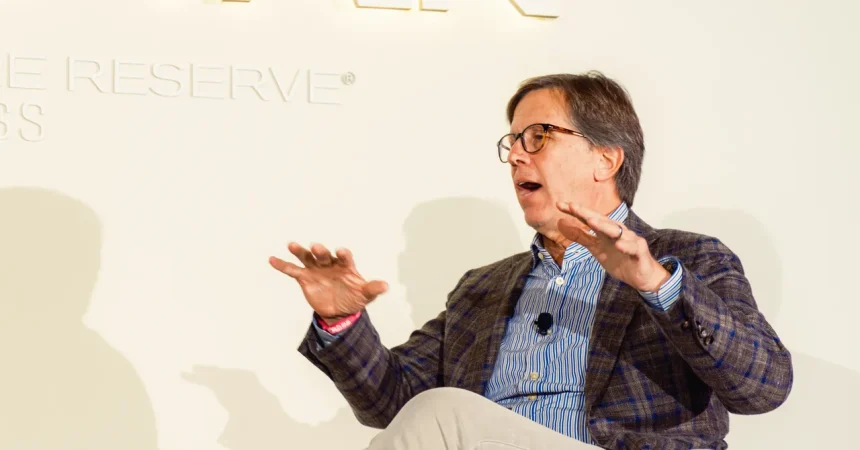
Mark Lanier has spent decades in courtrooms, but he doesn’t talk like a man who’s grown comfortable with legal jargon or corporate theatrics. When asked what it would really take to hold social media companies accountable for the harm they may be causing, he doesn’t reach for a careful, diplomatic phrase. He just says it: “I think it just takes beating the tar out of them.” That bluntness, delivered on stage at the WIRED World Fair on a Wednesday afternoon, captured the mood of a conversation that was equal parts legal analysis and moral outrage. Lanier wasn’t there to entertain. He was there to explain, with a mix of frustration and resolve, why big tech lawsuits are so hard to win, why symbolic victories matter more than they seem, and why he’s determined to keep pushing even when the odds feel stacked against ordinary people. He’s not a detached observer. He’s the lead attorney in the first social media addiction case to actually go to trial, a case that ended in March with a verdict against both Meta and Google. The plaintiff walked away with six million dollars. It was a landmark moment, but as Lanier knows all too well, six million dollars means almost nothing to companies worth hundreds of billions or trillions. It’s a rounding error. And yet, for Lanier, the point was never just the money. It was about proving that these companies can be put in a courtroom and forced to answer for what they do.
To understand just how lopsided this fight can feel, consider the scale of the opposing forces. Meta is not a scrappy startup trying to find its footing. It’s a global behemoth, worth around 1.7 trillion dollars, with armies of lawyers, lobbyists, and public relations experts at its disposal. Google is similarly entrenched. When a lone plaintiff asks for damages, even a victorious verdict like the one Lanier secured in March feels less like a punishment and more like a small bump in the road. The six-million-dollar award was celebrated as a breakthrough, and in many ways it was—it marked the first time a jury had held these platforms legally responsible for addiction-related harms. But Lanier is realistic about what that judgment means in the grand scheme of things. In the world of corporate accounting, six million dollars hardly registers. It doesn’t change a quarterly earnings report. It doesn’t send a message that resonates in a boardroom. It might even be written off as the cost of innovation or, worse, the price of doing business. Still, Lanier doesn’t see it as a failure. He sees it as an opening. The case proved that juries can be convinced, that the evidence of harm can be presented, and that the legal system can be made to sit up and listen. It gave other attorneys, other states, and other victims a blueprint for what’s possible, even if the financial reward feels insultingly small compared to the damage being alleged.
That’s where the attorneys general come in. Lanier believes that the most meaningful change is less likely to come from individual lawsuits and more likely to come when states band together and act as powerful plaintiffs in their own right. These are not just lawyers trying to make a name for themselves. They are public officials representing millions of people, and when they sue, they bring a different kind of weight to the table. In August, a case went to trial in which attorneys general from several states accused Meta of failing to protect young users on Instagram and Facebook. Arkansas was among them, and Lanier’s firm served as outside counsel. The allegations were serious: that Meta knew about the risks to teenagers, that it designed its platforms to keep them hooked, and that it failed to take meaningful action to protect them. Just a few days into the trial, Meta blinked. The company agreed to a settlement worth up to 16.7 billion dollars, to be distributed across 51 US states and territories. It also committed to concrete changes, including a default two-hour time limit for teenagers on its platforms. TikTok, facing similar pressure, agreed to time limits too in a separate settlement in Alabama in September. For Lanier, this kind of result is far more than a rounding error. It’s a serious financial consequence, and it comes with public commitments that can be monitored and enforced. It shows that when states pool their resources and their anger, companies are willing to negotiate in a way they never would with an individual plaintiff.
But even a settlement on that scale doesn’t completely solve the problem. Meta, after all, is a company whose market value dwarfs the settlement amount. Sixteen point seven billion dollars is an enormous sum for almost any other entity, but for Meta, it can still be absorbed and written off as the price of continued operations. Companies at this scale think in terms of decades and global markets. A settlement, no matter how large, can be framed as a reasonable risk-management decision rather than a moment of genuine accountability. That’s why Lanier insists that the courtroom alone isn’t enough. The more subtle, and perhaps more powerful, effect of these cases is the way they shift public perceptions. When evidence of harmful design and inaction becomes part of a legal record, it changes how ordinary people view the platforms they use every day. It changes how parents think about handing a phone to a thirteen-year-old. It changes how employees at these companies feel about their own work. It creates a cultural conversation that cannot be easily undone by a PR campaign. Lanier believes that this kind of pressure is essential. It’s what drives reform when courts and regulators fall short. People start asking questions. They start demanding transparency. They start holding companies to a standard that goes beyond legal compliance. And that, more than any single judgment, is what has the power to reshape the industry over time.
Lanier’s motivation isn’t hard to find. He said it plainly from the WIRED stage: “I am not here because I’m bored on a Wednesday. I’m here because I want everybody to know what these companies do—because that type of pressure will help change everything.” There’s something almost disarmingly honest about that. He isn’t pretending to be a neutral observer or a detached legal technician. He’s an advocate, and he wants the public to be angry, informed, and engaged. He wants people to understand that these platforms are not simply neutral tools that young people happen to overuse. They are systems that are carefully engineered to hold attention, collect data, and monetize behavior. When that engineering crosses a line into something resembling exploitation—especially of minors—Lanier wants there to be consequences. He wants the public to see the documents, the internal emails, the decision-making processes that prioritize growth over well-being. He wants a level of transparency that companies have fought hard to avoid. His belief is that once people truly understand what’s happening, they will demand change. Not just in courtrooms, but in school boards, in state legislatures, in Congress, and in the marketplace. Companies will be forced to respond because their reputations, their stock prices, and their ability to recruit top talent will all depend on it.
In the end, Lanier’s message is a reminder that accountability isn’t a single event. It’s a process, often slow and frustrating, made up of small victories and occasional setbacks. The six-million-dollar verdict was a step. The sixteen-billion-dollar settlement was another, much larger step. But the real work is cultural and political. It involves convincing a weary public that these issues matter, that the evidentiary record is real, and that change is possible if enough people care. Lanier doesn’t pretend to have a magic solution. He doesn’t claim that lawsuits alone will fix social media. But he does believe that beating the tar out of these companies, through litigation, through publicity, through public pressure, is the only way to make them pay attention. That’s the human side of the story. It’s not about billion-dollar payouts or courtroom drama. It’s about the parents who have watched their children spiral into depression and anxiety. It’s about the teenagers who feel trapped by their own phones. It’s about a legal system that is finally beginning to ask hard questions about the technologies that shape so much of modern life. And it’s about people like Mark Lanier, who refuse to accept that the most powerful companies in the world are above the law. He’s on the stage for a reason. He’s in the fight for a reason. And the more people who understand that reason, the more likely it is that real change will finally come.