The SUV Revolution: How China’s Love Affair with Chunky Cars Is Reshaping the Auto Industry
When you think about it, there are very few things left that can genuinely bring the entire world together in agreement. Political divisions, cultural boundaries, economic rivalries—these all seem to drive us apart with alarming regularity these days. But tell a car buyer from Texas, Tokyo, Turin, or Tehran that they should consider a rugged, high-riding, generously proportioned Sports Utility Vehicle, and you’ll likely find a surprising amount of common ground. The SUV has, for decades now, been the great unifier of the automotive universe. It’s the savior of the car world, the format that keeps the global industry humming even when everything else seems to be collapsing around it. Consider this staggering statistic: SUVs now account for nearly half of all new vehicle sales worldwide. That’s not merely a trend; that’s a wholesale domination. By a substantial margin, the SUV is the largest segment in the global auto industry, and it shows no signs whatsoever of surrendering its crown.
The humble sedan, meanwhile, has been relegated to the sidelines in much of the Western world. Ford doesn’t even bother selling a traditional sedan in America anymore—can you believe that? The quintessential family car of generations past has become an endangered species in the United States. China tells a slightly different story, though. About a third of all vehicles sold in China are still sedans, a proportion that’s more than double what you’d find in the American market. But here’s the twist that should worry established automakers everywhere: Chinese car manufacturers understand perfectly well that the rest of the world has fallen head-over-heels for the chunky, muscular SUV silhouette. They’ve done their market research, they’ve studied Western tastes and preferences, and they know exactly what buttons to push. Rather than trying to convince the world to love something different, they’re giving the world exactly what it already loves—but with fresher technology, bolder designs, and price tags that traditional manufacturers simply cannot match. The strategy is clear: lure Western drivers away from familiar premium marques by offering the same SUV experience they crave, but at a value proposition that’s virtually impossible to ignore.
Xiaomi’s Bold Gamble and the Battle for SUV Supremacy
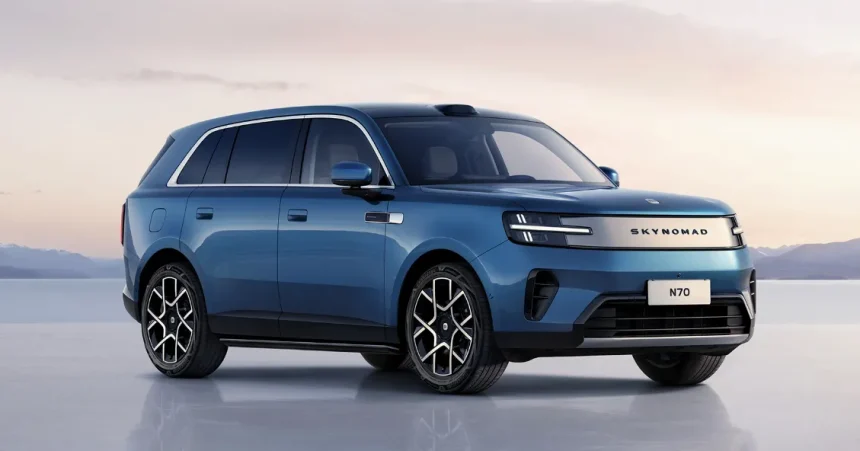
Speaking of impossible-to-ignore propositions, let’s talk about Xiaomi. You might know the company best for its smartphones, its smart home gadgets, or its robot vacuums, but Xiaomi has set its sights considerably higher—on the vast, lucrative, and increasingly competitive SUV marketplace. Xiaomi Auto just played what could well be its winning hand in this particular high-stakes game. Earlier this month in Beijing, the company revealed the remaining details of its upcoming SkyNomad SUVs, including the all-important pricing information that everyone had been eagerly anticipating. And if you’re a luxury automaker like Bentley or Range Rover, you should probably be paying very close attention, because Xiaomi is coming for your customers. Both Bentley and Range Rover have recently unveiled their flagship electric SUVs, complete with all the prestige, heritage, and craftsmanship that those storied brands bring to the table. But here’s the uncomfortable question they’re now facing: how many potential buyers will choose their vehicles when Xiaomi’s SkyNomad offerings deliver more technology at a fraction of the price? The answer might keep luxury executives up at night, and frankly, it should.
Let’s zoom in on the numbers, because they’re genuinely startling. The new Xiaomi Auto SkyNomad N70 is a five-seat, extended-range EV that packs better technology than a Range Rover—at roughly half the price of a Velar, which sits in the middle of Range Rover’s lineup historically. We’re not talking about some barebones, stripped-down bargain-basement attempt at an SUV here. This is a serious vehicle with serious capabilities, marketed with a serious understanding of what premium car buyers want. It offers the kind of cabin technology that would make a Tesla owner feel slightly envious, the sort of connected experience that comes naturally to a company that has spent years perfecting consumer electronics. And it’s being built by a company that, let’s not forget, only made its very first electric vehicle in 2024. That’s an almost breathtaking pace of development. Xiaomi didn’t just dip its toes into the auto industry; it cannonballed into the deep end and is already competing with brands that have been building cars for over a century. The SkyNomad SUV lineup represents Xiaomi’s audacious attempt to leapfrog the established order, and based on what we’ve seen so far, the strategy appears to be working exactly as intended.
The American Appetite for Trucks and the Road to Electrification
Across the Atlantic, the SUV phenomenon has evolved into something even more extreme. In America, trucks and SUVs now represent more than 80 percent of all new vehicle sales. That’s an absolutely staggering figure—it means the traditional passenger car has become almost a niche product in the land of the automobile. This American appetite for big, powerful, and often gas-hungry vehicles creates a peculiar challenge for the industry’s shift toward electrification. You can’t simply replace a tiny city car’s battery system with one designed for a three-ton truck; the scale, the weight, the power requirements, and the charging infrastructure all need to be rethought from the ground up. Marc McGrath, the US CEO of automotive manufacturer Schaeffler Group, recently explained to WIRED that one of the main reasons his company is investing heavily in developing its own solid-state batteries is specifically to properly electrify the power-hungry trucks and SUVs that Americans so dearly love. This isn’t about making eco-friendly vehicles that Americans will reluctantly accept; it’s about making the vehicles Americans already want far more sustainable without forcing them to compromise. And here’s the crucial insight: no one wants another F-150 Lightning situation, where a much-hyped electric truck experiences production setbacks and public relations difficulties. The market has been burned before, and it’s not eager to repeat the experience.
The push toward solid-state battery technology represents the next frontier in this electrification challenge. Traditional lithium-ion batteries, for all their improvements over the past decade, still have significant limitations when it comes to range, charging speed, and energy density. Solid-state batteries, by contrast, promise to be lighter, safer, more energy-dense, and faster-charging—exactly the attributes needed for massive trucks and SUVs to become genuinely viable electric vehicles rather than compromised, range-anxious compromises. Schaeffler’s investment in this technology signals a recognition that the future of American mobility lies not in smaller vehicles, but in electrifying the vehicles that Americans have already chosen. The company understands that you can’t fight cultural preferences that have been decades in the making. Instead, you work with them, making the SUV format smarter, cleaner, and more efficient without sacrificing any of the things that make these vehicles so beloved in the first place. It’s a delicate balancing act, but one that the industry has no choice but to master. After all, the electric revolution can only truly succeed if it embraces the formats people actually drive, not the formats that environmentalists wish they would drive.
The Jaecoo 7 Phenomenon: A Case Study in SUV Supremacy
If you want hard evidence of just how powerful the SUV phenomenon has become—and just how effectively Chinese manufacturers are exploiting it—look no further than the astonishing, meteoric rise of a vehicle called the Jaecoo 7. This Chinese-made SUV has taken the United Kingdom by storm in a way that almost defies belief. In 2025, it was essentially an unknown newcomer, a name that nobody had ever heard of. Fast forward to the present, and it’s become one of the country’s best-selling new cars. Not one of the best-selling Chinese cars, not one of the best-selling budget cars—one of the best-selling cars, period, across the entire market. Car enthusiasts have affectionately nicknamed it the “Temu Range Rover,” a nod to both the budget shopping app and the undeniable visual resemblance to Britain’s beloved luxury SUV brand. The Jaecoo 7 comes in both conventional gasoline and hybrid flavors, so there’s an option for every type of buyer. The company’s marketing materials liberally throw around the word “luxury,” which might have seemed laughable coming from an unknown manufacturer just a couple of years ago. But here’s the thing: at just £29,210 (a little over $39,000), the Jaecoo 7 delivers a surprisingly premium experience at a price point that undercuts virtually the entire Western automotive establishment. You can see why British buyers are flocking to it in droves.
The most telling sign of the Jaecoo 7’s success is how it’s changing the automotive retail landscape at ground level. My own local Nissan dealer—a franchise that has represented the Japanese marque for years, with all its heritage and established customer base—has swiftly dumped the Japanese brand and transformed into an official Jaecoo dealer. Walk in there today, and you’ll find not just the incredible 7, but also the Jaecoo 5 and the Jaecoo 8, an entire lineup dedicated to this ascendant Chinese brand. It’s genuinely hard to think of another automotive brand that has enjoyed such a rapid and dramatic rise in such a short period. Traditional vehicle launches are carefully orchestrated affairs with years of brand building, slow volume ramp-ups, and cautious expansion. Jaecoo has blown through all of those conventions with remarkable speed, capitalizing on the universal appeal of SUVs and the irresistible value proposition that Chinese manufacturing now offers. The dealerships that have switched loyalties are making a calculated business decision, not an emotional one—they’re following the customers, and the customers are voting enthusiastically with their wallets for this new wave of Chinese SUVs.
The Rising Tide of Chinese Automakers and the Road Ahead
The Jaecoo phenomenon isn’t an isolated case; it’s part of a much broader wave that’s transforming the global automotive industry. Other Chinese brands are playing the same strategy across Europe with remarkable effectiveness. XPeng and BYD have been steadily building their presence, offering slyly competitive vehicles that match established competitors on features while dramatically undercutting them on price. But the most significant entrant in this ongoing invasion is undoubtedly Xiaomi Auto, which is set to launch its vehicles in Europe in 2027. Let me put that timing in perspective: Xiaomi made its first electric vehicle in just 2024, which means by the time it formally enters the European market, it will have been building cars for a grand total of three years. Three years—and already it’s preparing to do battle with automakers who have spent decades—indeed, over a century in some cases—building their reputations and their engineering prowess. Astonishingly, the company’s SU7 Ultra has already claimed the title of “World’s Fastest Sedan,” an achievement that would have seemed utterly absurd just a few years ago. Think about that: the world’s fastest production sedan, in its class, was built by a company that didn’t exist as an automaker at the beginning of this decade. The audacity, the engineering capability, and the sheer speed of execution are genuinely breathtaking.
For Western automakers, this represents an existential challenge unlike anything they’ve faced before. The Japanese disrupted Detroit in the 1970s and 1980s with their fuel-efficient, reliable small cars. The Koreans followed a similar playbook a generation later with better warranties and even lower prices. But the Chinese wave is different in both scale and sophistication. These aren’t cheap, disposable vehicles aimed at the bottom of the market; they’re genuinely advanced machines with cutting-edge technology, premium-feeling interiors, and performance characteristics that rival—and sometimes exceed—the established premium brands. And they’re wrapped in the one body style that the entire world already loves: the SUV. By focusing their efforts on SUVs specifically, Chinese manufacturers are taking the path of least resistance into the hearts and garages of Western consumers. They’re not asking drivers to change their preferences or make sacrifices; they’re simply offering a better value proposition in the exact format that buyers already crave. The implications for the industry are profound. Market share will shift, dealership networks will transform, and the very definition of automotive luxury may need to be rewritten. One thing is certain: the global love affair with the SUV isn’t ending anytime soon, and the Chinese automakers are poised to benefit more than anyone else from that enduring passion.