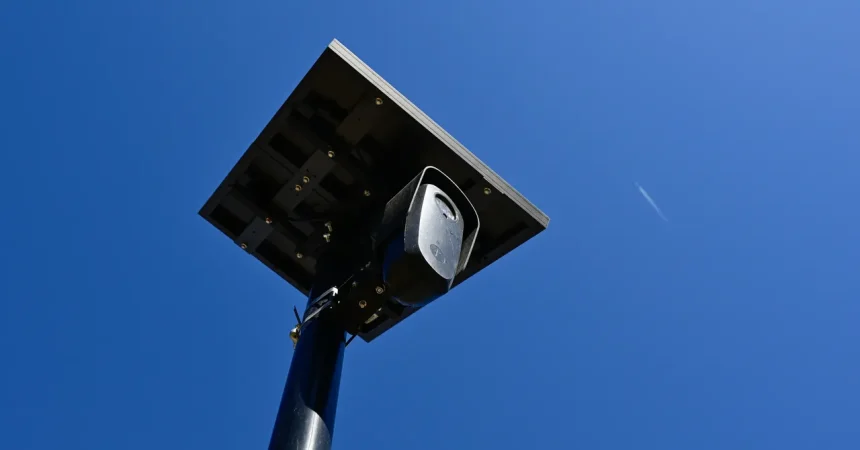
On a quiet Friday morning, Flock Safety employees opened their inboxes to a message that would change the course of their professional lives. The company, known for its sweeping network of license plate-reading cameras installed in neighborhoods, shopping centers, and police departments across the country, announced a voluntary employee separation program. The internal email, later shared with WIRED, framed the offer as a “generous” severance package for anyone who wished to leave, but the subtext was unmistakable: the company is in trouble, and it needs to shrink. Applications opened that same day, with a hard deadline of October 2 for employees to decide whether they want to walk away. Flock said it expects to grant buyouts to most who apply, and people close to the company believe a significant portion of its roughly 1,500 employees may take the offer. For those workers, the decision is not simple. It means weighing the comfort of a known paycheck against the uncertainty of a startup whose public image has crumbled in recent months. Some will stay out of loyalty or fear; others will see the severance as an exit route they never expected. The choice is deeply personal, and the ripple effects will be felt not just in the company’s offices but in the living rooms of employees wondering what comes next.
The backdrop to this moment is a firestorm of public criticism that has engulfed Flock Safety. Its license plate readers, which capture and store images of every vehicle that passes by, have become a point of intense controversy across the United States. Over the past month, WIRED has documented a series of alarming revelations: officers allegedly using the system to track former romantic partners and colleagues, agencies sharing access far more widely than previously understood, and a lack of transparency about how the devices are manufactured. Even more unsettling, a dismantled Flock device revealed exactly how much data the cameras collect — far more than just license plate numbers. These stories have fueled a growing sense of distrust among community members, civil liberties advocates, and even some of the very law enforcement agencies that once embraced the technology. For Flock employees, many of whom joined the company believing they were helping make neighborhoods safer, the backlash has been disorienting. They read the headlines and the angry social media posts, and they watch as cities decide to pull their contracts. They feel the weight of being associated with a company that has become a symbol of surveillance overreach in the minds of many. The people who work on the engineering, sales, and customer success teams are not faceless corporate operatives; they are individuals who have to face their own conscience and their friends’ questions at dinner parties. The erosion of public trust is not just a business problem — it is a human one, and it has crept into the company’s culture with every canceled contract and every viral video of a damaged camera.
Financially, Flock Safety is feeling the strain. The company, founded in 2017 and valued at more than $8 billion in a funding round that closed in April, has seen many of its contracts either not renewed or outright dropped this year. According to people familiar with the situation, this could leave the company short of its revenue goals, and the consequences of that shortfall are already visible. A wave of vandalism targeting Flock cameras has added unexpected costs, both in terms of replacing damaged hardware and in the lost confidence such attacks represent. Without the buyout program, one person familiar with the company believes, Flock would almost certainly have been forced to lay off staff. Instead, it is offering employees a chance to volunteer for departure, a strategy that allows the company to reduce its workforce while preserving a veneer of goodwill. For employees, this distinction matters. A layoff is a harsh, impersonal act; a voluntary separation program at least feels like a choice. But the choice is framed by circumstances: the threat of involuntary cuts is the unspoken alternative. Employees are being asked to decide whether to jump before they are pushed, and the emotional toll of that decision is immense. Some are mothers and fathers who need health insurance for their kids. Some are young professionals who have never navigated a job search in a turbulent market. Some are true believers in the company’s mission and feel torn between staying loyal and protecting their futures. The financial pressures are real, and they weigh on every conversation in the break room.
The severance package itself is being described as the “most generous” Flock has ever offered, roughly double its previous packages. Employees who have received buyout offers say the amounts range in the tens of thousands of dollars, which can feel like a lifeline or a pittance depending on one’s personal circumstances. In addition to the cash, the package includes several months of health care coverage, a crucial component for families who rely on regular doctor visits and prescriptions. The offer also allows employees to exercise their stock options within two years after separation, a longer window than the company typically grants to those who resign. That detail is quiet but meaningful: it suggests that while Flock expects people to leave, it does not want to sever the potential financial upside entirely. Perhaps the company hopes that employees will remain invested in its success, even from afar. Or perhaps it is simply an acknowledgment that their options may be worthless in the short term, so extending the deadline is a gesture of goodwill. Either way, employees are now living through a strange limbo. They have a few weeks to decide, and then they will learn on October 9 whether their applications have been accepted. Most accepted employees would leave by October 29, though some may be asked to stay an additional one to three months to ensure a smooth transition. That timeline turns late October into a looming date, a threshold between an old life and an unknown one. For the people who stay, the office will feel smaller and quieter. For those who go, the severance check will serve as a closing chapter — but it cannot buy peace of mind.
Behind the scenes, some employees are speculating about what the buyout program means for Flock’s long-term future. The company has raised an enormous amount of money — about $1.2 billion in venture capital — but it is now facing the kind of existential questions that no amount of funding can automatically answer. People familiar with the severance plan tell WIRED that some workers may be taking the offer because they expect the company to eventually sell off parts or all of its business just to stay afloat. That kind of speculation is corrosive, even when it remains unspoken. But the evidence is hard to ignore: the vandalism targeting Flock cameras this year has not been a random spasm of anger but a coordinated pattern of resistance, and it has sent a signal not only to the public but to investors and employees alike. As one person put it, “When you see enough of the vandalism, you know the writing is on the wall” — something has to change. That change could be strategic, financial, or existential, and the uncertainty is felt at every level of the company. Employees who have poured years of their lives into building Flock are now wondering whether their work will be remembered as an innovation in public safety or a cautionary tale about unchecked surveillance. They are also worried about their career prospects: Will other companies see them as tainted by their association with Flock? Will they be able to speak proudly about their time there, or will they have to explain and defend decisions they did not make? No severance package can answer those questions, and they linger long after the last day of work.
Flock’s CEO, Garrett Langley, has acknowledged the damage internally. On the All-In podcast last month, he said that “the biggest damage” caused by the backlash has been “internal morale.” His words reveal a leader who is watching his own team struggle with a crisis of purpose and identity. “Because you go on to X or you go on to Reddit and you go, why are people so mad at us when we’ve been doing the same thing for nine years?” Langley asked. “And why are they so mad at us for things we don’t do? And we just want people to be safe.” That sentiment is both sincere and revealing. The company genuinely believes its technology serves a protective purpose; the people who build it, market it, and support it are not mustache-twirling villains. They are engineers who care about their families, salespeople who believe in their product, and support staff who simply want to earn a living doing meaningful work. But the world has changed around them. Nine years ago, license plate readers were a niche tool used mainly by law enforcement. Today, they are part of a sprawling, interconnected surveillance network that touches millions of ordinary Americans, and the public is paying attention in a way it never did before. Privacy concerns that were once theoretical are now concrete, and stories of abuse have shattered the illusion of good intentions. Langley’s frustration is understandable — it is hard to be hated for things you do not do. But the company will need more than empathy and self-reflection to survive. It will need to rebuild trust with communities that feel violated, and it will need to do so while its employees are walking out the door. The voluntary separation program is a turning point, but whether it is a graceful exit or the beginning of the end remains to be seen. For the thousands of people who work for Flock, the next few weeks will be a test of patience, hope, and resolve. They are not just leaving a job — they are leaving a story their lives, and they do not yet know how it will end.