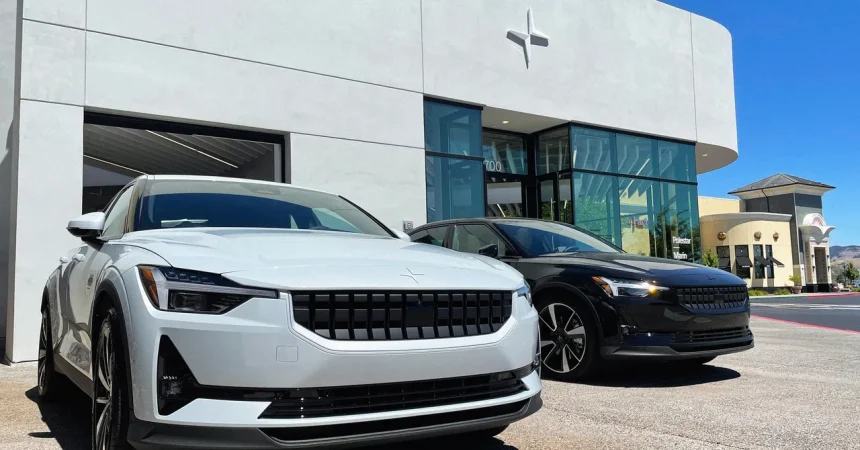
For those at the helm of an American electric vehicle dealership, the 2020s have felt less like a steady business venture and more like a high-speed roller coaster. Matthew Haiken, who opened Polestar Short Hills in northern New Jersey in 2021, has navigated a dizzying array of extremes. From the pandemic-era frenzy—where used EVs were suddenly worth more than brand-new ones—to the influx of buyers chasing federal tax credits, and the subsequent whiplash when those incentives were rolled back, the market has rarely been stable. Perhaps most fascinating was the recent “Tesla exodus,” where drivers shifted brands specifically to distance themselves from the controversy surrounding Elon Musk’s political alignments. For dealers like Haiken, every week felt like a new chapter in a rapidly shifting economic and social landscape.
However, the industry’s typical volatility has now been eclipsed by an existential crisis. In late June, the landscape for Polestar dealers shifted from turbulent to dire when the company announced it would cease U.S. sales starting with the 2027 model year. The root of the problem lies in a new Commerce Department ruling aimed at banning vehicles containing specific Chinese-made “connected” technology—hardware and software that the government fears could be weaponized for surveillance or data collection. Because Polestar is majority-owned by China’s Geely Holding, they found themselves on the wrong side of this national security firewall. While other manufacturers managed to navigate these legal hurdles, Polestar’s inability to secure an authorization has left its U.S. dealer network in an impossible position.
For a business owner like Haiken, who has poured “many millions” of dollars into his Polestar franchise and staff, the news wasn’t just a financial blow; it felt like a betrayal. Unlike Volvo—a sibling brand also owned by Geely—which successfully negotiated its status through “constructive discussions” regarding data security and governance, Polestar appears to have hit a dead end. Haiken is unsparing in his frustration, placing the blame squarely on Polestar’s global leadership for failing to secure the brand’s future on American soil. He feels that the company simply “dropped the ball,” leaving him to face the fallout with staff and customers who remain confused and deeply disappointed by the sudden retreat from the market.
The federal government’s stance, championed by Commerce Secretary Gina Raimondo, remains uncompromising. The administration argues that modern vehicles, with their sophisticated cameras, microphones, and continuous GPS tracking, are effectively moving data-collection hubs. The official position is that the risk of a foreign adversary accessing the private movements and data of American citizens is a threat to national security that cannot be negotiated away. While the government frames this as a necessary precaution to protect the privacy and safety of the nation, dealers like Haiken are left holding the pieces of a business model that was built on the assumption that global supply chains and international automotive brands would remain accessible.
Polestar, for its part, is attempting to pivot, framing its U.S. departure as a “strategic focus” on Europe, where the vast majority of its sales are already concentrated. They have promised to maintain a support network for current owners, ensuring that those who bought the Polestar 3 or 4 aren’t left with “bricks” in their driveways. Yet, for the dealers on the ground, these corporate talking points ring hollow. Haiken points out that comparing European and U.S. sales figures is misleading given the significantly delayed rollout of the Polestar 4 in America. Looking at the bottom line, he recognizes that the brand has essentially pulled the rug out from under the very people who invested their capital to build the company’s reputation in the U.S. market.
As the sunset for U.S. Polestar sales approaches, the human element of this saga remains front and center. Despite the corporate withdrawal, Haiken is committed to his local community, promising that his stand-alone service center will continue to operate. He knows that his customers will need someone to turn to for tune-ups and technical support, and he intends to be that pillar for them, even if the manufacturer has left the scene. There is a melancholy irony in this; he is doubling down on his commitment to the local drivers while the global entity he represents walks away. It is a stark reminder that in the brave new world of interconnected, high-tech transportation, the most vulnerable people are often the ones who simply believed in the product enough to build a business around it.