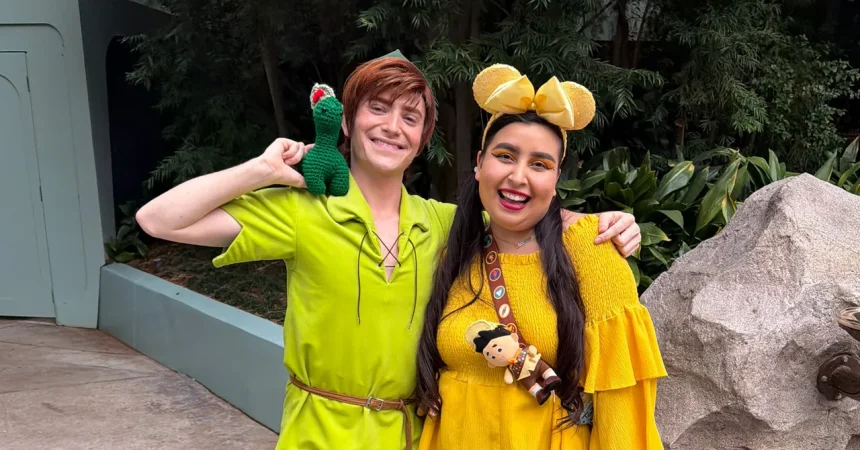
In the vibrant, meticulously manicured world of Disneyland, where every corner is designed to evoke wonder and nostalgia, Toni Kulusich found her own unique slice of joy. As a 27-year-old content creator, she wasn’t just another guest in mouse ears; she was a regular presence, filming meet-and-greet interactions with the park’s beloved characters. While she enjoyed engaging with a variety of Disney icons, one character held a special place in her heart: Peter Pan. The boy who refused to grow up, with his swaggering confidence, mischievous grin, and occasional sharp-tongued brattiness, was her favorite. Her videos captured playful games of tag and spontaneous skipping through the park, showcasing a bond that seemed to delight both the creator and the character. For Kulusich, a Los Angeles native with an annual pass and a weekly ritual of visiting the park, this was a harmless, joyful hobby—a way to release her inner child in a space specifically designed for such abandon.
That idyllic world shattered on August 2nd. A seemingly innocuous video, in which she gifted Peter Pan a crocheted duck keychain, suddenly exploded in popularity. The views skyrocketed from 10,000 to over a million in a matter of days, but the virality wasn’t the kind any creator dreams of. The comments section, once filled with fellow fans, quickly turned into a cesspool of accusations and threats. Commenters accused her of planting a tracking device in the gift, with one writing, “Slice that duck open and make sure there’s no AirTag inside.” Others branded her a creepy stalker, saying, “Imagine being known for being the creep that follows Peter Pan around.” The vitriol was swift, relentless, and deeply personal. The public perception of her innocent videos had been completely inverted, transforming her from a fan into a caricature of obsession, a punchline for a viral internet pile-on. The irony was stark: her follower count had doubled to 125,000, but this newfound attention was a poisoned chalice.
Kulusich was blindsided. She understood, on some level, the internet’s deep-seated antipathy toward “Disney adults”—those perceived as spending their lives and savings in a state of prolonged adolescence. But she fiercely rejected the notion that her fandom was unhealthy or all-consuming. In telling her story, she is quick to list the markers of a stable, grounded life: she’s been married for four years to her husband, a marine who is a more casual Disney fan (his favorite is Cars’ Lightning McQueen, a clear mockery of her Peter Pan devotion), and holds down a demanding full-time job as a manager at a big-box retail store. Her Disney content is a passionate hobby, not a life’s purpose. “It’s not like I’m going to the store or to my job and thinking about Peter Pan,” she explains, a defensive edge in her voice. “It’s just that when I’m inside Disney, I’m able to release my inner child and the kid who doesn’t want to grow up. And that’s what [Peter Pan] stands for.” It was a simple, earnest statement of intent, yet it was entirely lost in the digital firestorm.
The harassment escalated far beyond online comments. Internet sleuths, fueled by righteous indignation and a desire for more content, began excavating her digital past. They unearthed a decade-old video of her meeting Peter Pan, presenting it as evidence of a lifelong, disturbing fixation. They analyzed the character performer’s body language frame by frame, claiming to see discomfort and fear, a classic case of armchair psychology. They went so far as to find her wedding video, leaving comments expressing sympathy for her husband and speculating that she was secretly in love with a fictional character. The invasion of privacy reached its terrifying peak when someone discovered her place of work and posted the address online. The threat was clear enough that her manager, concerned for her safety, was forced to change her work hours. The digital mob had crossed the line from mockery to real-world harassment, and the psychological toll was immediate and crushing. “It’s definitely taken a toll on my mental health,” she admits. “Imagine waking up to thousands of comments saying you’re a crazy stalker lady every single day.”
By the end of the week, Kulusich was a global phenomenon, branded with a title that robbed her of her name: “Peter Pan Girl.” The New York Post and countless other outlets framed her as the “Baby Reindeer of the Disney influencer ecosystem,” a reference to Netflix’s hit series about a deranged stalker. The narrative was set, the story was viral, and nuance was nowhere to be found. In hindsight, Kulusich can see how a five-second clip, stripped of all context and joyful intent, could be twisted into something sinister. The internet, in its frantic quest for the next big villain, had found one in her. “People really just took a five-second video of me with Peter Pan out of context and ran with it,” she laments, the bewilderment still palpable. The absurdity of the situation isn’t lost on her—being vilified for playing tag with a grown man in a fairy costume is a surreal experience few will ever have to endure.
The frenzy surrounding Kulusich is a potent distillation of several toxic strains of internet culture. It perfectly illustrates the blinding speed and reckless velocity of misinformation in the digital age, where a single misinterpreted video can become universal gospel. It’s a case study in the hysterical nature of TikTok “armchair analysis,” where amateur body-language experts and psychologists feel fully qualified to diagnose a stranger’s mental state from a few grainy pixels. And it’s the most extreme manifestation of the widespread, often vitriolic, loathing directed at “Disney adults.” The public’s general disdain for grown adults who find profound joy in a corporate theme park was weaponized, turning a personal hobby into a criminal offense. Kulusich became a scapegoat for a cultural anxiety about arrested development, her harmless videos serving as flashpoints for a broader societal judgment. In a world where fame is a commodity, she was catapulted into a kind of fame she never wanted, one defined not by her creativity but by the projections of a million strangers who saw in her a reflection of their own resentments and fears.
In the aftermath, Kulusich has had to figure out how to pick up the pieces of her life, both online and off. She has a platform now, larger than before, but it feels precarious, built on a foundation of mockery. She’s taken a step back from posting, trying to process the whirlwind and protect her mental health. The question of whether she’ll return to her hobby of filming Peter Pan interactions is a complex one. She insists she doesn’t want to let the hate win, that she shouldn’t have to give up something she loves because of the unhinged actions of a few. The park, once a sanctuary for her inner child, is now also the site of her most public humiliation. Yet, as she navigates this strange new reality, there is a thread of defiant hope. She points out the quiet irony: that in the story of Peter Pan, the boy who never grows up, she is being punished for doing exactly that—for holding onto a piece of childhood in a world that demands constant, performative adulthood. Her story is a cautionary tale, not about the dangers of fandom, but about the cruelty of the digital mob and the staggering ease with which a person can be dehumanized, vilified, and redefined in a single, viral news cycle.