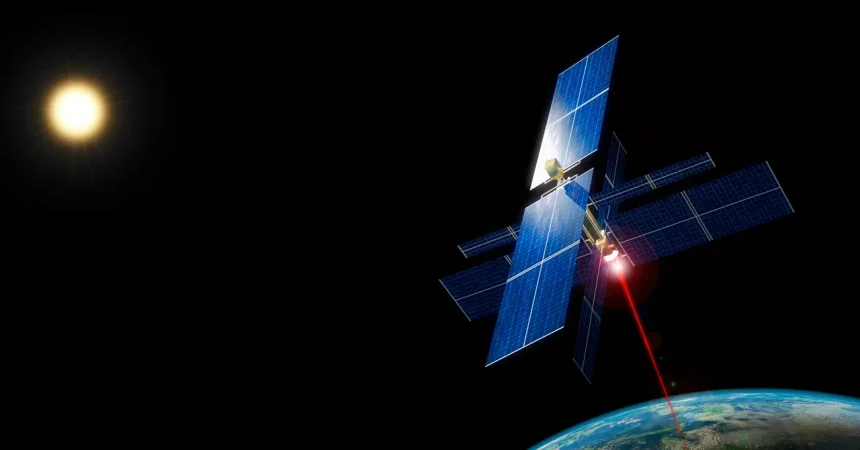
The recent FCC authorization of Reflect Orbital’s “Eärendil-1” satellite marks a pivotal moment in our relationship with the night sky. While the project sounds like a premise from a science fiction novel, the reality is that a Santa Monica-based startup has secured the rights to launch a massive, 18-meter reflective mirror into low Earth orbit. By aiming to bounce sunlight onto specific locations on the ground during nocturnal hours, the company hopes to revolutionize how we interact with solar power and emergency lighting. For the proponents, this is a bold leap into a future where renewable energy is no longer tethered to the rising and setting of the sun, promising a “continuous supply” of power that could fundamentally change global energy consumption.
However, the path to this milestone has been anything but smooth. The vision of “on-demand” sunlight has sparked a firestorm of debate, drawing nearly 2,000 public comments during the regulatory review process. Astronomers, environmentalists, and dark-sky advocates have voiced deep-seated concerns, fearing that the success of this mission could lead to the commercialization—and perhaps the total degradation—of our natural night sky. Organizations like the American Astronomical Society and DarkSky International have positioned themselves firmly against the project, arguing that adding artificial light sources to orbit is not just an inconvenience, but an existential threat to the delicate work of studying the cosmos from the ground.
The technology itself is incredibly precise and undeniably ambitious. Eärendil-1, named after a legendary star-mariner in J.R.R. Tolkien’s lore, is designed to unfurl an ultrathin, highly reflective film that can illuminate a diameter of five to six kilometers. From an altitude of 625 kilometers, the satellite will attempt to prove that it can direct beams of light with accuracy. Reflect Orbital frames this as the pinnacle of American innovation, suggesting that if they can master this, the applications are endless: they could light up remote disaster sites, assist in complex search-and-rescue operations, or keep power grids humming long after the sun has set. To the company, this is about efficiency, safety, and technological progress.
Yet, this small “experimental” step carries the shadow of a much larger blueprint. Reflect Orbital has not been shy about its long-term goals, which include a potential constellation of 50,000 satellites by 2035. If this vision for a “sky filled with moons” comes to fruition, we are looking at a radical transformation of the human experience. Researchers like Tony Tyson of the Vera C. Rubin Observatory warn that we may be crossing a threshold from which there is no easy return. The accumulation of satellites already orbiting our planet has been a growing headache for astronomers, but adding massive, reflective mirrors is seen by many as a step too far, potentially washing out the stars and disrupting the natural rhythms of life on Earth.
Beyond the academic and environmental concerns lies the very human question of how such a project might affect our daily lives. Pilots navigating the night skies, drivers on dark highways, and even wildlife that rely on the cycles of darkness are caught in the potential crosshairs of these light beams. Critics argue that we are treating the sky as a corporate billboard or a utility company’s private asset, failing to account for the psychological and biological importance of true, unadulterated darkness. The promise of “productive hours” for solar farms is alluring, but one must ask if the price of that efficiency is the permanent loss of our ancestral view of the stars and the disruption of the planet’s nocturnal health.
Ultimately, the FCC’s decision to greenlight Eärendil-1 is a guarded compromise. By framing it as a, limited-duration test, the regulatory body is attempting to balance the drive for innovation with the necessity of caution. They have made it clear that this authorization does not grant a free pass for a future fleet of thousands; any expansion will be subject to a new, rigorous regulatory gauntlet. Whether this project becomes the foundation for a brilliant new era of renewable energy or a cautionary tale about human hubris will depend on the findings of this single, experimental mission. For now, we wait to see if the light that Eärendil-1 casts back to Earth brings the progress we hope for, or if it simply illuminates the cracks in our fragile relationship with the natural world.