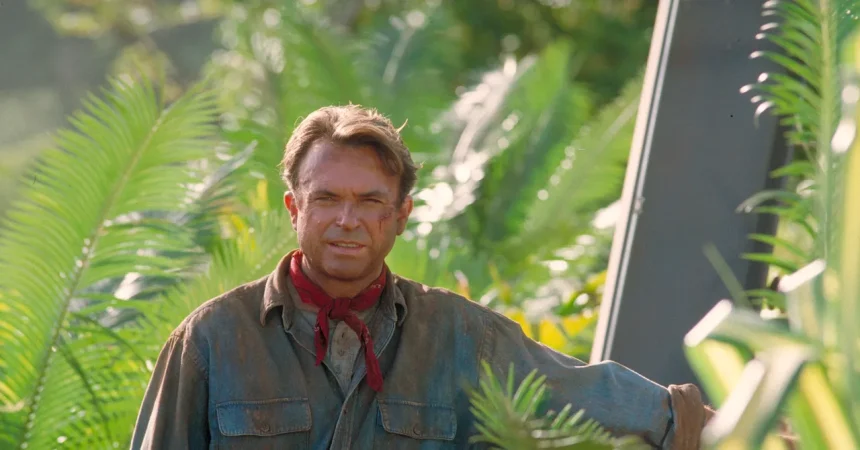
The recent passing of Sam Neill, the acclaimed New Zealand actor who died in Sydney at 78, has prompted a global outpouring of grief that highlights not just his immense talent, but the profound, quiet legacy he left behind. His career was a tapestry of remarkable range—he could effortlessly slip into the skin of a troubled detective, a dark sorcerer, or even the harbinger of the end times. Yet, despite these varied and complex performances, Neill will be forever enshrined in the public imagination for his work as Dr. Alan Grant in Jurassic Park. More than just a blockbuster hero, Neill’s turn as the rugged, thoughtful paleontologist became a cultural touchstone that transcended the screen, fundamentally altering the career trajectories of an entire generation of scientists who saw in him a reflection of who they hoped to become.
The impact of Neill’s performance on the scientific community is nothing short of extraordinary. On platforms like X and Bluesky, tributes have poured in from researchers who trace the genesis of their professional lives back to the moment they watched Dr. Grant dust off fossilized remains or study a stricken triceratops with genuine, childlike wonder. For many, Dr. Grant wasn’t just a fictional character; he was a catalyst. Whether they stayed in the academic sphere or migrated into healthcare and environmental advocacy, these professionals speak of a common “Dr. Grant effect”—a moment in their youth where they decided that the pursuit of knowledge and the reverence for Earth’s secrets were the most noble callings a person could follow.
When we examine why a paleontologist from a 1993 film captured the hearts of so many, the answer lies in Neill’s specific approach to the role. Unlike the hyper-violent, gun-toting action heroes that dominated the cinema of the late 80s and 90s, Dr. Grant was a triumph of intellect over force. He didn’t win because he was the strongest or the fastest; he won because he was level-headed, observant, and intellectually curious. He championed the idea that science wasn’t about dominance or the monetization of discovery, but about understanding our place in a deep, historical timeline. For young people watching, this offered a refreshing, aspirational alternative to the typical “macho” tropes of the era, proving that heroes could wield a magnifying glass and a keen mind with just as much impact as a hero with a weapon.
This character also acted as a vital role model for the next generation of researchers—a “man of science” defined by his conviction and humility. Professionals like Kevin Holloway and Jim Porter, who moved into fields ranging from neuroscience to environmental geology, emphasize that Neill imbued Grant with a “gruff kindness” that felt grounding and authentic. He was a mentor and a partner, treating Dr. Ellie Sattler as his undisputed equal and balancing his professional duties with the unexpected, messy responsibility of protecting two children. There was an earnestness to his portrayal that made the complex, often arduous work of science look like a meaningful, life-affirming adventure rather than an ivory-tower obsession.
Beyond the accolades and the box office records, Sam Neill’s legacy is defined by the warmth he projected both on and off the screen. Fans often speak as fondly of his charming, humble updates about his New Zealand vineyard and his beloved farm animals as they do of his cinematic triumphs. This public persona helped bridge the gap between “movie star” and “relatable human.” It meant that when audiences watched him in Jurassic Park, they weren’t just watching a performance; they were watching a person who radiated integrity. He provided a blueprint for how a man could be strong without being toxic, and how a scientist could be dedicated without losing his humanity.
Ultimately, the passing of Sam Neill is a significant loss to the world of art, but it also serves as a beautiful reminder of the power of storytelling to shape the real world. By embodying a character who prioritized understanding, respect, and stewardship of the natural world, Neill provided a beacon for countless people searching for their own purpose. As these scientists, researchers, and field workers share their memories, it is evident that Neill’s “Alan Grant” was more than just a role; it was an invitation to look at the world with curiosity and compassion. He may be gone, but in every lecture hall, lab, and excavation site where someone is working to understand our past and preserve our future, a little bit of Sam Neill lives on.