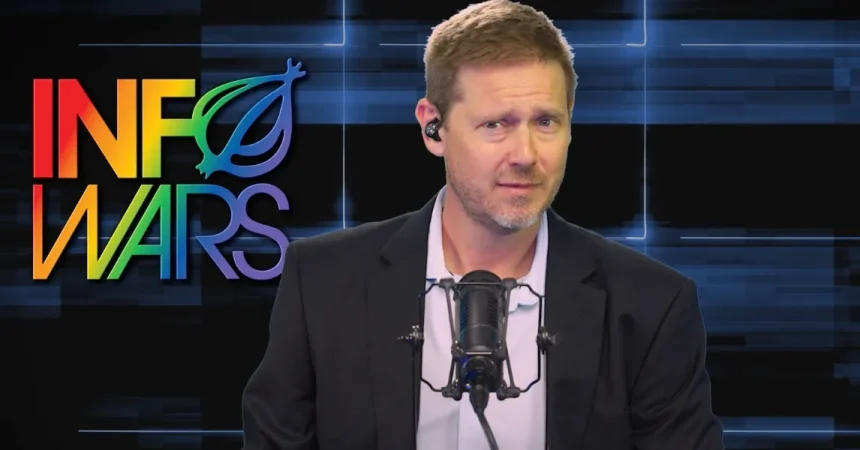
In a bold, surrealist power move that feels like something ripped straight from a dark satirical novel, The Onion has effectively seized control of the Infowars platform. This isn’t just a corporate acquisition; it is a calculated act of ideological insurgence. By stepping into the shoes of Alex Jones, The Onion’s leadership team—specifically CEO Ben Collins and Onion Inc. owner Jeff Lawson—is attempting to reclaim the digital space from years of conspiratorial decay. While they maintain the necessary legal distance by labeling the project a “parody,” the underlying intent is electric: they are holding a mirror up to the chaotic, profit-driven outrage machine that has defined internet discourse for over a decade. It is a brazen attempt to dismantle the “blowhard” archetype by becoming the very thing they are mocking, proving that sometimes the only way to deflate a monster is to put on its skin and expose how ridiculous it looks underneath.
For the families of Sandy Hook, who remain the primary victims of Jones’ long-standing campaign of harassment and misinformation, this move feels like a much-needed breath of cosmic justice. The Onion has pledged to funnel an initial $100,000 from merchandise sales directly to these affected families, serving as a tangible rebuke to the man who profited off their suffering. It is a rare moment where the cruel, gamified nature of the internet is harnessed for a restorative purpose rather than a destructive one. Lawson describes this not just as a business pivot, but as a moral imperative. By turning the Infowars brand against itself, they are effectively starving the trolls of their own oxygen, using the platform’s legacy as a weapon to dismantle the very infrastructure of paranoia that allowed it to survive in the first place.
Beyond the legal and ethical battles, there is a profound cultural realization at play: satirizing the “modern internet” is nearly impossible because the internet is no longer a shared landscape. It has fractured into a thousand paranoid silos where personal truth competes with objective reality. Lawson notes that effective satire requires a common ground, a baseline of shared experience that can be subverted. Because that baseline has evaporated, comedians have been struggling to land punches against a digital ecosystem that is inherently self-parodying. By focusing on the “conspiracist brain rot” exemplified by figures like Alex Jones and Joe Rogan, The Onion has found a common enemy. Everyone knows this archetype—the loud, sweaty, desperate podcaster selling supplements while peddling end-of-days fear—and that recognition allows them to cut through the noise and reveal how inherently hollow the whole charade is.
What makes this project truly human, and perhaps historically significant, is its refusal to treat the absurdity as something sophisticated. Collins is blunt, arguing that while people are busy scouring the horizon for “the big secret cabal” that runs the world, they are missing the mundane, crushing reality of government graft and institutional rot right in front of their faces. The Onion isn’t trying to out-conspire the conspiracists; they are trying to break the trance. They are arguing that the “big secret” isn’t some interdimensional entity; it’s just greedy, mediocre people in power who want your money. By adopting the aesthetic of Infowars but filling it with nonsense, they strip the “scary” conspiracist format of its gravity, effectively turning the dark, basement-studio aesthetic into a punchline that can’t be taken seriously.
The execution of this vision is being handled with the kind of comedic firepower that feels like an “Avengers, assemble” moment for the industry. Bringing in legends like Tim Robinson, seasoned satire veterans like Brad Holbrook, and the frantic, viral energy of Nick Lutsko creates a chaotic, high-energy environment that mocks the self-importance of the original Infowars programming. Lutsko’s recurring bit—an unwanted, creepy elf mascot that corporate keeps trying to fire—is the perfect metaphor for the entire operation. It is a reminder that behind the “serious, world-saving” façade of the average internet firebrand, there is usually just a desperate, awkward, and profoundly unfunny person trying to sell hog water to an audience they don’t even like.
Ultimately, both Collins and Lawson see this as a necessary intervention for the health of democracy. For years, skeptics argued that satire would eventually lose its teeth in the face of post-truth extremism, but The Onion is betting that sharp, unapologetic laughter remains our most effective defense. If the rise of modern American populism fed on the vacuum left by a lack of aggressive, mocking critique, then this new iteration of Infowars is a direct attempt to steer the culture back toward reality. It remains a high-stakes experiment, but as they continue to broadcast from the belly of the beast, the goal is clear: they want to prove that if you point out the absurdity of the world loudly and consistently enough, the people who thrive on that absurdity will eventually have nowhere left to hide.