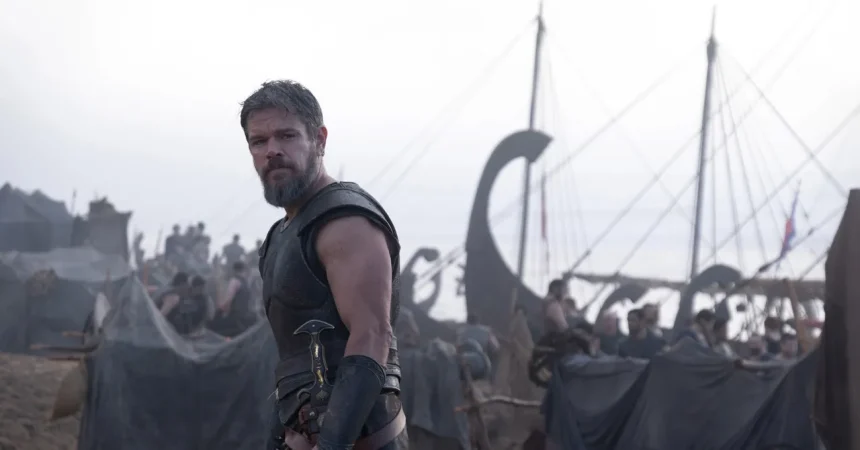
The debate surrounding Emily Wilson’s translation of Homer’s Odyssey serves as a fascinating mirror for our own fractured cultural landscape. At the heart of the critique is her portrayal of Odysseus, a man who is as much a hero as he is a coward, a strategist as he is a brute. For some critics, this nuanced, deeply human, and often messy depiction feels like a betrayal of the idealized, stoic, and monolithic hero that generations have projected onto the ancient text. However, to frame Wilson’s work as a mere “deconstruction” is to ignore the reality of translation: every version of the Odyssey—from the Victorian age to the present day—has been filtered through the specific anxieties and moral frameworks of its era. The tension here isn’t just about ancient Greek; it’s about a modern disagreement over what we want our foundational myths to represent in a rapidly changing world.
The academic pushback led by critics like Richard Whitaker highlights a fundamental divide in the field of classics. Whitaker argues that translators have a moral obligation to remain tethered to the value systems of the past, even when those values are uncomfortable or exclusionary. From his perspective, Wilson’s interpretation crosses the line from faithful transmission into revisionist territory, particularly regarding her handling of women and enslaved characters. His critique suggests that by “correcting” the text to align with modern sensibilities, a translator risks erasing the authentic, brutal reality of the original epic. This creates a difficult question for scholars: is a translation meant to be a fossilized record of ancient mindsets, or a living document that invites new readers to engage with the text on their own terms?
Wilson’s own defense of her work focuses on the technical rigor that many of her detractors seem to overlook. She did not approach the Odyssey with a radical’s whim, but with the discipline of a poet focused on mathematical and rhythmic precision. By matching Homer’s line count exactly and transposing the ancient dactylic hexameter into English iambic pentameter—the rhythm of Shakespeare—she was attempting to recapture the feel of an epic that was meant to be heard, not just read. This is not the hallmark of someone trying to “vandalize” a classic, but rather the work of someone obsessed with the structural architecture of the poem. It challenges the notion that her work is merely ideological; rather, it is a masterclass in the exhausting labor of poetic reconstruction.
The paradox of this controversy is that those who accuse Wilson of imposing modern biases are often themselves draped in the biases of their own time. It is a common human failing to see one’s own cultural framework as “neutral” while viewing any shift in perspective as “agenda-driven.” As Wilson notes in her essays, translators are like fish in water; it is nearly impossible to step outside the current of your own era’s values. When a translator renders Odysseus or Helen through a new lens, they are merely acknowledging the reality that antiquity is not a static object but a conversation. The claim that Wilson is “rewriting” history ignores the fact that every previous translation has been a “rewriting,” whether it was an intentional choice or a subtle, unconscious reflection of the translator’s own colonial or patriarchal assumptions.
Ultimately, the hostility toward Wilson’s Odyssey suggests that some readers have turned these ancient stories into totems—symbols of a “Western civilization” that they fear is being eroded. For these critics, the Odyssey is a pillar supporting a very specific narrative about male heroism, divine right, and traditional order. When that pillar is depicted with complexity, or when a Black actress is cast as Helen, it isn’t just an artistic choice being challenged; it is a perceived existential threat to their worldview. By demanding a “pure” version of the Odyssey, what they are really asking for is a confirmation of their own modern prejudices, masking those contemporary desires as a commitment to ancient truth.
This conflict reminds us that our love for the classics is rarely purely academic. We look to Homer to tell us who we are and where we came from, and when a new translation forces us to see the flaws in our heroes or the shadows cast by our ancestors, we naturally flinch. Wilson’s contribution is valuable not because it is the “correct” version or even a “perfect” one, but because it breaks the spell of the comfortable, sanitized versions we were taught to worship. By humanizing the characters and stripping away the layers of dust left by centuries of imperial interpretations, she has invited us to engage with the Odyssey as it truly is: a loud, messy, and deeply human survival story. In doing so, she hasn’t destroyed the myth; she has given it a new heartbeat.