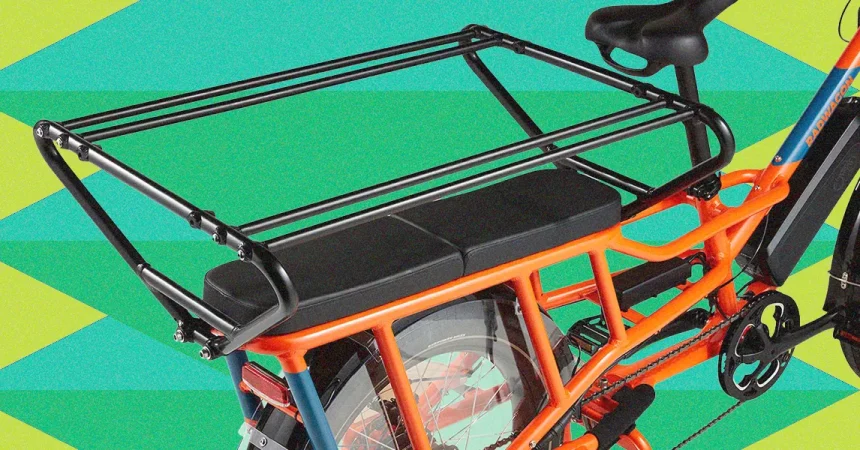
Four years ago, my wife and I made a decision that felt both practical and slightly experimental: we bought our first ebike, a Radwagon 4, with the explicit goal of ditching one of our two family cars. Living in a world dominated by highways and heavy metal, we wanted to prove that short, local errands—anything under five miles—could be handled via pedal-assist. At the time, our children were very young, and our lives revolved around the logistical puzzle of school runs, daycare drop-offs, and weekend playdates. We needed a machine that wasn’t just a bicycle, but a reliable, sturdy transport vessel that could hold our gear and keep our kids safe. The direct-to-consumer model allowed us to tailor the bike to our exact needs, resulting in a setup that included a cavernous front basket, a rear pad for our son, and a secure Thule Yepp seat for our toddler. Little did we know, that bike would quickly become the centerpiece of our daily routine.
The transition from car-dependent to bike-commuter parents was surprisingly fluid. Once that bike arrived and we assembled it, it became our primary mode of city transit. From rushing to doctor’s appointments to squeezing in quick trips to the grocery store, the ebike transformed the chore of “getting there” into a shared family experience. The physical act of riding gave us a newfound connection to our neighborhood, turning blurred-out car window views into vibrant, local interactions. It wasn’t just about reducing our carbon footprint; it was about reclaiming our autonomy and teaching our children that the world is much more accessible than we often assume from behind the windshield of an SUV.
The true unsung hero of our setup has been the large front basket, which acts as a chaotic, wonderful repository for modern family life. It has hauled everything from the mundane to the bizarre. Just recently, while heading to the local park, that basket held a soccer ball, a lunchbox of snacks, two baseball gloves, our bike locks, and—most importantly—two binders of Pokémon cards. On other days, it has acted as a grocery cart, swallowing two or three overflowing bags of produce, or even served as a makeshift transport for a thrift-store guitar amp. It is a testament to the versatility of these machines; when you remove the constraints of a traditional trunk, you realize how little you actually need to survive, and how much a simple, well-placed basket can actually carry.
However, time has a funny way of shifting your gear requirements. My daughter has outgrown her toddler seat, and my son, now eight, has reached that age where being seen on the back of his dad’s bike feels a little less “cool” and more like an inconvenience to his independence. He’s now capable of riding his own bike around town, which is a bittersweet milestone for any parent. The era of the “Family Wagon” is effectively sunsetting in my household. While I feel a pang of nostalgia for the days of having a tiny passenger pressed against my back, I also recognize that this transition is exactly what we bought the bike for—to help them grow, to foster their confidence, and to eventually watch them pilot their own machines.
Now that the bike is no longer primarily serving as a kid-hauler, I am currently recalibrating its purpose for its second act: the “Grocery Getter.” The ebike market has exploded over the last few years, offering specialized options for mountain riders, commuters, and weekend cruisers, but I’ve found that the utility of a sturdy cargo bike is unbeatable. My goal for this next chapter is to optimize the bike for maximum heavy lifting. I am experimenting with new panniers and attachment systems that allow me to distribute weight more effectively, turning this electric workhorse into a serious tool for bulk errands. It’s a hobby that feels like a natural extension of the minimalism we started four years ago—proving that a bicycle can serve as a legitimate, high-capacity vehicle for an entire household.
As I look at the landscape of modern cycling, it is clear that ebikes have moved past being a novelty item; they are legitimate infrastructure for the future of our cities. Whether you are navigating the “Family Wagon” phase, ensuring your kids have comfortable, safety-rated seats and proper protective gear, or you are leaning into the “Grocery Getter” life to minimize your reliance on fossil fuels, the logic remains the same. By shifting how we transport our children and our goods, we aren’t just moving things from A to B; we are changing the pace of our lives. We’ve learned that the most reliable car is sometimes the one that doesn’t use any gas at all, but rather the collective energy, curiosity, and adaptability of the people riding it.