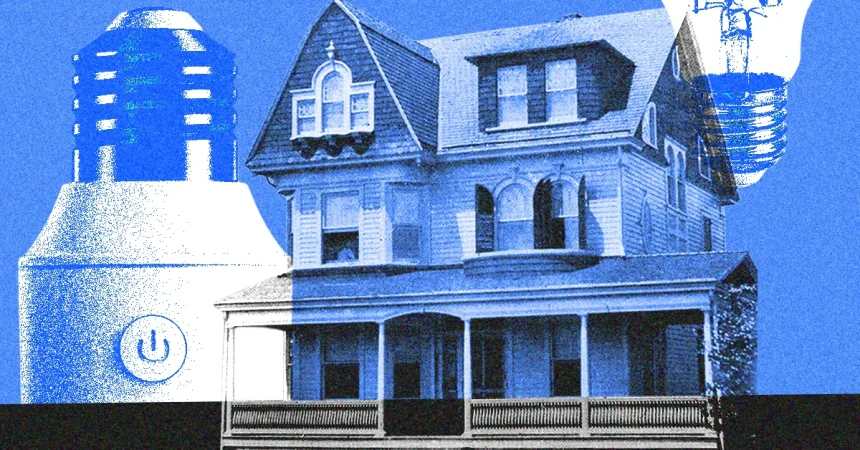
Purchasing a home at the close of 2025 felt like stepping into a living piece of history. My wife and I found ourselves the proud, slightly overwhelmed owners of a 1907 Craftsman in Portland, Oregon—a property officially recognized on the National Historic Registry. It’s the kind of house that breathes character: original millwork, authentic layout, and that unmistakable, heavy-timbered charm of the early 20th century. For us, it was the dream, but it was also a blank, century-old canvas. We arrived with a clear vision: to honor the legacy of this structure while slowly, carefully bringing it into the modern age. We’re working with a modest budget and a whole lot of “sweat equity,” balancing the delicate act of restoration with the practical needs of modern life.
Our guiding philosophy has become the art of the “invisible upgrade.” This house is the antithesis of a modern smart home; it’s a drafty, creaky, beautiful relic from the Teddy Roosevelt era. Integrating cutting-edge technology into such an environment requires a light touch. We don’t want glowing panels or plastic-heavy interfaces ruining the warm, organic vibe of a home built over a hundred years ago. Every decision we make is filtered through a singular question: can this technology improve our lives without screaming that it exists? It’s a rewarding challenge, teaching us as much about home maintenance as it does about the capabilities of modern tech.
The urgency of this project became apparent almost immediately upon taking the keys. Our first hurdle was the furnace, which was not just inefficient—it was a health hazard, kicking off carbon monoxide and demanding an immediate, expensive intervention. Bringing in a local furnace team before we even fully moved in was a sobering reminder that living in a historic home is a serious commitment. However, this crisis gave us our first major “tech win.” We decided to pair the new, high-efficiency furnace with the Ecobee Smart Thermostat Enhanced. It was a strategic move, chosen after hours of research, because it offered the perfect middle ground between high-tech capability and a clean, unobtrusive design.
Choosing the Ecobee over competitors like the Google Nest was a calculated decision based on the nuances of a historic home. The Ecobee’s built-in radar for motion detection was a standout feature, allowing the house to “understand” where we are without requiring us to install clunky, additional sensors in every room. The interface is intuitive, and the setup process was remarkably straightforward—a godsend when you’re already juggling a thousand other restoration tasks. It doesn’t just sit on the wall looking sleek; it actively manages the climate in a house that lacks the modern insulation standards of today’s builds, which is a massive upgrade in terms of both comfort and safety.
Beyond the hardware, the data is where the magic truly happens. Every month, the thermostat provides us with a detailed recap of our energy usage and temperature fluctuations. In an uninsulated 1907 home, this information is invaluable. It’s like having a window into the house’s metabolic system. We can track where the drafts are biting hardest and see exactly how our usage patterns impact our comfort. It has transformed our approach to climate control, moving us from reactive guesswork to proactive management. Plus, there’s a financial upside: by utilizing local utility rebate programs, we’ve managed to shave money off our monthly bills, making the tech pay for itself in small, steady increments.
Ultimately, these first six months have been a journey of finding a rhythm between the 1907 past and the 2025 present. It’s a lot of work, and there are days when the “sweat equity” feels more like just “sweat,” but seeing the house start to feel both authentically old and functionally new is deeply satisfying. We are proving that you don’t have to sacrifice the history of a home to enjoy the conveniences of modern life. We’re just getting started on this restoration, but if our early experiments with home automation are any indication, we’re on the right path. It’s a wonderful, messy, and incredibly rewarding time to be homebodies.