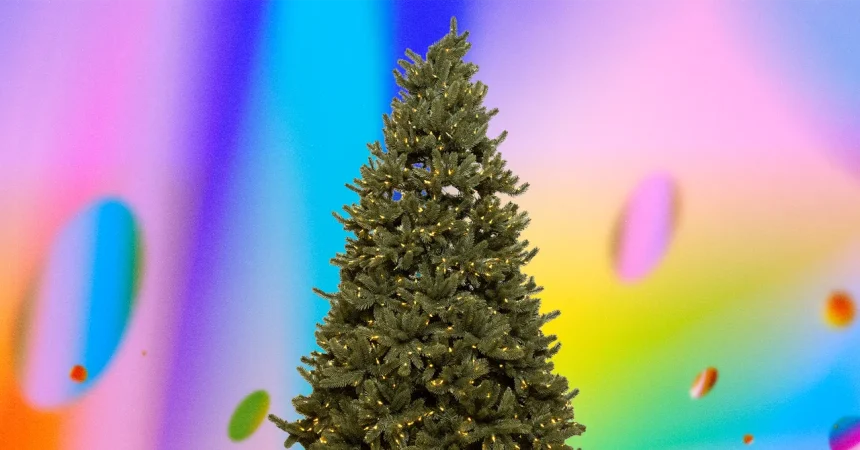
It might seem strange to talk about Christmas in the middle of spring, but for those who appreciate the convenience of an artificial tree, there is actually no better time to start planning for the holidays than right now. Last November, the team at WIRED decided to skip the marketing fluff and conduct a rigorous, blind-judged competition to see which artificial trees actually looked like the real thing. By enlisting professional interior designers to evaluate ten popular models, they stripped away the brand prestige to find out which trees could truly stand up to scrutiny. The result confirmed what many enthusiasts already suspected: when it comes to capturing that authentic, evergreen magic, Balsam Hill remains in a league of its own.
Taking top honors in the competition was Balsam Hill’s Vermont White Spruce, a tree that impressed the judges with its stunning realism. It wasn’t just a one-hit wonder for the company, either; another Balsam Hill model secured fourth place, and the brand swept the category for the quickest assembly. In a market often saturated with cheap plastic imitations, Balsam Hill has managed to cultivate a reputation that is actually backed by quality. They’ve been honing their craft since 2006, and our testing proved that their success isn’t just word-of-mouth hype—their trees simply look better, shine brighter, and feel sturdier than the competition, even when the lights are off and the labels are hidden.
Because we are currently six months away from the holiday season, most people aren’t even thinking about tinsel or tree skirts. However, this off-season gap is precisely why now is the perfect window for savvy shoppers. Balsam Hill is currently running an aggressive clearance event on Amazon, offering discounts of up to 50 percent on a variety of their most popular models. Whether you are looking for a smaller 5.5-foot Classic Blue Spruce for an apartment or a towering 7.5-foot Balsam Fir for a main living area, you can grab premium-grade holiday decor for a fraction of its usual winter price.
Beyond the numbers and the discounts, there is the practical element of what it is actually like to live with a Balsam Hill tree. After the competition, one of the testers took home a 7.5-foot model for long-term use, and the experience was truly eye-opening. As someone who has wrestled with frustrating artificial trees in the past, the ease of assembly was the most striking difference. Despite being the largest and most substantial tree in the house, it was remarkably simple to put together. It looked so realistic that guests throughout the season were convinced it was a fresh-cut pine, turning the artificial setup into a standout focal point of the home.
Of course, quality comes with its own set of minor quirks. Because these trees are built to last with high-quality materials and dense, realistic branches, they are undeniably heavy and take up a fair bit of space in storage. You have to be prepared to handle a sturdy, substantial piece of equipment. In fact, one unintended consequence of the high-quality, full silhouette of the tree was that it required far more ornaments than expected to fill the branches, leaving a longtime collector scrambling to find more decorations to fill the gaps. These aren’t defects, but rather evidence of a product that treats the holiday aesthetic with serious attention to detail.
Ultimately, the decision to buy a Christmas tree in the heat of spring boils down to your willingness to plan ahead. If you don’t mind the short-term chore of lugging a new box up to the attic or finding a corner in your closet to stash it for the next few months, the financial reward is substantial. You are essentially trading a bit of pre-holiday stress for deep savings on a product that you will be glad you bought once December rolls around. For those who want the look of a premium, professional-grade Christmas tree without the peak-season price tag, this is the smartest move you can make all year.