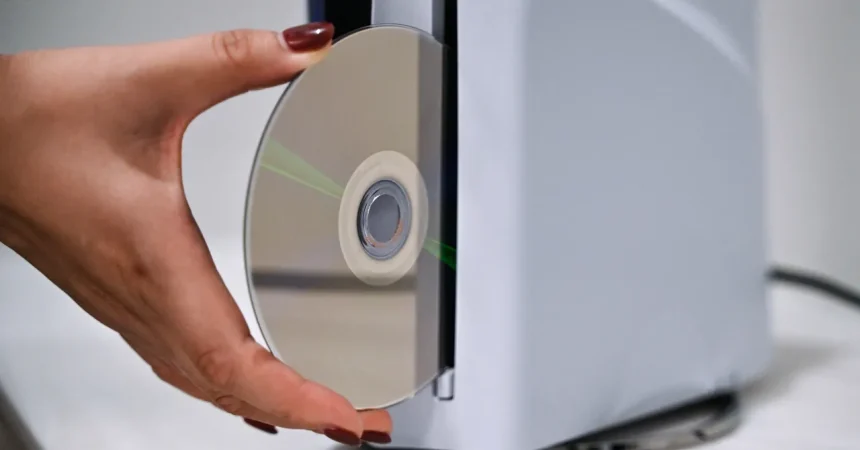
The landscape of gaming is shifting beneath our feet, and for collectors and physical media enthusiasts, the horizon looks increasingly bleak. Sony recently dropped a bombshell: beginning in January 2028, the company will officially cease production of physical game discs for all new PlayStation titles. According to Sid Shuman, Sony’s senior director of global content communications, this transition is simply an acknowledgment of reality. As consumer preferences continue to lean heavily toward the ease of digital storefronts, Sony believes it must evolve to match the broader trends of the entertainment industry. While the announcement consists of only a few paragraphs, its implications are massive, signaling the potential end of an era where a game is a tangible object rather than a temporary lease.
To understand Sony’s perspective, one must look at the logistical challenges of modern game development. The sheer demand for high-speed access and massive file sizes has often rendered the traditional Blu-ray disc obsolete before it even reaches the shelf. With triple-layer 4K discs capped at 100GB, modern blockbusters—which often balloon well beyond that capacity—are already forcing users into digital downloads even when they buy a physical copy. Furthermore, the industry is racing toward speed; solid-state drives offer performance benchmarks that optical discs simply cannot touch. For developers, especially smaller studios, cutting out the expensive, resource-heavy hurdles of physical manufacturing and distribution is an undeniable boon, allowing them to focus entirely on bringing their creations directly onto the player’s console with a single click.
However, the logic of convenience often ignores the emotional and practical weight of ownership. The recent backlash surrounding the upcoming Grand Theft Auto VI serves as a perfect microcosm of this tension. Even when labels choose to include only a download code in a physical box, the community outcry highlights a deep-seated desire for something to hold, display, and possess. For many gamers, a disc represents a sense of permanence that a digital library simply cannot replicate. When you buy a disc, the ownership feels definitive; when you buy a digital license, you are playing by the publisher’s rules, and at any moment, the game can be “updated,” censored, or—more concerningly—removed entirely.
This transition evokes uneasy memories of Microsoft’s 2013 Xbox One launch, which nearly imploded because of its restrictive, anti-consumer approach to disc usage. Microsoft’s early plans to neuter the secondary market, effectively turning purchased games into non-transferable licenses, met with such fierce vitriol that the company was forced to backtrack completely. By moving to an all-digital model, Sony risks triggering that same resentment. The secondary market—the ability to buy, trade, or lend used physical games—has been a cornerstone of the console gaming ecosystem for decades. Removing the physical medium isn’t just about saving space in a server room; it’s about tightening the grip of corporate control over how games are bought, sold, and accessed.
The most chilling aspect of this “all-digital” future is the lack of a safety net for the consumer. When a game exists only on a server, it is subject to the whims of licensing agreements and corporate bottom lines. We have already seen the consequences in the film and television market; recently, Sony announced that hundreds of licensed titles would be wiped from the libraries of British PlayStation users due to expiring content agreements, with no refunds provided. If Sony is willing to delete entire movie collections from its users’ accounts, one has to wonder: how far are they from doing the same to our gaming libraries? When you no longer own the physical media, you no longer own your collection—you are essentially paying for a subscription that can be revoked without warning.
Ultimately, we are trading the sovereignty of ownership for the altar of convenience. While the transition makes sense from a financial and technical spreadsheet, it strips away the autonomy of the gamer in ways that we are still beginning to quantify. There is a distinct, melancholic feeling in knowing that the discs we grew up with will soon be relics of the past, relegated to basements and museum shelves. As we march toward 2028, the industry promises us faster downloads and seamless updates, but it takes something away that can never be replaced: the absolute, irrevocable certainty that the game on your shelf belongs to you, and that no server outage or license expiration can ever take it away.