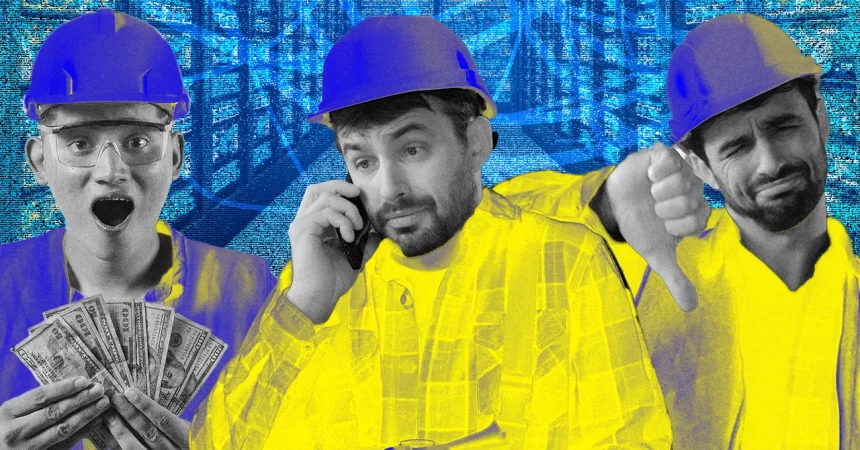
The rapid, multi-billion-dollar expansion of data centers across the United States has transformed the construction landscape, turning everyday electricians into the literal architects of the AI revolution. As Big Tech giants scramble to build the physical infrastructure needed to power artificial intelligence, a fierce competition for skilled labor has erupted. Major organizations like the International Brotherhood of Electrical Workers (IBEW) are positioning their members as the backbone of this technological shift, while corporate titans like Meta and Google are funneling millions into trade academies to ensure a steady supply of qualified hands. For the average electrician, this surge represents unprecedented job security and a chance to participate in the biggest industrial pivot of the decade, yet the professional reward comes with an increasingly complicated social cost.
Beneath the surface of this booming market, a quiet but profound moral crisis is brewing within the electrical trade. Online communities—most notably the forums found on Reddit—have become sounding boards for workers grappling with the ethics of their craft. It is no longer just about blueprints and wiring schematics; the conversation has drifted toward the broader implications of AI, the sustainability of these facilities, and the potential for long-term economic displacement. Some workers worry if they are helping to build a future that will eventually render their own labor unnecessary, while others are beginning to question whether their participation in these massive, resource-hungry projects makes them complicit in the gentrification and environmental strain these facilities impose on local communities.
This ethical tug-of-war has bled into the personal lives of workers, creating a strange new reality where one’s livelihood becomes a point of contention in social circles. In an era of rampant skepticism toward Big Tech, electricians are finding that explaining their work at a data center can act as a sudden buzzkill during dinner parties or dates. It is a surreal experience to be a high-skilled, essential worker and feel the need to hide that fact, fearing the judgment of others who equate their labor with corporate greed or the societal perils of unregulated AI. For many, the choice to remain anonymous when discussing their day jobs stems from a desire to escape the immediate scorn of people who view these data centers as unwelcome additions to their neighborhoods.
Despite this social stigma, the allure of upward mobility remains a powerful motivator for those willing to look past the controversy. For many tradespeople, a massive data center project is more than just a job; it is a ladder to better pay, management roles, and specialized engineering training that might otherwise be out of reach. One Midwest electrician, who candidly admitted to taking a pay cut just to get his foot in the door of a data center, views the situation through a lens of pragmatism. He recognized early on that AI is the trajectory of our future and decided that it was better to be an insider helping to shape the infrastructure than an outsider watching from the sidelines. By securing a management promotion within months, he turned a moral gray area into a personal career victory.
At the opposite end of the spectrum, workers like Ryan represent a growing faction of the trade that adheres to a strict moral code, regardless of the paycheck. For these electricians, the decision to decline a project is an act of ideological defiance against corporations they deem suspicious or inherently damaging to democracy. The distrust isn’t just about AI; it’s about the concentrated power of executive figures and the circular nature of a tech bubble that feels untethered from the needs of the average person. By leveraging the agency provided by their union memberships, these electricians are intentionally bypassing massive industrial contracts, choosing to prioritize their personal values over the lucrative—but ethically murky—demands of the tech sector.
Ultimately, the clash highlights the growing divide between the rapid acceleration of technology and the people tasked with building it. While the money flowing into data centers is undeniable, the human cost is measured in internal conflicts, strained social interactions, and a fundamental questioning of what it means to be a “good” worker in an era of corporate consolidation. As the industry continues to expand, electricians find themselves on the front lines of a much larger societal debate. They are trapped between the undeniable growth of a high-tech future and the persistent, nagging fear that they are helping to build a world they might not actually want to live in. For now, the profession continues to evolve, moving forward with one hand on the wire and the other on the lever of their own conscience.