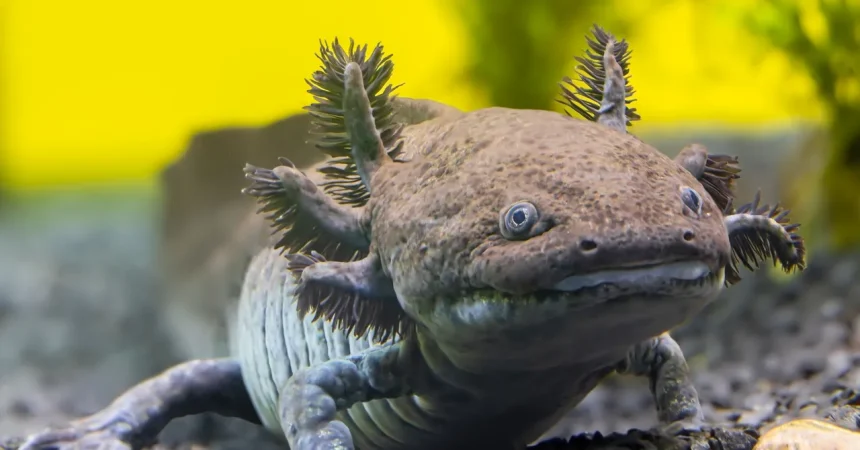
In a groundbreaking discovery that bridges millions of years of natural history, researchers at the National Autonomous University of Mexico (UNAM) have unlocked a long-held secret buried in the soil of Hidalgo. By analyzing fossilized remains first unearthed in the early 2000s, a team from the Zaragoza School of Advanced Studies (FES Zaragoza) has officially identified a new, extinct species of salamander: Ambystoma quetzalcoatli. This isn’t just another addition to the catalog of ancient creatures; it stands as the oldest record of the genus Ambystoma ever documented in Mexico. For paleontologists, this discovery is a vital piece of the evolutionary map, offering a rare glimpse into the ancestral origins of the iconic, smiling axolotls that have enchanted the world for generations.
The story of how these creatures came to be preserved begins in the municipality of Atotonilco el Grande, a region that looks vastly different today than it did eons ago. Back then, this area was defined by a sprawling, 85-square-kilometer freshwater lake system, likely created when the flow of the local Amajac River was obstructed. This temperate, lush environment served as a bustling hub of biodiversity, sustaining an array of ancient life, including intricate plant species, microscopic diatoms, early beetles, and fish. While other remains from this site had been studied over the years, the amphibian fossils sat waiting in the archives, representing a silent, undocumented chapter of Mexican biological history until the FES Zaragoza Paleobotany Research Group decided it was time for a closer look.
What makes this find particularly remarkable is the sheer quality of the preservation. The researchers were gifted with a dozen specimens that were not merely fragmented bone chips, but complete, articulated skeletons. This integrity allowed the team, led by Jorge Herrera Flores and María Patricia Velasco de León, to perform the kind of anatomical scrutiny that usually requires a stroke of luck. To peel back the layers of time, the team moved beyond simple observation, employing cutting-edge technology including high-resolution computed tomography (CT) scans. By digitally dissecting the fossils and comparing them against the skeletons of thirteen modern salamander species—including the famous Ambystoma mexicanum of Xochimilco—they were able to look past the surface and identify the distinct evolutionary markers of a species unknown to science.
The data revealed that Ambystoma quetzalcoatli was indeed a unique entity, possessing anatomical “fingerprints” that set it apart from its modern cousins. Through their study, recently published in Palaeontologia Electronica, the team highlighted several striking physical departures. Perhaps the most notable distinction involves the skeletal structure: while modern axolotls typically possess 16 or fewer trunk vertebrae, this ancient ancestor boasts 17. Furthermore, the creature exhibited a distinct cranial architecture, featuring a unique palate structure and a specialized, elongated opening at the top of its skull. These findings suggest that while these salamanders share a clear lineage with the ones we know today, they were highly adapted to a niche environment that existed long before the modern landscape took shape.
Comparing these ancient fossils with living tiger salamanders and various endemic Mexican species required a massive global effort, utilizing 3D imaging and international biological collections. This rigorous comparative analysis was not just about naming a new species; it was about positioning Ambystoma quetzalcoatli within the larger family tree of North American amphibians. By identifying these specific skeletal variations, the researchers have managed to highlight the persistence and adaptation of the Ambystoma genus over vast stretches of time. It reinforces the idea that Mexico’s unique geographical makeup—its history of volatile rivers, isolated lakes, and cooling climates—has been a crucible for evolutionary innovation for a very long time.
Ultimately, the identification of Ambystoma quetzalcoatli is a testament to the importance of museum archives and the dedication of the paleontologists who revisit them with fresh eyes. It serves as a gentle reminder that our understanding of the natural world is always evolving; the “new” discoveries we make today are often hidden in plain sight, waiting for the right technology and the right perspective to bring them to life. By naming this species in honor of the rich traditions of their homeland, the researchers have done more than just add a name to a list. They have cemented a meaningful connection between Mexico’s deep, prehistoric past and its vibrant, modern ecological identity, ensuring that the legacy of this ancient salamander is finally given the scientific recognition it deserves.