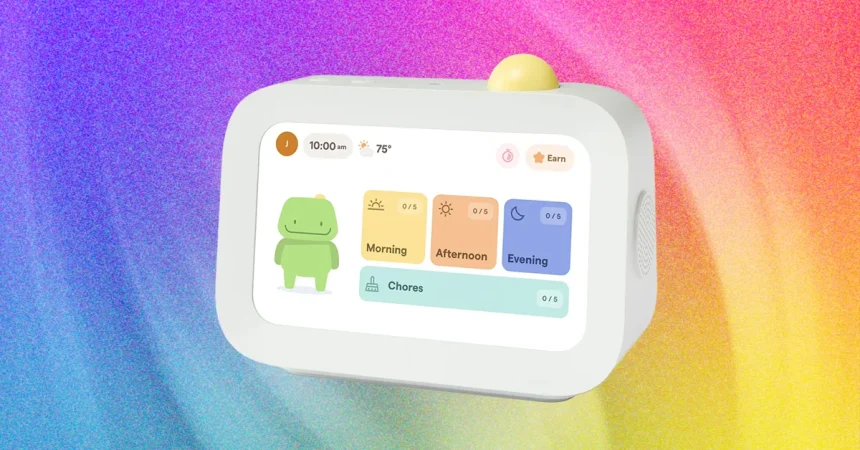
The cardboard box sat on the kitchen counter for a full day before I mustered the courage to open it. I am inherently wary of any technology that promises to simplify parenting, especially those that claim to gamify daily routines. Our mornings had devolved into a chaotic symphony of whining, forgotten socks, and the inevitable time-out. I wanted a chore chart—a tangible, visual structure—but the idea of a digital screen felt like just another pacifier for my child’s attention span. Yet, the Skylight Buddy’s sleek packaging and promises of autonomy won me over. When I finally unboxed it, the build quality impressed me: a sturdy, almost toy-like tablet with a weighted stand designed specifically for a child’s reach. It has a soft, rounded aesthetic that screams “kid-friendly” without being garish. I set it up, plugged it in, and presented it to my four-year-old son with a degree of skeptical ceremony. The reaction was immediate and electric. “It’s my own screen!” he shrieked, his eyes widening with the same glee he reserves for ice cream or a stray cat. For almost two weeks now, that initial excitement has not fizzled out, which is a genuine miracle in a household where toys are typically discarded after a mere 48 hours. He has a specific daily routine: wake up, brush teeth, put on clothes, eat breakfast, and then, in the evening, tidy up, put on pajamas, and brush teeth again. Each of these tasks appears as a bright, colorful card on the Buddy’s display, with a satisfyingly large, round corner checkbox. He taps it with his tiny index finger, and a tactile “click” sound emanates from the speaker, simulating the physical satisfaction of checking off a paper list. He doesn’t just tap it; he presses it with the force and concentration of someone defusing a bomb. The corner of the checkbox is perfectly rounded, an intentional design choice that makes it easy for small hands to locate without even looking. I watch him perform this ritual each morning, and I see a spark of agency and ownership that I’ve never witnessed before. He has transformed from a passive recipient of my nagging into the proud administrator of his own day.
The beauty of the Skylight Buddy, however, lies not just in the check—but in the captivating ritual of the uncheck. Because, let’s be brutally honest, a four-year-old will never accurately complete an entire task list on the first pass without a bit of adult intervention. “Did you put your pajamas on, buddy?” I’ll ask, after he’s already sprinted from the hallway to the device to tap the “Night Routine” completion button, eager for his reward. He pauses mid-stride, looks down at his still-naked legs, and a slow, sheepish grin spreads across his face. There’s a moment of panic where he glances at the screen, sees the box is already checked, and a flicker of internal conflict crosses his features—the struggle between his desire to cheat the system and his nascent understanding of honesty. But then comes the most delightful part of the app’s logic: he simply taps the unfinished task to uncheck it back to its blank state, goes and physically completes the action—pulling the soft, navy cotton pants over his chubby, reluctant legs—and then sprints back to the screen to recheck the box, earning his validation. This ritual of unchecking and rechecking transforms a mundane chore into a game of verification and data integrity. It is almost like watching him learn to manage a spreadsheet, to reconcile the digital ledger with the physical reality of his life. He is the database, and the device is the arbiter of truth. He must correct the record before he can claim victory. This process has become our nightly dance. It is no longer a battle of wills; it has evolved into a partnership where the Buddy acts as a kind, neutral third party. I don’t have to nag him or raise my voice; I just have to point out the discrepancy between the virtual list and his actual physical state. The device has become the benevolent police of our home, turning my disciplinary role into that of a data auditor.
But the true magic, the piece of software that ensures he returns to the screen dozens of times a day, is the emoji rain. When a single task is completed—and especially when the entire list is wrapped up—the screen erupts in a cascading shower of animated emojis. Sometimes it’s a torrent of gold stars and spinning planets; other times it’s a frantic burst of rockets, beaming faces, and swirling hearts. They fall from the top of the screen, bouncing off invisible edges, swirling in a joyful cacophony, accompanied by a cheerful, synth-heavy chime that is surprisingly pleasant and not grating. My son’s favorite activity is to trigger this celebration prematurely. He will sit cross-legged, staring at his list, and realize he still has three daunting tasks remaining. He’ll glance over to see if I’m watching, and then, with a mischievous glint in his eye, he’ll deliberately tap the “Complete All” button. The emojis rain down. He bursts into laughter, his whole body shaking with glee. Then he looks at me, proud and defiant, and I tell him, “No, buddy, you didn’t brush your teeth yet.” He doesn’t care. He has seen the fireworks. He then painstakingly unchecks the three unfinished tasks, placing them back on the list, only so he can trigger the rain again once he actually completes them for real. I find this subversion utterly charming and profoundly human. It makes me reflect on my own adult life. My laptop’s Notes app holds a daunting, never-ending to-do list of work projects, grocery runs, and pending emails. When I finish something, it just vanishes with a silent swipe or a quiet “delete” keystroke. There is no celebration, no confetti, no visual acknowledgment of my tiny victories. I silently yearn for a Notes app that rewards me with a random rocket ship or a dancing taco for submitting a tax form. He gets a galactic parade for putting on his shoes; I get a gray, lifeless checkmark for managing a complex household budget. There is a fundamental inequality in how we validate effort.
On a more practical, logistical note, the sync feature between the Skylight Buddy and the larger Skylight Calendar has become an unexpected lifesaver in our two-story home. The main Skylight Calendar hangs in our high-traffic kitchen, where we manage meal plans, family schedules, and the weekly photo frame that cycles through family memories. But when my son is upstairs in his bedroom winding down for the night—a territory far removed from the kitchen—he checks his tasks exclusively on the Buddy. If he completes “Put Away Toys” on the Buddy, that exact same task gets instantly checked off on the big screen downstairs. I don’t have to run up and down the staircase fourteen times a night to verify his work or physically mark things off an analog whiteboard. This invisible data connection means the digital state of our family is always perfectly synchronized, regardless of which room we happen to occupy at any given moment. This might sound like a trivial perk, but for a parent juggling dinner preparation, laundry, and bedtime, it eliminates an immense amount of friction. I can glance at the big calendar while chopping vegetables, see his progress ripple through in real-time, and call up to him, “Great job with the toys, buddy!” The physical distance between us is bridged by this seamless cloud sync. It turns our home into a small, intelligent ecosystem where accountability is beautifully distributed across multiple screens. I never have to ask, “Did you really do it?” because I can just look. And he knows that looking is happening, which adds an extra, gentle layer of accountability to his routine. The days of me shouting “Did you wash your hands?” from the bottom of the stairs are gone, replaced by a quiet glance at a glowing screen.
Now, let’s address the elephant in the room: the subscription model. I’m often deeply wary of purchasing consumer hardware that feels like a Trojan horse for ongoing, never-ending fees. The Skylight Buddy has its own subscription tier called Buddy Plus, priced at a very reasonable $39 per year—which is significantly cheaper than the larger Skylight Plus subscription. If you already own a Skylight Calendar, you might want to opt into the Skylight Plus plan anyway, as it unlocks the photo frame feature, a comprehensive rewards system, and a surprisingly robust meal planning tool. For the Buddy specifically, the subscription unlocks “Rewards, Timers, and Nudges.” For my four-year-old, however, the standard free tier is more than sufficient. He doesn’t need to earn stars that translate into tangible rewards like extra screen time; he just wants to see the emojis rain down. But I can absolutely see the colossal value for older kids. If you have a seven or eight-year-old, the ability to set up a reward system—where completing chores earns stars that convert into a trip to the ice cream shop or a pass on a weekend chore—is a powerful behavioral tool. The “Nudges” feature is also excellent for kids who might need a gentle, automated reminder to move on from a task, taking that burden off the parent. We haven’t integrated any of that yet. Honestly, the vibrant aesthetics and the pure dopamine-driven gamification of checking boxes is keeping him engaged without any financial investment beyond the hardware. The pricing structure is compelling enough to recommend: $120 for the Buddy if you bundle it with a free month of the Plus Plan, or $140 if you buy the device standalone. The subscription is a choice, not a mandatory requirement, and for now, we are happily living in the free tier, watching our child find joy in the simple act of completion.
The most profound and unexpected change, surprisingly, has been his sudden, inexplicable enthusiasm for brushing his teeth. It was once our daily battle—the whining, the turned head, the negotiations for “just five more minutes.” But now, he practically sprints to the bathroom the moment the night routine is mentioned. He can’t wait to squeeze the strawberry-flavored toothpaste onto his brush, open his mouth wide, and scrub away, just so he can race back to the Buddy and tap that final box. The habit has become a genuine dopamine chase, a self-reinforcing loop of physical action and digital reward. It’s astonishing how a piece of plastic and clever software can completely reframe a child’s perspective on personal hygiene. I know this fascination might eventually fade; the novelty of the emoji rain could wear off in a month or a year. But the core structure it provides—the visual roadmap of his day, the satisfying rhythm of start, action, completion, celebration—might genuinely stick. It teaches him sequence, responsibility, and the profound satisfaction of closing a loop. And honestly, it’s teaching me a lesson too. For the wider WIRED audience, if you’re a parent curious about the intersection of consumer technology and early childhood development, spending $120 on a specialized chore screen might feel excessive. But after two weeks of watching my son interact with it, I can clearly see the value in giving a child a dedicated, low-stakes digital dashboard for their own autonomy. It’s more than just a toy; it’s a gentle mentor. It doesn’t replace my role as a parent, but it certainly lightens the load of being the sole nagging reminder in the household. If you want to dive deeper into the best consumer tech innovations for your family, or if you just want to read more tested reviews like this, subscribing to WIRED gives you unlimited access to experts who rigorously test these gadgets so you don’t have to waste your money on the ones that fail. For now, I’m just immensely happy that my kid is brushing his teeth with a genuine smile on his face, driven by the simple, beautiful promise of digital stardust.